

Maddy summaryHR 666, the Access to Counsel Act, requires U.S. immigration officers to provide certain travelers a meaningful opportunity to consult with legal counsel within one hour of starting secondary inspection at ports of entry. It directly affects travelers including U.S. citizens, lawful permanent residents returning from abroad, visa holders, refugees, and parolees seeking entry. Key provisions mandate phone access to counsel, allow advocates to present evidence to officers, and require in-person meetings when possible. Lawful permanent residents cannot abandon their status without first consulting a lawyer unless they waive this right in writing. The bill takes effect 180 days after enactment.
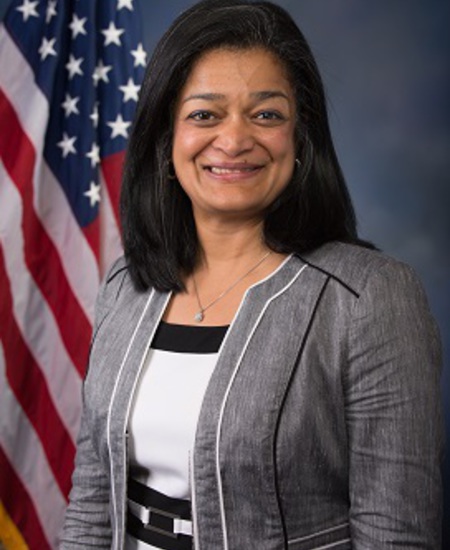
Rep. Pramila Jayapal
Sponsored bills
Maddy summaryThis bill requires Congress to declare war before the U.S. can conduct a first-use nuclear strike - meaning a nuclear attack launched without prior nuclear retaliation against the U.S., its territories, or allies. It prohibits using federal funds for such strikes unless explicitly authorized by a congressional declaration of war. The bill directly affects the President’s authority to order nuclear weapons use and the military’s execution of such orders, reinforcing constitutional war powers. It defines "first-use" strictly to prevent unilateral action absent congressional approval, aiming to create a clear legal check on nuclear decision-making.
Maddy summaryHR 653, the Transition-to-Success Mentoring Act, creates a federal grant program to fund school-based mentoring programs for middle school students transitioning to high school. It directly affects at-risk students in high-poverty, high-crime, rural, or high-violence school areas, requiring eligible school districts or community partnerships to assign each student a "success coach." Key provisions mandate coaches to develop individualized plans with students and parents, meet monthly to track academic/career goals, provide quarterly progress reviews, and connect students to college/career opportunities. The bill also requires grantees to report on student outcomes like attendance, academic progress, disciplinary issues, and social-emotional development, with detailed training requirements for coaches covering trauma-informed practices and disability inclusion.
Maddy summaryThis bill prohibits the possession, sale, or transfer of most large-capacity ammunition magazines (holding more than 15 rounds) for the general public, while exempting law enforcement officers (including campus security officers), retired officers, and certain licensed entities like nuclear facility security. It requires new magazines manufactured after enactment to have serial numbers and manufacturing dates, and allows federal grant funds to support buy-back programs for these devices. Existing owners of such magazines lawfully possessed before the law's enactment are exempt from the prohibition. The law applies to devices not already covered under current exemptions for law enforcement, nuclear security, and retired officers.
Maddy summaryThis bill amends the U.S. Code to expand appeal rights for certain postal employees. It allows non-unionized postal workers in supervisory, professional, technical, clerical, administrative, or managerial roles (covered under the Executive and Administrative Schedule) to directly appeal personnel decisions to the Merit Systems Protection Board (MSPB). Previously, these employees may have lacked this specific appeal path. The change clarifies their eligibility under Section 1005(a)(4)(A)(ii)(I) of Title 39, U.S. Code, ensuring they can seek MSPB review for employment-related disputes.
Maddy summaryThis bill requires the U.S. Postal Service to provide written proposals to supervisors' organizations 60 days before pay/benefit decisions expire or after new collective bargaining agreements are reached. It directly affects postal supervisors and managers covered by collective bargaining agreements regarding their pay policies, schedules, and fringe benefits. The key mechanism establishes clear timelines for negotiations and mandates that any dispute resolution panel must issue a binding final decision within 15 days of receiving input from both parties. This aims to streamline the process for resolving pay and benefits disputes between the Postal Service and supervisory staff organizations.
Maddy summaryThis bill adjusts federal employee pay rates for 2024. It increases basic pay for all federal workers under statutory pay systems and prevailing rate systems by 4.7%, and raises locality pay adjustments by 4.0%. These changes directly affect all federal employees covered by the specified pay systems, including those in wage areas and under sections 5348/5349 of Title 5. The bill implements these raises without altering existing pay system structures or requirements.
Maddy summaryHRES 49 is a symbolic House resolution recognizing the cultural and historical significance of Lunar New Year in 2023. It formally acknowledges Lunar New Year's origins in China over 4,000 years ago, its celebration across East and Southeast Asia (including the Year of the Rabbit in Chinese tradition and Year of the Cat in Vietnamese tradition), and its observance by millions of Asian Americans and others in the U.S. The resolution expresses respect for Asian Americans and all global communities celebrating this holiday and extends well-wishes for a prosperous new year. As a ceremonial resolution, it has no legal effect or policy changes - it solely serves to affirm cultural recognition.
This resolution condemns the Supreme Court's holding in Dobbs v. Jackson Women's Health Organization (that there is no constitutional right to abortion) and expresses a commitment to instituting judicial reform and supporting access to abortion and the communities affected by the Court's ruling. It also urges the executive branch to advance reproductive justice.
Maddy summaryHR 430, the Lunar New Year Day Act, would designate the Lunar New Year as a federal holiday by adding it to the official list of holidays observed by federal employees. This change would require federal offices to close and federal employees to receive a paid day off on the actual date of the Lunar New Year each year. The holiday would be observed annually on the date the Lunar New Year falls, which varies yearly based on the lunar calendar. This bill directly affects federal workers and operations, aligning with existing federal holiday practices.