

Maddy summaryHR 1404, the CHAMPVA Children’s Care Protection Act of 2025, expands healthcare eligibility under the CHAMPVA program for children of veterans. It increases the maximum age for children to receive medical benefits from 21 to 26 years old, regardless of marital status. This change directly affects dependent children of veterans who were previously eligible until age 21, extending coverage through their mid-twenties. The policy amendment applies to medical care provided on or after the bill’s enactment date.
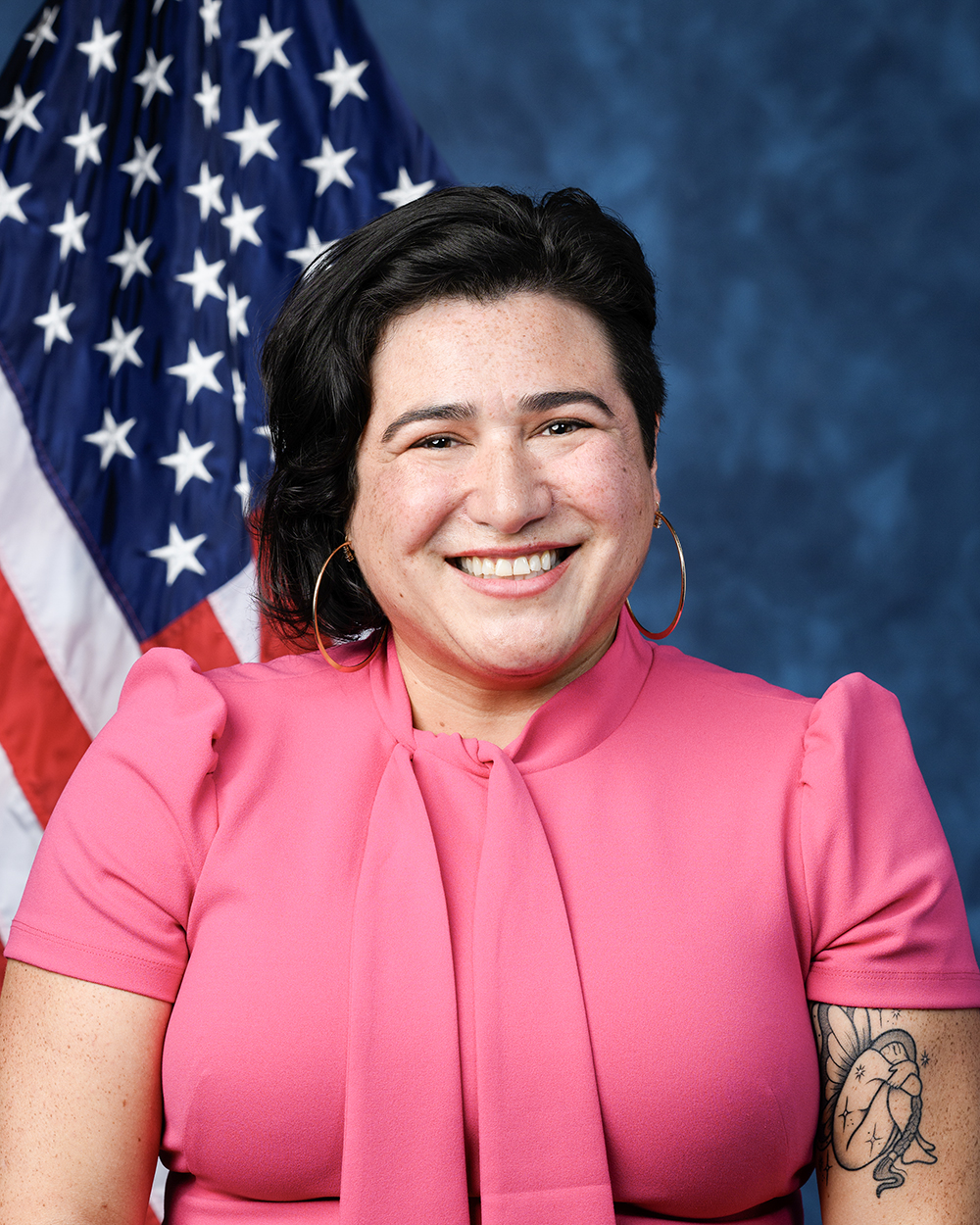
Rep. Emily Randall
Sponsored bills
Maddy summaryHRES 966 is a ceremonial resolution passed by the U.S. House of Representatives to formally recognize California State Senator Monique Limón's historic appointment as the first Latina and first mother to serve as Senate President Pro Tempore. The resolution highlights her background as a first-generation college graduate, former educator, and long-time state legislator representing districts in Santa Barbara. It does not create new laws or policy changes; instead, it serves as a formal acknowledgment of her leadership and service to California. The resolution was submitted for her upcoming swearing-in on January 5, 2026.
Maddy summaryHR 6839, the Vaccine Transportation Access Act, provides federal grants to nonprofit community organizations that serve low-income or minority communities facing transportation barriers to vaccines. The grants fund projects like on-demand rides, first/last mile transportation to vaccine sites, and expanded transit coordination to reduce missed appointments. Recipients must track performance metrics and report outcomes to the Department of Health and Human Services. The bill also adds a provision ensuring 100% federal funding for nonemergency vaccine-related transportation costs under Medicaid plans.
Maddy summaryThe Reproductive Coercion Prevention and Protection Act of 2025 defines reproductive coercion as controlling a person's reproductive choices through force, threats, sabotage of contraception, or pressure to become pregnant or terminate a pregnancy. It creates a federal civil right of action, allowing victims to sue in court for damages if the coercion involved interstate activities - such as travel across state lines, interstate communication (e.g., email or phone), or payments. The bill does not override state laws or court jurisdictions, preserving existing state definitions of domestic violence and reproductive coercion. It specifically targets cases where abusers sabotage mail-order birth control or force victims to travel for reproductive health care, addressing gaps in current protections.
Maddy summaryHCONRES 64 is a congressional resolution directing the President to withdraw U.S. military forces from any hostilities against Venezuela that lack explicit congressional authorization. It applies to ongoing military operations in Venezuela not approved by Congress through a declaration of war or specific law authorizing force. The resolution invokes the War Powers Resolution (50 U.S.C. 1544(c)), requiring the removal of troops within the timeframe specified by that law. This bill does not affect military actions already authorized by Congress but mandates the end of unapproved operations.
Maddy summaryHCONRES 61 directs the President to withdraw U.S. military forces from hostilities against any terrorist organization designated by the president in the Western Hemisphere. This bill specifically applies to military operations involving U.S. armed forces in the region targeting such groups. The key provision requires the withdrawal unless Congress has passed a formal declaration of war or specific authorization for that military action. The resolution invokes Section 5(c) of the War Powers Resolution to compel this change in military deployment.
Maddy summaryHRES 955 is a symbolic House resolution recognizing the importance of maintaining U.S. leadership in ending pediatric HIV/AIDS globally. It affirms support for existing programs like PEPFAR and the Global Fund, which provide critical prevention services (e.g., antiretroviral prophylaxis for pregnant women) and treatment for children. The resolution specifically calls for continued commitment to closing the treatment gap for children, expanding access to long-acting prevention methods, and advancing the Global Alliance to End AIDS in Children by 2030. As a recognition measure, it does not create new laws or allocate funding but underscores ongoing U.S. efforts to prevent mother-to-child transmission and improve pediatric HIV outcomes.
Maddy summaryThis bill prohibits using fiscal year 2026 Department of Defense funds to implement hiring freezes, layoffs, or unnecessary delays in filling vacant positions at public shipyards. It directly affects public shipyards and their Federal civilian employees by preventing workforce reductions without justification. The key provision blocks specific personnel actions - hiring freezes, layoffs, and unfounded hiring delays - using Defense Department funding. This is a procedural measure focused on preserving existing workforce stability at these facilities.
Maddy summaryThe Fair Competition for Small Business Act of 2025 amends the Clayton Act to allow legal claims for violations of the Sherman Antitrust Act or for violations of the bill's own section (section 2). This technical change would directly affect small businesses and other entities involved in antitrust litigation by expanding the grounds for lawsuits under the Clayton Act. The key mechanism is a modification to the Clayton Act that references the bill's provisions, creating a new basis for claims. The bill does not specify additional substantive rules beyond this amendment.
Maddy summaryHR 6731, the "Restore Trust in Government Act," requires Members of Congress, the President/Vice President, and their spouses or dependent children to divest certain financial investments during federal service. It defines "covered investments" broadly (including stocks, commodities, and derivatives) but excludes Treasury bonds, municipal bonds, family farm interests, and some Alaska Native Settlement stock. Covered individuals must sell holdings within 90-180 days of taking office or enacting the law, with limited exceptions for qualified blind trusts or spouses’ occupational trading. Violations incur a 10% fee on the investment value and require returning profits, paid to the Treasury. Ethics offices enforce these rules, publish penalty details, and issue divestiture certificates.