Protecting Our Students by Terminating Graduate Rates that Add to Debt Act or the POST GRAD Act This bill authorizes graduate and professional students to receive subsidized Stafford Loans. These students have been ineligible to receive subsidized Stafford Loans since July 1, 2012.
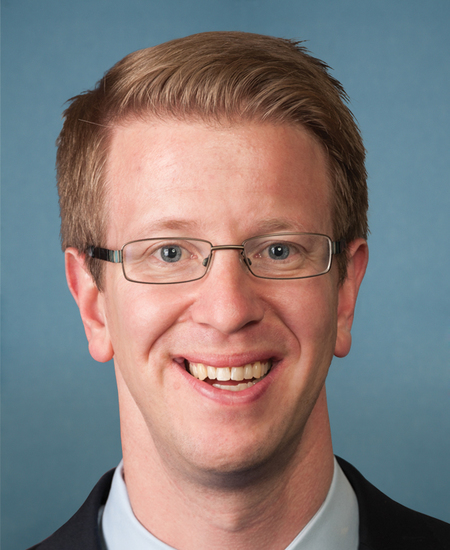
Rep. Derek Kilmer
Sponsored bills
Value in Health Care Act of 2021 This bill makes a series of changes to certain methodologies and components used in the Medicare Shared Savings Program. The program enables accountable care organizations (ACOs) to receive payments for savings stemming from care coordination and management. Among other changes, the bill requires the Centers for Medicare & Medicaid Services to increase the shared savings rate for participating ACOs, as specified, and to establish a program that assists ACOs with start-up and operational costs of participation. The bill also extends certain incentive payments for health professionals who participate in eligible alternative payment models. The Government Accountability Office must report on health outcomes and racial disparities among beneficiaries who receive care from providers under alternative payment models compared to beneficiaries who receive care from providers under the traditional fee-for-service system.
State and Local Cybersecurity Improvement Act This bill requires the Cybersecurity and Infrastructure Security Agency (CISA) to establish the State and Local Cybersecurity Grant Program to address cybersecurity risks and threats to the information systems of state, local, or tribal organizations. Eligible grant applicants (i.e., states and certain Indian tribes) must submit a cybersecurity plan—to be approved by CISA as a condition of disbursement—that describes how the applicant will use the funds to address cybersecurity risks and threats to their information systems. Grant funds must be used to implement, develop, or revise the applicant's cybersecurity plan or to assist with activities that address imminent cybersecurity risks or threats. CISA must establish a State and Local Cybersecurity Resilience Committee to provide state, local, and tribal stakeholder expertise, situational awareness, and recommendations to CISA on how to address cybersecurity risks and threats. CISA must develop and maintain a resource guide for state, local, tribal, and territorial government officials to assist with identifying, preparing for, detecting, protecting against, responding to, and recovering from cybersecurity risks, threats, and incidents. In addition, CISA must develop and make publicly available a Homeland Security Strategy to Improve the Cybersecurity of State, Local, Tribal, and Territorial Governments. Finally, CISA must assess the feasibility of implementing a short-term rotational program to detail approved state, local, tribal, and territorial government employees to CISA in cyber workforce positions.

Urban Indian Health Providers Facilities Improvement Act This bill expands the authority of the Indian Health Service (IHS) to make funds available for urban Indian organizations to renovate, construct, or expand urban Indian health facilities. Specifically, the bill authorizes the IHS to (1) make funds available for renovations even if the renovations are not minor, and (2) make funds available for purposes other than assisting the organizations in meeting certain accreditation standards.
Comprehensive Paid Leave for Federal Employees Act This bill provides paid family and medical leave to federal employees. Currently, federal employees are entitled to 12 weeks of administrative leave for one or more of the following reasons: (1) the birth of a child, (2) the adoption or foster care of a child, (3) the care of an immediate family member with a serious health condition, (4) inability to work due to a serious health condition, and (5) exigencies relating to an immediate family member's active duty service in the Armed Forces. However, of these reasons, employees are entitled to paid administrative leave only in connection with the birth, adoption, or foster care of a child (i.e., parental leave). The bill provides 12 weeks of paid administrative leave for any of these reasons, and specifies that this leave is in addition to any annual or sick leave to which employees are entitled.
Fighting Homelessness Through Services and Housing Act This bill requires the Health Resources and Services Administration to award grants to local and tribal government entities for the planning and implementation of programs to address homelessness.
National Infrastructure Development Bank Act of 2021 This bill establishes the National Infrastructure Development Bank as a government corporation to finance energy, environmental (e.g., drinking water or waste facilities), telecommunications, and transportation infrastructure projects. The bill establishes the National Infrastructure Development Bank Board, which must oversee the infrastructure projects. The board may make loans and loan guarantees to assist in financing infrastructure projects. Further, the board must establish an executive committee, a risk management committee, an audit committee, and a compliance office. To be eligible for financial assistance from the bank, an infrastructure project (1) must have a public benefit, as determined by the board; and (2) may not have a sole use or purpose that is private. An infrastructure project must use iron, steel, and manufactured products that are made in the United States. The bill also establishes accounting and reporting requirements. In particular, the Government Accountability Office must, within five years of this bill's enactment, submit a report to Congress evaluating the bank's activities.
This bill extends by one year the deadline for completion of proposed management plans for the Appalachian Forest National Heritage Area in West Virginia and Maryland, the Maritime Washington National Heritage Area in Washington, the Mountains to Sound Greenway National Heritage Area in Washington, the Sacramento-San Joaquin Delta National Heritage Area in California, the Santa Cruz Valley National Heritage Area in Arizona, and the Susquehanna National Heritage Area in Pennsylvania.
PFAS Registry Act of 2021 This bill directs the Department of Veterans Affairs (VA) to establish a registry for current or past members of the Armed Forces who may have been exposed to per- and polyfluoroalkyl substances due to the environmental release of aqueous film-forming foam at a military installation or other Department of Defense (DOD) location. Additionally, the VA must consult with DOD and the Environmental Protection Agency to make recommendations for additional chemicals that should be included in the registry.
Fairly Assessing Service-related Toxic Exposure Residuals Presumptions Act or the FASTER Presumptions Act This bill revises policies and procedures of the Department of Veterans Affairs (VA) related to establishing or modifying presumptions of service-connection based on toxic exposure. The bill sets up a procedure by which the VA must determine whether to establish, remove, or modify via regulations presumptions of service-connection based on toxic exposure. Specifically, the bill establishes within the VA the Formal Advisory Committee on Toxic Exposure, the Science Review Board, and the Working Group to assist with the various procedures in establishing or removing presumptions of service-connection. Such procedures include assessing the exposure of veterans to toxic substances during active service, evaluating research on the health effects of exposure, and making recommendations based on the evidence and research. The bill also establishes the Expert Advisory Panel on Constrictive Bronchiolitis within the VA to develop guidelines for VA research on symptomatic veterans who served on active duty in the Southwest Asia theater of operations and have bronchiolitis. The Department of Defense must develop and implement a plan to strengthen data collection with respect to members of the Armed Forces (including the reserve components) who are exposed to toxic substances while serving. The VA must initiate or sponsor various studies related to veterans who served on active duty in certain locations. Finally, the VA must provide annual training to relevant employees to improve the handling of claims for compensation and benefits that relate to toxic exposure.