

Twenty-First Century Dams Act This bill addresses dam infrastructure and safety. First, the bill provides resources for programs related to state dam safety, the rehabilitation of high hazard potential dams, and the inspection of dams. In particular, the bill reauthorizes through FY2026 the National Dam Safety Program. In addition, the bill reauthorizes through FY2026 a program related to the rehabilitation of structural measures and a program related to water infrastructure. Next, the bill allows a new tax credit for maintaining and enhancing hydroelectric dams that is equal to 30% of the basis of any qualified dam safety, environmental, and grid resilience enhancement property placed in service in a taxable year. It also allows a 30% credit for qualified obsolete river obstruction removal expenditures for demolishing and removing certain nonpowered or hydroelectric dams. The bill directs the Department of the Army to establish a program to carry out dam removal projects. Further, the bill establishes the Dam Removal Council to (1) coordinate with participating federal agencies to annually notify all known dam owners of the availability of dam removal funding and provide guidance on the existing programs of participating agencies; (2) evaluate and submit to Army recommendations for dam removal projects, technical assistance programs, and funding allocations; and (3) develop a dam removal strategy. The bill requires certain dam assessments, including a joint assessment by the U.S. Geological Survey and the Department of Energy. The bill also authorizes specified federal agencies to undertake certain activities related to federal dam infrastructure.
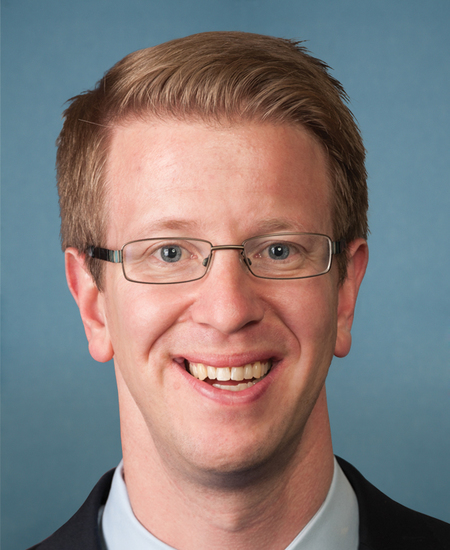
Rep. Derek Kilmer
Sponsored bills
This resolution establishes a House Permanent Select Committee on Aging.
Real Emergency Access for Aging and Disability Inclusion for Disasters Act or the REAADI for Disasters Act This bill establishes programs and requirements to assist individuals with disabilities and older adults (age 50 or older) with disaster preparedness. Among other provisions, the bill requires the establishment of an advisory committee that includes disabled individuals and older adults to oversee the use of funds made available by this bill; allows states to contract with Centers for Independent Living to provide services and support to disabled individuals in preparing for hazards; requires the Department of Health and Human Services to award grants to carry out projects of national significance that, among other things, create opportunities for disabled individuals and older adults to directly contribute to disaster preparedness, recovery, and mitigation; modifies and expands the membership of the National Advisory Committee on Individuals with Disabilities and Disasters to ensure that it represents the diversity of the disabled and older adult communities; and establishes the Disability and Disaster Preparedness Advisory Commission to review settlement agreements involving potential violations of the Rehabilitation Act of 1973 and the Americans with Disabilities Act of 1990. The Government Accountability Office must study the compliance of federal agencies with such enactments in expending funds to support disabled individuals and older adults in responding to, recovering from, and mitigating disasters.
Disaster Relief Medicaid Act This bill establishes a series of programs and requirements relating to Medicaid coverage of individuals affected by a federally declared major disaster. In particular, the bill provides for specific disaster relief coverage under Medicaid for individuals who meet specified income eligibility standards and, during the seven-day period preceding the disaster, were either residents of the impacted area or were employed in the impacted area (and subsequently lost employment). Coverage is effective for two years after the date of the disaster declaration. State Medicaid programs must provide disaster relief coverage that is at least as comprehensive as the state's Medicaid coverage and the Medicaid coverage of the individual's home state, as applicable. The bill applies a 100% Federal Medical Assistance Percentage (i.e., federal matching rate) to such coverage and related administrative expenses.
Children's Mental Health Infrastructure Act of 2021 This bill provides funding through FY2026 to the Health Resources and Services Administration for grants to improve the capacity of children's hospitals to provide pediatric behavioral health services, including by modernizing sites of care and enhancing telehealth capabilities.
Helping Kids Cope Act of 2021 This bill provides funding through FY2026 to the Health Resources and Services Administration (HRSA) for grants to enhance access to and provider training in pediatric behavioral health care. Specifically, HRSA must award grants to pediatricians, children's hospitals, and other providers to support pediatric behavioral health integration and coordination within communities. Grant-funded activities may include hiring community navigators to assist families in accessing appropriate services, incorporating behavioral health services in pediatric practices, and delivering services via telehealth. In addition, HRSA must award grants to children's hospitals to expand training for providers in the pediatric behavioral health workforce.
This bill requires airports to broadcast in terminals automated announcements about the penalty for interfering with cabin or flight crews.
This resolution recognizes the 75th anniversary of the Fulbright Program, which promotes international goodwill through the exchange of students in the fields of education, culture, and science.
State Cyber Resiliency Act This bill establishes the State Cyber Resiliency Grant Program to assist state, local, and tribal governments in preventing, preparing for, protecting against, and responding to cyber threats. Under this program, the Department of Homeland Security may award grants to a state for the development and implementation of an active cyber resiliency plan. Such plan must be tailored to achieve specific objectives, including enhancement of the response and resiliency of computer networks, industrial control systems, and communications systems against cybersecurity threats or vulnerabilities; implementation of continuous vulnerability assessments and threat mitigation practices; adoption of cybersecurity best practices by entities performing cybersecurity functions within a state; and confirmation that continuity of communications and data networks would be maintained in the event of a catastrophic disruption of such communications or networks.
The Pioneering Antimicrobial Subscriptions To End Up surging Resistance Act of 2021 or the PASTEUR Act of 2021 This bill authorizes the Department of Health and Human Services (HHS) to enter into subscription contracts for critical-need antimicrobial drugs, provides $11 billion in appropriations for activities under the bill, and contains other related provisions. A manufacturer of a Food and Drug Administration-approved antimicrobial drug may apply to HHS to have the drug designated as a critical-need antimicrobial, and HHS may enter into a subscription contract for such a critical-need antimicrobial. The bill imposes certain requirements related to such contracts, including a mechanism to lower payments under the contract in certain instances to limit the manufacturer's revenue from the drug. Furthermore, HHS and the Centers for Disease Control and Prevention (CDC) shall award grants to support efforts to encourage the appropriate use of antimicrobial drugs and efforts to combat antimicrobial resistance. The CDC shall also track and assess data relating to antibacterial resistance and human antibiotic use and make such data publicly available. HHS shall also establish a Committee on Critical Need Antimicrobials. The committee shall develop a list of prioritized infections for which new antimicrobial drug development is needed, among other duties. Within six years of the bill's enactment, the Government Accountability Office shall report to Congress a study on the bill's effectiveness in developing priority antimicrobial drugs.