This resolution supports the designation of National Clean Energy Week.
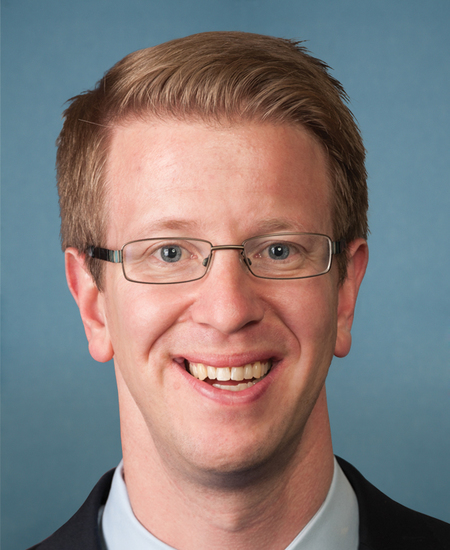
Rep. Derek Kilmer
Sponsored bills
Tyler Clementi Higher Education Anti-Harassment Act of 2021 This bill addresses harassment at institutions of higher education (IHEs). Specifically, the bill requires each IHE to include in its annual security report a statement of policy regarding harassment on the basis of a student's actual or perceived race, color, national origin, sex (including sexual orientation, gender identity, pregnancy, childbirth, a medical condition related to pregnancy or childbirth, and a sex stereotype), disability, or religion. In addition, the Department of Education may award grants to IHEs to initiate, expand, or improve programs to (1) prevent the harassment of students; (2) provide counseling or redress services to students who have been harassed or accused of subjecting other students to harassment; or (3) educate and train students, faculty, or staff to prevent harassment or address harassment if it occurs.

Securing the Rights our Veterans Earned Act or the SERVE Act This bill provides eligibility for specified Department of Veterans Affairs benefits to former members of the Armed Forces who were separated or discharged (honorably or otherwise) by reason of sexual orientation or gender identity.
This resolution expresses that the House of Representatives supports the goals of researching new interventions to prevent and treat malaria and encourages continued leadership by the United States to ensure that service member health is not jeopardized by vector-borne disease. The resolution also supports sustained or enhanced efforts to ensure that once malaria is eliminated in a country it does not return.
2020 WHIP+ Reauthorization Act This bill expands disaster indemnity programs through which the Department of Agriculture provides payments to agricultural producers for crop and milk losses resulting from hurricanes, wildfires, and other qualifying natural disasters. In particular, the bill extends the Wildfire and Hurricane Indemnity Program Plus (WHIP+), the On-Farm Storage Loss Program, and the Milk Loss Program to make losses that occurred in the 2021 and 2022 calendar years eligible for payments. Under current law, these programs provide disaster payments to agricultural producers with crop and milk losses resulting from qualifying natural disasters that occurred in the 2018 and 2019 calendar years.
This bill reauthorizes through FY2026 certain activities under the Impact Aid Program. The program provides funding to local educational agencies that have lost property tax revenue due to the presence of tax-exempt federal property or to those that have experienced increased expenditures due to enrollment of federally connected children (e.g., children living on Indian lands or military bases).
Supporting Early-childhood Educators' Deductions Act or the SEED Act This bill expands the tax deduction for the expenses of elementary and secondary school teachers to include early childhood educators.
John R. Lewis Voting Rights Advancement Act of 2021 This bill establishes new criteria for determining which states and political subdivisions must obtain preclearance before changes to voting practices may take effect. Preclearance is the process of receiving preapproval from the Department of Justice (DOJ) or the U.S. District Court for the District of Columbia before making legal changes that would affect voting rights. A state and all of its political subdivisions shall be subject to preclearance of voting practice changes for a 10-year period if 15 or more voting rights violations occurred in the state during the previous 25 years; 10 or more violations occurred during the previous 25 years, at least 1 of which was committed by the state itself; or 3 or more violations occurred during the previous 25 years and the state administers the elections. A political subdivision as a separate unit shall also be subject to preclearance for a 10-year period if three or more voting rights violations occurred there during the previous 25 years. States and political subdivisions that meet certain thresholds regarding minority groups must preclear covered practices before implementation, such as changes to methods of election and redistricting. Further, states and political subdivisions must notify the public of changes to voting practices. Next, the bill authorizes DOJ to require states or political subdivisions to provide certain documents or answers to questions for enforcing voting rights. The bill also outlines factors courts must consider when hearing challenges to voting practices, such as the extent of any history of official voting discrimination in the state or political subdivision.
Student Mental Health Helpline Act of 2021 This bill authorizes grants to support student mental health and safety helplines (i.e., a free, confidential service that is accessible via telephone and other communication platforms that assists students facing challenges with abuse, bullying, depression, self-harm, and related issues). The Substance Abuse and Mental Health Services Administration (SAMHSA) may award the grants to agencies or other subdivisions of a state, Indian tribe, or local government that are primarily responsible for health, public health, or education. Among other purposes, recipients must use funds to establish or maintain a helpline that provides information to school officials (to the extent permitted by federal privacy standards for health information) about student mental health and safety concerns. The bill also requires SAMHSA to report on the feasibility of setting up a nationally available student mental health and safety helpline.
Collaborate in an Orderly and Cohesive Manner Act This bill requires the Department of Health and Human Services (HHS) to award grants for implementing and evaluating specified models of care that integrate the delivery of behavioral health and primary care services. Specifically, HHS must award grants to primary care providers for the initial costs (e.g., hiring staff) of implementing such models. In awarding the grants, HHS must prioritize recipients that provide care to medically underserved populations and in areas where the prevalence of behavioral health conditions exceeds the national average. HHS must also provide additional incentive payments to recipients that use appropriate billing codes and quality measures for behavioral health services. In addition, HHS must award grants to national and regional organizations for providing technical assistance to health care providers and systems to improve implementation of integrated behavioral health and primary care models. Furthermore, HHS may direct its agencies to expand efforts to evaluate current and emerging integrated behavioral health and primary care models.