

Strengthen Kids' Mental Health Now Act of 2022 This bill establishes several requirements to support the provision of behavioral health services under Medicaid and other programs, particularly for children. For example, the bill temporarily requires payment for pediatric mental, emotional, and behavioral health services under Medicaid to align with Medicare payments to providers. The bill provides for a 100% Federal Medical Assistance Percentage (i.e., federal matching rate) for any associated additional expenditures. The Centers for Medicare & Medicaid Services must issue guidance on how state Medicaid programs may expand the availability of telehealth services and mental, emotional, and behavioral health services. In addition, the Health Resources and Services Administration must award grants to support (1) pediatric behavioral health care integration in communities, (2) pediatric mental health and substance use disorder workforce training, and (3) the infrastructure of pediatric hospitals and rural health clinics with respect to behavioral health services.
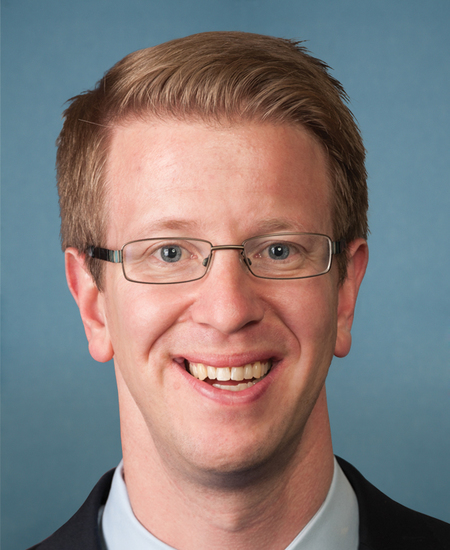
Rep. Derek Kilmer
Sponsored bills
Emmett Till Antilynching Act This bill makes lynching a federal hate crime offense. Specifically, the bill imposes criminal penalties—a fine, a prison term of up to 30 years, or both—on an individual who conspires to commit a hate crime offense that results in death or serious bodily injury or that includes kidnapping or an attempt to kidnap, aggravated sexual abuse or an attempt to commit aggravated sexual abuse, or an attempt to kill.
This resolution supports the goals and ideals of National Women's History Month and recognizes the women and organizations that continue to promote the teaching of women's history.
9-8-8 Implementation Act of 2022 This bill modifies provisions to increase access to behavioral health services, with a focus on crisis services and the 9-8-8 telecommunication system. (The 9-8-8 system provides callers with mental health or suicide crisis support and resources through the existing National Suicide Prevention Lifeline and is scheduled to take effect by July 16, 2022.) The bill reauthorizes through FY2027 and revises the National Suicide Prevention Lifeline program and requires a national suicide prevention media campaign. In addition, the Substance Abuse and Mental Health Services Administration (SAMHSA) must establish standards for a behavioral health crisis continuum of care that health care providers and communities may use in responding to individuals experiencing a behavioral health crisis. The continuum must include emergency treatment, stabilization, and related services. The bill expands Medicaid and other insurance coverage for such services. The bill further expands Medicaid coverage for behavioral health services. This includes permanently allowing coverage of certain community-based mobile crisis services and exempting some short-term stabilization services from coverage restrictions that apply to institutions for mental diseases. Additionally, the bill establishes (1) an office within SAMHSA to coordinate behavioral health activities; and (2) various grants, including a pilot program for mobile crisis care teams that respond to behavioral health crises rather than law enforcement and a capital improvement program for certain behavioral health facilities. The bill also reauthorizes through FY2027 and expands certain workforce programs for behavioral health providers. It also addresses training for emergency services dispatchers and coordination of the 9-1-1 system with the 9-8-8 system.
Veterans Exposed to Toxic PFAS Act or the VET PFAS Act This bill provides eligibility for Department of Veterans Affairs (VA) hospital care and medical services to veterans and their family members (including those in utero) who have specified conditions and resided at a military installation where individuals were exposed to perfluoroalkyl and polyfluoroalkyl substances, commonly known as PFAS. PFAS are man-made and may have adverse human health effects. Hospital care and medical services may not be furnished for a condition that is found to have resulted from a cause other than the exposure to PFAS at a military installation. The VA may provide reimbursement for hospital care or medical services provided to a family member only after the family member or provider has exhausted all claims and remedies otherwise available for payment of such care. For disability compensation purposes, the bill establishes a presumption of service-connection for specified conditions in veterans who served at a military installation at which individuals were exposed to PFAS. Under a presumption of service-connection, specific conditions diagnosed in certain veterans are presumed to have been caused by the circumstances of their military service. Health care benefits and disability compensation may then be awarded.
This resolution expresses support for the designation of Welcome Home Vietnam Veterans Day. It also honors and recognizes the contributions of veterans who served in Vietnam.
This resolution commemorates the 100th anniversary of the American College of Surgeons Commission on Cancer. The commission establishes cancer care standards in health care settings and accredits cancer programs that meet those standards.
Rural Prosperity Act of 2022 This bill addresses social, economic, and community well-being and resilience in rural communities. Specifically, the bill establishes, within the Executive Office of the President, the Office of Rural Prosperity to promote and support social and economic prosperity in rural areas. The office, among other duties, must develop (1) a strategy for rural development, and (2) metrics to measure the effectiveness of federal programs on rural areas. Additionally, the bill sets up a council that includes representatives from federal agencies and White House policy offices to ensure collaboration across federal agencies and with other stakeholders concerning the needs of rural areas. The bill also requires the Department of Agriculture to develop, and report on the implementation of, a rural prosperity action plan that addresses structural challenges that affect rural communities.
Creating a Respectful and Open World for Natural Hair Act of 2022 or the CROWN Act of 2022 This bill prohibits discrimination based on a person's hair texture or hairstyle if that style or texture is commonly associated with a particular race or national origin. Specifically, the bill prohibits this type of discrimination against those participating in federally assisted programs, housing programs, public accommodations, and employment. Persons shall not be deprived of equal rights under the law and shall not be subjected to prohibited practices based on their hair texture or style. The bill provides for enforcement procedures under the applicable laws.
Forced Arbitration Injustice Repeal Act of 2022 or the FAIR Act of 2022 This bill prohibits a predispute arbitration agreement from being valid or enforceable if it requires arbitration of an employment, consumer, antitrust, or civil rights dispute.