

Truth and Healing Commission on Indian Boarding School Policies Act This bill establishes the Truth and Healing Commission on Indian Boarding School Policies in the United States and sets forth its powers, duties, and membership. Among other duties, the commission must investigate the impacts and ongoing effects of the Indian Boarding School Policies (federal policies under which American Indian, Alaska Native, and Native Hawaiian children were forcibly removed from their family homes and placed in boarding schools). Further, the commission must develop recommendations on ways to (1) protect unmarked graves and accompanying land protections; (2) support repatriation and identify the tribal nations from which children were taken; and (3) discontinue the removal of American Indian, Alaska Native, and Native Hawaiian children from their families and tribal communities by state social service departments, foster care agencies, and adoption agencies.
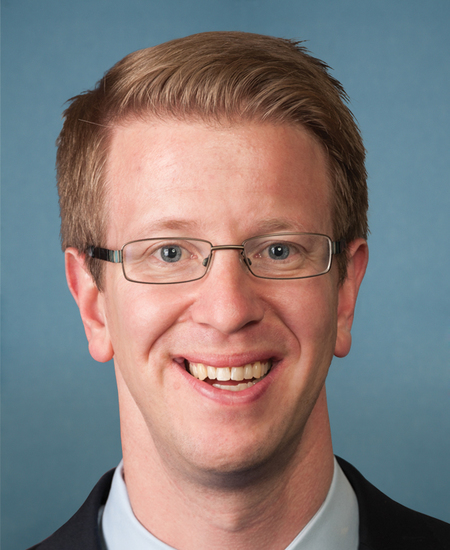
Rep. Derek Kilmer
Sponsored bills
Save Oak Flat Act This bill repeals the requirement for the Department of Agriculture to convey the 2,422 acres of Forest System land located in Tonto National Forest in Pinal County, Arizona, known as Oak Flat, to Resolution Copper Mining, LLC, in exchange for various parcels of land owned by Resolution Copper. Oak Flat is withdrawn from (1) entry, appropriation, or disposal under the public land laws; (2) location, entry, and patent under the mining laws; and (3) disposition under all laws pertaining to mineral and geothermal leasing or mineral materials.
Improving Government for America's Taxpayers Act This bill requires the Government Accountability Office (GAO), in its annual report to Congress, to consolidate matters for congressional consideration into one report, organized by policy topic, and to identify congressional oversight actions that can help agencies implement unimplemented priority recommendations. The GAO is also required to publish the above information and publish any known costs of unimplemented priority recommendations.
Mark O'Brien VA Clothing Allowance Improvement Act This bill modifies the Department of Veterans Affairs (VA) clothing allowance policy for veterans who, due to a service-connected disability, wear a prosthetic, use an orthopedic appliance (e.g., a wheelchair), or use a prescription skin medication that the VA determines causes irreparable damage to clothing. The bill requires the VA to continue the clothing allowance for such a veteran on an annual basis until the veteran elects to no longer receive the allowance, or the VA determines the veteran is no longer eligible for the allowance, whichever occurs first. The bill sets forth a procedure by which the VA must conduct reviews of clothing allowance claims to determine the continued eligibility of veterans. Specifically, the VA must conduct a review (1) five years after the date on which a veteran initially receives a clothing allowance and periodically thereafter, and (2) whenever the VA receives notice that the veteran no longer meets eligibility requirements. If a veteran is eligible for a clothing allowance based on a circumstance that is not subject to change, the VA does not need to review whether the veteran has continued eligibility. If the VA determines, as the result of a review of a claim, that a veteran no longer meets the eligibility requirements for a clothing allowance, the VA must provide notice of the determination and discontinue the clothing allowance. The notice must include a description of applicable actions that may be taken following the determination (e.g., filing a notice of disagreement). The bill also extends certain loan fee rates through January 15, 2031, under the VA's home loan program.
This resolution encourages people around the world to work to achieve the goal of zero new HIV transmissions, zero discrimination, and zero AIDS-related deaths, in order to end the HIV epidemic in the United States and around the world by 2030. The resolution supports continued funding for prevention, care and treatment services, and research programs for communities impacted by HIV and people living with HIV in the United States and globally. The resolution supports continued leadership by the United States in domestic, bilateral, multilateral, and private sector efforts to fight HIV. Finally, the resolution urges other members of the international community to sustain and scale up their support for and financial contributions to efforts around the world to combat HIV.
This resolution condemns the use of starvation of civilians as a weapon of warfare. It also calls on the U.S. government to prioritize diplomatic efforts to call out and address instances where hunger and intentional deprivation of food is being utilized as a weapon of war, including efforts to ensure that security operations do not undermine livelihoods of local populations to minimize civilian harm.
This resolution condemns Iran's state-sponsored persecution of its Baha'i minority and its continued violation of the international covenants on human rights. Further, it calls on Iran to immediately release all imprisoned or detained Baha'is, and it urges the President and the Department of State to impose sanctions on Iranian officials and others who are responsible for serious human rights abuses, including abuses against Iran's Baha'i community.
VA Work-Study Improvement Act This bill updates the Department of Veterans Affairs work-study program, including by increasing the number of hours an individual may work, modifying the minimum wage requirements, and implementing an electronic timesheet.
Build Housing with Care Act of 2022 This bill establishes a competitive grant program to support co-located childcare and housing facilities. It also requires the Government Accountability Office to study the availability and affordability of childcare for residents of public housing. Specifically, the Department of Housing and Urban Development must award the grants to eligible entities, which include community development financial institutions, public housing authorities, licensed childcare providers, government entities, housing developers, and consortia of such entities. Entities must use the grants for designing, planning, constructing, acquiring, renovating, or otherwise supporting new or existing facilities where childcare and housing providers are on the same premises.
Congressional Evidence-Based Policymaking Resolution This concurrent resolution establishes the Commission on Evidence-Based Policymaking to review, analyze, and make recommendations with respect to promoting the use of federal data for evidence-building and evidence-based policymaking. An individual is not eligible to serve on the commission if the individual is currently a Member of Congress (including a Delegate or Resident Commissioner to the Congress).