

Maddy summaryThis is a non-binding resolution expressing the House of Representatives' symbolic support for designating February 27-March 3, 2023, as "Public Schools Week." It does not create new laws, allocate funding, or directly affect any individuals or institutions. The resolution highlights the importance of public schools to democracy, equity, and student success through a series of supporting statements. As a procedural resolution, it has no legal effect beyond acknowledging the significance of public education.
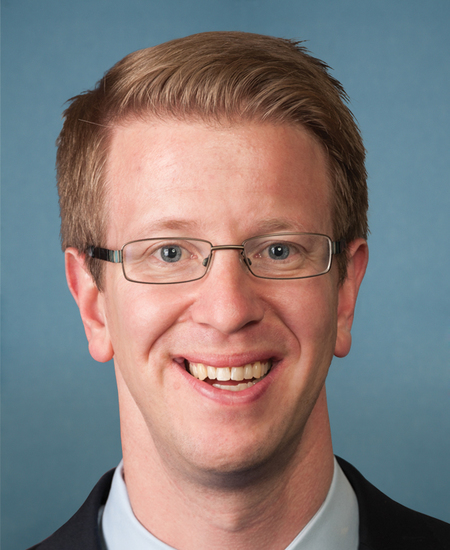
Rep. Derek Kilmer
Sponsored bills
Maddy summaryHR 1008 adds harmful algal blooms to the list of qualifying events for federal disaster assistance under the Stafford Act, enabling affected communities to access emergency aid. It also requires the CDC to conduct a study on health effects from airborne toxins during blooms within one year of enactment, to be shared with relevant congressional committees. The bill establishes a framework for federal response but does not provide new funding or directly regulate pollution sources. It primarily affects coastal and lake communities where blooms threaten public health, tourism, and local economies through potential beach closures, fishing restrictions, and property value declines.
This bill authorizes the Department of Agriculture to waive the matching funds requirement for grants under the specialty crop research initiative. Currently, entities that receive grants under the initiative must provide nonfederal matching funds (including funds from an agricultural promotion, research, and information program) equal to not less than the amount of the grant.
Maddy summaryHRES 150 is a ceremonial House resolution honoring the late civil rights leader John Robert Lewis (1940-2020). It formally recognizes his lifelong commitment to nonviolent activism, including his leadership in the Civil Rights Movement, the 1965 Selma voting rights march ("Bloody Sunday"), and his 30+ years serving as a U.S. Representative from Georgia. The resolution specifically commends his "towering achievements in the nonviolent struggle for civil rights" and his dedication to building the "Beloved Community" through justice and equality. As a commemorative resolution, it has no policy impact but serves as an official tribute to Lewis's legacy for the public and Congress.
Maddy summaryHR 724, the Arctic Refuge Protection Act, repeals the existing oil and gas program for the Arctic National Wildlife Refuge in Alaska and designates approximately 1.56 million acres of the refuge's coastal plain as federal wilderness. This bill directly affects the Arctic Refuge by permanently prohibiting oil and gas leasing and development in that specific area. The key mechanism is adding the designated land to the National Wilderness Preservation System under the Wilderness Act, requiring it to be managed for its natural conditions. This change legally protects the area from future fossil fuel extraction activities.
Boundary Waters Wilderness Protection and Pollution Prevention Act This bill withdraws approximately 234,328 acres of federal land and waters in a specified area in the Rainy River Watershed of Superior National Forest in Minnesota from entry, appropriation, and disposal under the public land laws; location, entry, and patent under the mining laws; and operation of the mineral leasing, mineral materials, and geothermal leasing laws. The area is adjacent to the Boundary Waters Canoe Area Wilderness and the Boundary Waters Canoe Area Wilderness Mining Protection Area. Land or interest in land within such area that is acquired by the United States shall be immediately withdrawn in accordance with this bill. The Forest Service is authorized to permit the removal of sand, granite, iron ore, and taconite from national forest system lands within such area if the removal is not detrimental to the water quality, air quality, and health of forest habitat within the Rainy River Watershed.
Maddy summaryThis bill prohibits the federal government from issuing oil and gas leases for exploration, development, or production on the outer Continental Shelf off the coasts of California, Oregon, and Washington. It amends the Outer Continental Shelf Lands Act to specifically block the Secretary of the Interior from authorizing such leasing in those coastal areas. The direct effect is on the Department of the Interior, which would no longer be permitted to conduct lease sales in these regions. The bill does not create new programs or funding but changes existing leasing authority.
IHS Contract Support Cost Amendment Act This bill allows tribes to receive contract support costs for activities that would otherwise be carried out by the Department of the Interior or the Department of Health and Human Services for direct operation of a program, but for which the costs are not fully covered by the amount of funds required by the Indian Self-Determination and Education Assistance Act of 1975.
Maddy summaryHR 1088, the Shirley Chisholm Congressional Gold Medal Act, authorizes a posthumous Congressional Gold Medal to honor Congresswoman Shirley Chisholm, the first African-American woman elected to Congress (1968) and the first Black candidate for a major party's presidential nomination (1972). The bill directs the Treasury Secretary to design and strike a gold medal featuring Chisholm's image, which will be presented by Congress and then permanently displayed at the Smithsonian Institution. Duplicate bronze medals may be sold to the public to cover production costs, with proceeds deposited into the U.S. Mint fund. This bill commemorates Chisholm's legacy and achievements without creating new laws or affecting any current policies.
Maddy summaryThe HELP Copays Act (HR 830) changes how health insurance plans calculate patient cost-sharing. It requires that payments made by third parties (like pharmacies, charities, or discount programs) toward medical costs count toward a patient's deductible, copay, or out-of-pocket limit. This directly affects insured individuals who receive financial assistance, discounts, or product vouchers for healthcare expenses. The law ensures these external payments reduce the patient's actual out-of-pocket costs more quickly, aligning with existing Affordable Care Act and Public Health Service Act requirements.