

Maddy summaryHR 6727 establishes the United States Foundation for International Conservation, a nonprofit organization that will provide grants to support long-term management of protected and conserved areas in eligible countries. The Foundation requires a 2:1 cost match from other sources, demands host country and community consent through binding agreements, and prioritizes areas with high biodiversity or species of significant importance. It will be governed by a Board of Directors including government officials and private sector experts, operate for 10 years with $1 million authorized for 2024 and $100 million annually from 2025-2035, and must follow international conservation standards while prohibiting funding for countries supporting terrorism or violating human rights.
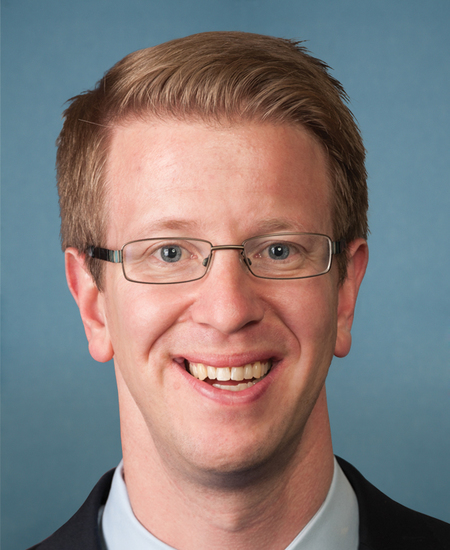
Rep. Derek Kilmer
Sponsored bills
Maddy summaryThis bill establishes a federal grant program to fund projects restoring native kelp forests, directly affecting eligible entities like fishing industry members, tribes, universities, nonprofits, and state/local governments. It requires projects to address the greatest kelp declines, focus on ecosystem resilience (including natural predator-prey relationships), integrate Indigenous knowledge, and avoid commercial harvesting. The program allocates $5 million annually (2024-2028), with at least $750,000 reserved for tribal projects, and mandates that federal funds cover up to 85% of project costs (with possible waivers). Grants prioritize areas identified in tribal or government restoration plans and require monitoring plans to measure project effectiveness.
Maddy summaryHR 7722, the Blue Ocean Energy Innovation Act of 2024, establishes a Department of Energy program to fund research and development of "blue energy technologies" - renewable energy systems or greenhouse gas capture systems operating in aquatic environments. The program directly affects the Department of Energy, national laboratories, and industries like maritime transportation, algae biofuels, and ocean tourism by providing funding to improve these technologies, reduce costs, support coastal job creation, and address unique marine environment challenges. Key mechanisms include creating a dedicated "Blue Economy Center of Excellence" at a national lab, requiring cross-agency coordination with agencies like NOAA and the Maritime Administration, and authorizing $1.5 billion over 10 years (2024-2034) for R&D. The bill aims to advance ocean-based renewable energy while supporting ecosystem restoration and workforce development, without replacing existing funding.
Maddy summaryHR 7698 establishes a new Office of Civic Bridgebuilding within the Corporation for National and Community Service to support programs reducing polarization and improving social cohesion. It authorizes $25 million annually (2025-2027) for competitive grants to nonprofits, community groups, and educational institutions to fund projects addressing local needs like healthcare gaps or environmental concerns through research-backed methods. Grantees must demonstrate how projects engage diverse communities, ensure participant safety (especially for marginalized groups), and use standardized metrics to track effectiveness. The Office will oversee grants, support training, and maintain a public research base on civic bridgebuilding best practices.
Maddy summaryThe Opportunities for Success Act of 2024 increases annual federal funding for work-based learning programs at colleges and universities, with appropriations rising from $1.5 billion in 2025 to $2.5 billion by 2029. The bill defines work-based learning to include internships, apprenticeships, cooperative education, and research positions, and establishes a funding formula that prioritizes institutions with high completion rates for Pell Grant recipients. It requires institutions to use specific portions of funds to support students with exceptional need and to ensure work-based learning positions align with students' career goals. The legislation also creates a pilot grant program for developing new work-based learning opportunities and mandates regular reporting on program effectiveness to track outcomes for participating students.
Maddy summaryHR 7634, the Plastic Pellet Free Waters Act, prohibits plastic pellets and pre-production plastic materials from being discharged into water through wastewater, spills, or runoff from specific facilities. It directly affects plastic polymer production facilities, plastic molding and forming facilities, and any point source (like packaging or transport operations) handling plastic pellets. The bill requires the EPA to issue a final rule within 60 days of enactment banning these discharges and updating all relevant wastewater, stormwater, and performance standards in permits and regulations. This creates a legal requirement for facilities to prevent plastic pellet pollution in waterways, targeting a major source of ocean plastic pollution.
Maddy summaryThis concurrent resolution (HCONRES 97) recognizes the gender wage gap, noting that women working full-time earn 84 cents for every dollar earned by men. It highlights racial disparities (e.g., Latinas earn 57 cents, Black women 69 cents) and the economic impact of the gap, including $965 billion in annual lost wages for women. As a symbolic resolution, it does not create new laws or policies but formally acknowledges the issue and reaffirms Congress’s commitment to addressing wage inequality.
Maddy summaryHRES 1075 is a ceremonial resolution recognizing AmeriCorps members, alumni, and AmeriCorps Seniors volunteers for their community service. It highlights their contributions over 30 years, including supporting vulnerable populations, disaster response, education, and environmental protection through nearly 200,000 annual volunteers. The resolution encourages nationwide recognition during AmeriCorps Week (March 10-16, 2024), urging the public to salute volunteers and promote community service. It has no funding or policy changes - only symbolic acknowledgment of existing program impacts.
Maddy summaryThis bill takes approximately 17.26 acres of land owned by the Puyallup Tribe of Indians in Pierce County, Washington, into federal trust for the tribe. The land, described as three specific parcels in Tacoma, will become part of the tribe's reservation and be managed under standard federal trust laws for tribal lands. The bill also clarifies that the U.S. government will not be liable for environmental contamination existing on the land before the trust transfer, and it prohibits the land from being used for any gaming operations under federal law.
Maddy summaryHJRES 118 proposes a constitutional amendment requiring House Representatives to submit a list of at least five qualified backup candidates before taking office. If a Representative dies, the state governor must select one from that list within 10 days, and the House Speaker immediately fills the vacancy. The temporary appointee serves until a special election is held to permanently fill the seat. This process aims to maintain House operations without delays during vacancies.