

Cultivating Opportunity and Recovery from the Pandemic through Service Act or the CORPS Act This bill makes several changes to AmeriCorps programs during the COVID-19 health emergency. Specifically, the bill: increases living allowance payments to program participants; increases educational awards for program participants; relaxes program requirements, including reducing the age requirement for AmeriCorps Seniors to 45 and older; creates a pilot program to allow state commissions to directly place individuals in approved AmeriCorps programs; and allows for targeted AmeriCorps grants to fund recovery projects in communities disproportionately affected by COVID-19. The bill also excludes AmeriCorps living allowance payments and educational awards from taxable income for program participants.
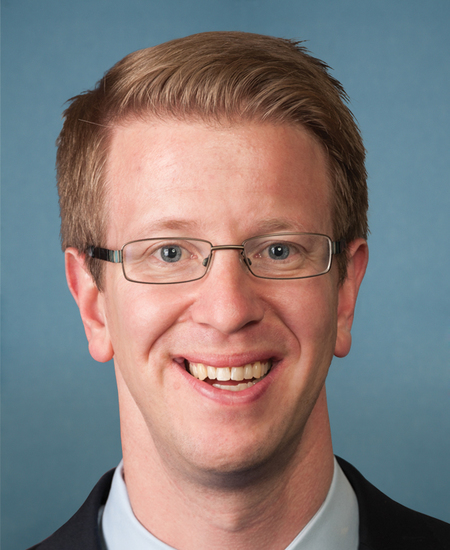
Rep. Derek Kilmer
Sponsored bills
Patsy T. Mink and Louise M. Slaughter Gender Equity in Education Act of 2021 This bill requires the Department of Education (ED) to establish an Office for Gender Equity to support state and local educational agencies, institutions of higher education, and elementary and secondary schools in fully implementing title IX of the Education Amendments of 1972, which prohibits discrimination on the basis of sex in federally funded education programs or activities. The office may provide grants and perform activities to reduce or prevent sex discrimination in all areas of education. The office must provide technical assistance and annual training to title IX coordinators and develop a handbook for conducting self-evaluations of title IX compliance. The training must address discrimination based on multiple characteristics, including race, ethnicity, national origin, disability status, religion, age, or actual or perceived sex. The office may award grants to eligible entities and partnerships that apply to carry out programs and activities designed to implement title IX and prevent and reduce sex discrimination, including programs that increase access to resources. ED must coordinate with the Institute of Education Sciences and other federal entities to investigate, identify, and disseminate best practices to (1) reduce and prevent sex stereotyping, bias, and discrimination in educational materials; (2) address sex-based harassment and violence on campuses; (3) develop counseling and career guidance training; (4) mitigate implicit bias in teaching and discipline; and (5) address the needs of students who face discrimination based on multiple characteristics.
Vanessa Guillén Military Justice Improvement and Increasing Prevention Act This bill modifies the process and policy related to the disposition of charges and convening of courts-martial for certain sexual assault cases and other specified offenses under the Uniform Code of Military Justice (UCMJ). Among other elements, the bill provides that the determinations on the preferral, disposition, and referral of charges for specified offenses under the UCMJ must be made by a commissioned officer of the Armed Forces who is designated as a court-martial convening authority (in grade O-6 or higher) and who is available for detail as trial counsel, has significant trial experience, and is outside the chain of command of the member subject to the charges.
Minority Business Resiliency Act of 2021 This bill permanently authorizes the Minority Business Development Agency (MBDA) and requires the MBDA to promote and administer programs that assist the development of minority business enterprises (MBEs). Specifically, the bill requires the MBDA to (1) provide assistance to MBEs in domestic and foreign markets by making available specified resources, (2) promote the position of MBEs in local economies, and (3) collect data on the causes of MBE success or failure and research how economic conditions affect the development of MBEs. The bill establishes formal processes for the MBDA Business Center Program and the MBDA Rural Business Center Program through which business centers provide programs and services to support MBEs. The bill also establishes new initiatives to promote economic resiliency for minority businesses, including (1) an annual forum to review problems and programs relating to capital formation by MBEs, (2) a study and report on alternative financing solutions for MBEs, and (3) entrepreneurship education grants for certain institutions of higher education to develop and implement entrepreneurship curricula. Further, the bill establishes grants for (1) certain nonprofit organizations that provide services to MBEs as one of their primary activities, and (2) MBEs for the purpose of supporting MBEs or helping MBEs remain in business. The Government Accountability Office must report on the programs carried out pursuant to the bill.
Tribal Tax and Investment Reform Act of 2021 This bill treats Indian tribal governments as states for purposes of the annual allocation of the tax-exempt bond volume cap. It also repeals provisions that limit an Indian tribal government's eligibility to issue tax-exempt bonds or to be exempt from specified excise taxes to transactions involving the exercise of an essential government function customarily performed by state and local governments. The bill (1) treats employee benefit or pension plans maintained by Indian tribes and domestic relations orders issued pursuant to tribal law in the same manner as plans maintained by states and domestic relations orders issued pursuant to state law; and (2) treats tribal charities and foundations in the same manner as charities and foundations funded and controlled by other governmental entities for purposes of the tax-exempt status of, and deduction for contributions to, such organizations. The bill gives Indian tribes or tribal organizations access to the Federal Parent Locator Service if they are eligible for a grant to operate a child support enforcement program. It makes those tribes and tribal organizations eligible to participate in the program that collects past-due support from individual tax refunds. An Indian tribal government may determine whether a child has special needs for the purpose of the tax credit for the adoption of a child with special needs.
Bolstering Long-term Understanding and Exploration of the Great Lakes, Oceans, Bays, and Estuaries Act or the BLUE GLOBE Act This bill addresses data collection and monitoring of the Great Lakes, oceans, bays, estuaries, and coasts. The bill increases domestic and international coordination to enhance data management and monitoring of the Great Lakes, oceans, bays, estuaries, and coasts. It adds programs for the application and development of innovative technology to the list of technology programs used to combat illegal, unreported, and unregulated fishing. It also modifies requirements related to the scientific workforce in areas of oceanic and atmospheric research and development to include investigating whether there is a workforce shortage, workforce diversity, actions the federal government can take to increase diversity in the scientific workforce, and actions it can take to shorten the hiring backlog for such workforce. The National Oceanic Atmospheric Administration (NOAA) must (1) ensure that a goal of its cooperative institutes is to advance or apply emerging technologies, (2) create an ocean innovation prize to catalyze the rapid development and deployment of data collection and monitoring technology, and (3) seek to enter into an agreement with the National Academy of Sciences to assess the potential for an Advanced Research Projects Agency-Oceans. The bill also reauthorizes through FY2024 various NOAA hydrographic programs, including nautical mapping and charting. Additionally, relevant federal agencies must measure the value and impact of industries related to the Great Lakes, oceans, bays, estuaries, and coasts on the U.S. economy.
Keep America's Waterfronts Working Act This bill addresses the preservation and accessibility of waterfronts in coastal states. The bill directs the National Oceanic and Atmospheric Administration (NOAA) to establish a Working Waterfront Task Force that will be designed to identify and address critical working waterfront needs with respect to cultural and economic importance, environmental threats, and market conditions for water-dependent businesses. NOAA must also establish a Working Waterfront Grant Program. Under the program, NOAA may award grants to coastal states with approved working waterfront plans in place to preserve and expand access to coastal waters for people engaged in fishing, aquaculture, boat building, and other water-dependent businesses. In addition, NOAA is authorized to award grants to coastal states for the purpose of developing or revising working waterfront plans. States are allowed to allocate any grant money received to eligible Indian tribes, local governments, and other entities. Each state that is awarded a grant must contribute at least 25% of matching funds towards the total cost of the project carried out with the grant, subject to certain exceptions. The bill establishes the Working Waterfronts Preservation Loan Fund to provide loans to coastal states for the purpose of implementing working waterfront plans.
Blue Carbon for Our Planet Act This bill addresses the protection and restoration of coastal blue carbon ecosystems, which are vegetated coastal habitats and include mangroves, tidal marshes, and other tidal or salt water wetland that have the ability to sequester and store carbon. Specifically, the bill establishes the Interagency Working Group on Coastal Blue Carbon to (1) develop and maintain a map of these ecosystems, (2) assess the impediments to the protection and restoration of these ecosystems, and (3) establish national protection and restoration priorities regarding these ecosystems. The National Oceanic and Atmospheric Administration (NOAA) must chair the group and establish a national goal for conserving ocean and coastal blue carbon ecosystems within the territory of the United States and set targets to restore degraded coastal blue carbon ecosystems as appropriate. NOAA must also (1) establish integrated pilot programs to restore degraded coastal blue carbon ecosystems, and (2) enter into an agreement with the National Academy of Sciences to assess the long-term effects of geologic stores of carbon dioxide in a deep seafloor environment. Finally, the bill establishes requirements concerning the stewardship and standardization of blue carbon data in the Coastal Carbon Data Clearinghouse.
Conceding Our Veterans' Exposures Now And Necessitating Training Act of 2021 or the COVENANT Act of 2021 This bill establishes a presumption of service-connection for certain illnesses related to exposure to airborne hazards or open burn pits and addresses the care available through the Department of Veterans Affairs (VA) for veterans with illnesses they assert to be related to exposures during their service. Specifically, the bill establishes a presumption of service-connection for certain illnesses becoming manifest in covered veterans to a degree of 10% or more. Under a presumption of service-connection, specific conditions diagnosed in certain veterans are presumed to have been caused by the circumstances of their military service. Health care benefits and disability compensation may then be awarded. A covered veteran is any veteran who served on or after August 2, 1990, in Bahrain, Iraq, Kuwait, Oman, Qatar, Saudi Arabia, Somalia, or the United Arab Emirates; or served on or after September 11, 2001, in Afghanistan, Djibouti, Egypt, Jordan, Lebanon, Syria, Yemen, Uzbekistan, the Philippines, or other countries the VA determines to be relevant. Among other elements, the bill requires the VA to provide medical examinations for veterans who submit a claim for disability compensation for an illness not listed in the bill but that is asserted to be related to airborne hazard or open burn pit exposure; authorizes the VA to stay pending claims for disability compensation related to the service and illnesses covered by this bill until the implementation of the bill; and provides VA hospital care, medical services, and nursing home care to covered veterans.
Presumptive Benefits for War Fighters Exposed to Burn Pits and Other Toxins Act of 2021 This bill establishes a presumption of service-connection for specified diseases associated with exposure to burn pits (an area used for burning solid waste in open air without equipment) and other toxins by veterans who were awarded specified medals on or after August 2, 1990. Under a presumption of service-connection, specific conditions diagnosed in certain veterans are presumed to have been caused by the circumstances of their military service. Health care benefits and disability compensation may then be awarded. Under the bill, if the Department of Veterans Affairs (VA) receives a written petition to add a disease to the list, the VA must request a determination by the National Academies of Sciences, Engineering, and Medicine with respect to whether there is a positive association between the exposure of humans to a covered toxin and the occurrence of the disease in humans. The bill makes disability or death of certain employees from specified diseases compensable as a work injury. Specifically, such employees are those who were employees of the Department of State, the Department of Defense, or an element of the intelligence community on or after August 2, 1990, and carried out job responsibilities for at least 30 days during a contingency operation.