

Maddy summaryThis bill blocks federal funding for states or local governments that suspend open or concealed firearm carry licenses. It directly affects state and local authorities by denying them access to federal financial assistance (such as for infrastructure or public programs) if they implement such license suspensions. The key mechanism is a funding penalty: any state or local government suspending gun permits forfeits eligibility for federal grants defined under 31 U.S.C. § 7501(a)(5). The policy change is a direct condition on federal aid, not a new regulation on gun ownership.
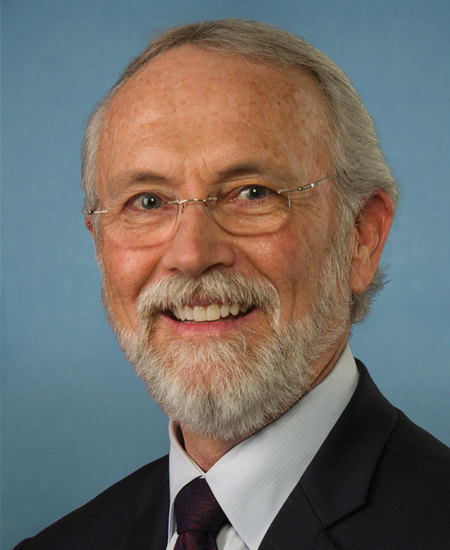
Rep. Dan Newhouse
Sponsored bills
Maddy summaryHR 5203, the AGRITOURISM Act, establishes a new Office of Agritourism within the U.S. Department of Agriculture (USDA). This office, led by a Director appointed by the Secretary, will promote agritourism activities - including farm-based education, recreation, direct sales, accommodations, and dining - to support rural agricultural businesses. The bill requires the USDA to coordinate with existing agencies, update programs, provide technical assistance, and share best practices for agritourism businesses. It directly affects small and family-run farms in all states by integrating agritourism into USDA's existing support systems. The legislation focuses on structural changes within the USDA, not new funding or regulations.
Maddy summaryHR 5654, the "Hot Showers Act," directs the Secretary of Energy to withdraw a specific proposed rule on water heater energy efficiency standards. The bill mandates the withdrawal of the "Energy Conservation Program: Energy Conservation Standards for Consumer Water Heaters" rule (88 Fed. Reg. 49058, July 28, 2023), and prohibits the Department of Energy from finalizing, implementing, or enforcing that rule or any substantially similar rule. This action directly affects the Department of Energy and manufacturers of consumer water heaters by halting the proposed efficiency standards. The bill is procedural, focusing solely on withdrawing the rule without creating new policy.
Maddy summaryHR 5652, the Stop Overdose in Schools Act, establishes a federal pilot program to help schools respond to opioid overdoses. It provides grants to school districts to train staff (like resource officers and nurses) in administering opioid reversal medications, purchase necessary kits, and raise awareness about opioid use disorder. The bill prioritizes rural schools (50% of grants) and districts in areas with high youth overdose rates (the other 50%). It also sets aside $5 million annually for fiscal years 2024 and 2025 to fund this program, requiring grant recipients to train designated school personnel in opioid reversal agent use.
Maddy summaryHR 5664 amends the Water Infrastructure Finance and Innovation Act to improve access to funding for small communities (populations under 25,000) and rural water projects, including those serving tribal communities. The bill lowers the minimum project cost threshold from $5 million to $1 million, creates new technical assistance for small communities to develop project proposals, and clarifies eligibility for rural water projects under various federal laws. It introduces "collaborative project delivery methods" like design-build and construction management at-risk, and requires a study on these methods' implementation. The bill extends annual funding through 2027 with $68 million for EPA and $15 million for the Army Corps of Engineers.
Maddy summaryHRES 720 designates the week of September 24-30, 2023 (and annually thereafter) as "Gold Star Families Remembrance Week" to honor families who have lost loved ones in military service. It specifically recognizes the sacrifices of families of fallen service members and veterans, and encourages Americans to observe the week through community service and celebrating the lives of those who died protecting the nation. This resolution is procedural and symbolic, with no new funding, regulations, or policy changes - only a formal designation to honor these families. It directly affects Gold Star families (those with members who died in military service) and the broader public through its call for observance.
Maddy summaryHRES 684 is a symbolic congressional resolution passed by the U.S. House of Representatives on September 14, 2023, condemning New Mexico Governor Michelle Lujan Grisham's emergency order that temporarily suspended open and concealed carry firearm rights for 30 days. The resolution asserts the order violated the Second Amendment, citing Supreme Court precedents (Heller, McDonald, Bruen) and noting a federal judge had already blocked the order's firearm restrictions. It does not change any laws or impose legal consequences - it is solely a formal expression of disapproval from Congress. The resolution directly addresses the Governor's actions but has no effect on New Mexico's laws or citizens' rights.
Maddy summaryHR 5635, the Northern Arizona Protection Act, nullifies a specific presidential proclamation (Proclamation 10606) that established the Baaj Nwaavjo I’tah Kukveni-Ancestral Footprints of the Grand Canyon National Monument. It also prohibits the future designation or extension of national monuments within the defined area without explicit approval from Congress. This bill directly affects federal land management decisions in northern Arizona, specifically blocking the use of the Antiquities Act for monument creation or expansion in that region. The key mechanism is a legal restriction requiring congressional authorization for any new monument designation in the specified area, effectively limiting presidential authority under the Antiquities Act there.
Maddy summaryThis bill extends existing programs that provide payments to counties and states with federal land, primarily to support local schools and communities. It updates key deadlines, extending secure payments through 2026, special project authorities through 2029, and county fund expenditure authority through 2028. A new pilot program allows regional foresters to appoint resource advisory committee members directly, with this authority ending October 1, 2028. These changes directly affect rural counties and states managing federal lands, maintaining current funding mechanisms without altering eligibility or payment amounts.
Maddy summaryHR 4831, the Fair Pay for Federal Firefighters Act, increases pay for wildland firefighters employed by the Forest Service or Department of the Interior during fiscal years 2024-2025. It establishes special pay rates (ranging from 1.5% to 42% above standard General Schedule rates, depending on grade) that replace regular pay for these workers. The bill also creates a new "incident response premium pay" provision, entitling eligible firefighters to 450% of their hourly rate for each day deployed on qualifying wildfires or fire-related incidents, capped at $9,000 annually per employee. This premium pay is excluded from calculations for benefits like leave accruals, overtime, or retirement. The bill directly affects federal wildland firefighters whose duties focus on forest, range, or wildland fires (not structural fires).