

This resolution supports the designation of National Teach Ag Day and recognizes the important role of agricultural education and the National FFA Organization in developing the next generation of agricultural leaders.
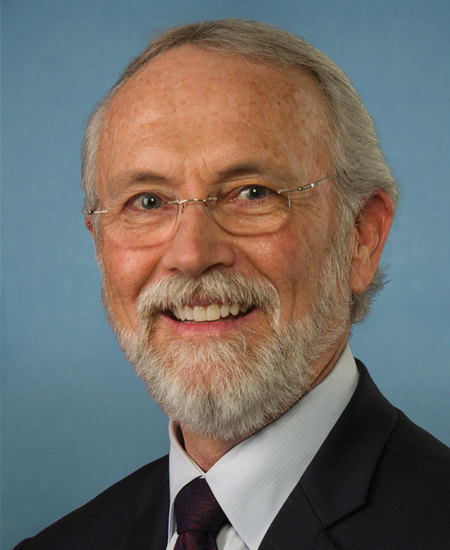
Rep. Dan Newhouse
Sponsored bills
Maddy summaryThis bill increases loan limits for farmers under the Farm Service Agency. It raises the maximum farm ownership loan amount from $600,000 to $850,000 (and guaranteed loans from $1.75 million to $3.5 million), and operating loans from $400,000 to $750,000 (guaranteed from $1.75 million to $3 million). It also doubles the microloan cap from $50,000 to $100,000. Additionally, the bill creates a new process allowing distressed guaranteed loans to be refinanced into direct loans if borrowers can't resolve issues with lenders and the farm operation can become financially viable. These changes directly affect farmers and ranchers seeking credit through the Farm Service Agency.
Maddy summaryHR 1147, the Whole Milk for Healthy Kids Act of 2023, allows schools participating in the National School Lunch Program to offer whole milk as an option during lunch. It amends the school lunch law to explicitly permit schools to serve flavored and unflavored whole milk alongside reduced-fat, low-fat, and fat-free milk choices for students. The bill also requires the Secretary of Agriculture to adjust meal regulations to account for saturated fat from whole milk, ensuring it doesn't count against meal fat limits. This change directly affects participating schools and the students who receive school lunches, expanding their milk beverage options.
Maddy summaryThe PHONE Act of 2023 creates a temporary freeze on phone number reassignment for fixed wireline voice service subscribers in areas affected by major disasters. It prevents phone companies from reassigning landline numbers during a 1-year "covered period" (starting from a presidential disaster declaration) unless the subscriber requests it, and prohibits early termination fees if service is canceled due to disaster-related inaccessibility of a home. Subscribers can later resubscribe to the same number without connection fees, and states must identify affected areas for the FCC to track. This directly affects landline users in disaster zones who might otherwise lose their numbers during recovery.
Maddy summaryThe Defense of Property Rights Act (HR 6758) would allow property owners to seek compensation in either U.S. District Court or the U.S. Court of Federal Claims when government actions - such as regulations or physical takings - deprive them of property rights without "just compensation." It repeals a law that previously forced owners to choose between courts, clarifies that "just compensation" includes full market value and business losses (with interest), and shifts the burden of proof to the government to justify regulatory actions. The bill directly affects individuals and businesses owning real estate, water rights, mineral rights, or other property protected under the Fifth Amendment, particularly when government rules significantly restrict property use or value. It sets a 6-year statute of limitations for claims and requires courts to award attorney fees to successful plaintiffs.
Maddy summaryThe Hydropower Clean Energy Future Act (HR 4045) designates hydropower as an essential renewable resource in federal programs and modifies definitions to explicitly include it in renewable energy standards. It creates exemptions for small hydropower projects (up to 40 megawatts) from certain licensing requirements and establishes an expedited licensing process for "next-generation" hydropower projects using newer technologies not in widespread use. The bill also requires a report on market barriers to hydropower development, modernizes the licensing process with specific timelines (including 2-year deadlines for final licensing decisions), and promotes development at existing non-powered dams and closed-loop pumped storage facilities. This legislation directly affects hydropower developers, federal agencies, and state governments involved in energy regulation and environmental review processes.
Maddy summaryThis bill prohibits federal funding for housing undocumented immigrants on public lands managed by specific federal agencies. It blocks the use of federal money to provide temporary or permanent shelter (including encampments) for "specified aliens" - defined as individuals not legally admitted to the U.S. - on lands under the National Park Service, Bureau of Land Management, Fish and Wildlife Service, or Forest Service. The restriction applies to all housing arrangements, including leases or contracts, and directly affects how these agencies manage public lands. The policy change prevents federal agencies from using taxpayer funds to support shelter for non-admitted immigrants on federally managed properties.
Maddy summaryThe Immigration Visa Efficiency and Security Act of 2023 caps family-based immigrant visas for any single country at 15% (2% for dependent areas) of total visas annually, addressing longstanding visa backlogs for certain nations. It establishes new requirements for H-1B employers, including posting job openings on a Department of Labor website, meeting specific wage requirements (minimum $90,000 or prevailing wage), and preventing discrimination against workers. The bill also creates enhanced procedures for investigating H-1B violations, increases penalties for noncompliance, prohibits certain visas for nationals of "foreign adversary countries," and establishes a new pathway for employment-based immigrants to adjust their status with specific job requirements during the process.
Maddy summaryHRES 793 is a resolution passed by the U.S. House of Representatives calling on Hamas to immediately release all 199 hostages taken during Hamas' October 7, 2023 attack on Israel. The resolution condemns Hamas for the attack, the taking of hostages, and threats against hostages, while stating that holding hostages violates international humanitarian law under the Geneva Conventions. It demands the immediate release of all hostages and expresses sympathy for victims and their families. As a symbolic resolution, it does not create legal obligations but formally expresses the House's position.
Maddy summaryHRES 683 is a non-binding resolution expressing the House's support for diplomatic efforts to encourage Mexico to fulfill annual water delivery commitments under the 1944 U.S.-Mexico treaty. The treaty requires Mexico to deliver an average of 350,000 acre-feet of water annually (over a 5-year cycle) to the U.S., but Mexico has historically delayed deliveries until the cycle ends. The resolution specifically acknowledges water shortages faced by South Texas farmers and urges Mexico to meet its annual obligations, while supporting negotiations for more reliable water agreements. It does not create new legal requirements but formally encourages diplomatic action to address the delivery delays.