

Maddy summaryHR 3269, the Law Enforcement Innovate to De-Escalate Act, exempts specific less-than-lethal projectile devices from federal firearm taxes and National Firearms Act restrictions. The bill defines these devices as those firing projectiles at under 500 feet per second and designed not to cause death or serious injury. This directly affects law enforcement agencies using such devices and manufacturers producing them, by removing tax burdens and registration requirements. The key change is creating a clear legal exemption for these devices under federal law, streamlining their use for de-escalation purposes.
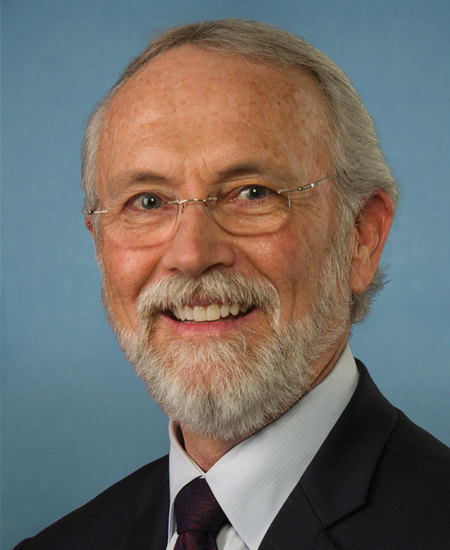
Rep. Dan Newhouse
Sponsored bills
Maddy summaryThe Save Our Sequoias Act establishes a coordinated approach to protect giant sequoia groves in California from wildfires, insects, and drought. It creates a Giant Sequoia Lands Coalition including federal agencies, state governments, and the Tule River Indian Tribe to assess grove health, develop protection projects, and recommend forest management activities. The bill streamlines implementation of certain projects through categorical exclusion from environmental reviews, authorizes $10-40 million annually for conservation efforts, and establishes a fund for philanthropic support of sequoia protection.
Maddy summaryThis bill requires the Secretary of Agriculture to suppress wildfires on specific National Forest System lands within 24 hours of detection. It directly affects lands classified as high-risk - those in severe drought (D2+), under National Wildland Fire Preparedness Level 5, or in the top 10% of fire exposure zones. Key provisions mandate immediate suppression of prescribed fires that exceed limits, prohibit hindering state/local firefighting efforts, and restrict using fire as a management tool to only compliant prescribed burns. Backfires or burnouts may only be initiated with an incident commander’s order or for firefighter safety, and must be controlled until extinguished.
Maddy summaryThis bill codifies and expands existing U.S. sanctions targeting Chinese entities involved in fentanyl-related activities. It authorizes the President to impose financial sanctions on foreign persons - including Chinese government entities, ports, ships, manufacturers, and online marketplaces - that facilitate the international flow of illicit synthetic narcotics or their precursors. Key provisions include blocking U.S. financial transactions with targeted entities, requiring congressional reporting on enforcement, and excluding intelligence/law enforcement activities from sanctions. The bill directly affects Chinese entities operating in Hong Kong, Macau, or mainland China that contribute to fentanyl proliferation, with sanctions applying to property or transactions within U.S. jurisdiction.
Maddy summaryHR 10459 establishes a federal Joint Task Force to Counter Illicit Synthetic Narcotics (JTF-ISN) to coordinate agency efforts against synthetic opioid trafficking. The task force, led by a presidentially appointed Director reporting to the Attorney General, includes members from Justice (DEA, FBI), Treasury (FinCEN, IRS), Homeland Security (CBP, ICE), State, Commerce, Defense, and intelligence agencies. It requires regular congressional reports on operations, funding needs, and efforts to disrupt trafficking networks - particularly those linked to foreign entities like China - while explicitly limiting the task force to targeting large-scale trafficking, not personal use or low-level dealing. The bill does not create new agency powers but mandates better interagency coordination to address the opioid crisis through strategic operations and information sharing.
Maddy summaryThis bill requires Chinese shipping companies to properly declare fentanyl precursors and related chemicals on all shipments to the U.S., with strict customs reporting rules. It imposes civil penalties of up to $250,000 or 0.025% of a vessel’s cargo value for non-compliance, doubling for falsified records and escalating for repeated violations. The penalties collected fund U.S. drug enforcement efforts targeting fentanyl trafficking. It directly affects Chinese entities (including those with significant Chinese ownership) involved in shipping these chemicals to the U.S. or cooperating jurisdictions.
Maddy summaryThis bill cancels Executive Order 14072, which aimed to protect old-growth forests, and prohibits the Agriculture and Interior Secretaries from implementing, enforcing, or developing rules related to that order or similar policies. It specifically blocks the finalization of a planned environmental review for managing old-growth forests across national forests, as outlined in a June 2024 Forest Service notice. The bill directly affects federal forest management decisions by halting actions tied to the canceled executive order. It focuses on reversing specific administrative steps rather than creating new environmental standards.
Maddy summaryThis bill requires Medicare Advantage plans to implement electronic prior authorization systems by 2027 and publish detailed data on their approval and denial rates for medical services by 2026. It directly affects Medicare Advantage plans (private insurers offering Medicare coverage) and their enrollees (seniors 65+), mandating transparency about prior authorization decisions, processing times, and appeal outcomes. Key provisions include requiring plans to report annual statistics on request approvals/denials, average processing times, and use of technology, with this data published publicly by the Centers for Medicare & Medicaid Services. The bill also sets timelines for plan responses to prior authorization requests and mandates reports to Congress on implementation and impacts.
Maddy summaryThe Maximum Pressure Act (HR 6114) is a legislative proposal that would maintain and expand U.S. sanctions against Iran. The bill would codify existing sanctions, require Iran to meet 12 specific conditions before sanctions could be lifted (including ending support for terrorism, releasing hostages, and ending nuclear enrichment), and expand sanctions on Iran's Revolutionary Guard Corps and missile programs. It also establishes new reporting requirements for the U.S. government to monitor Iran's activities and the impact of sanctions. The legislation would require congressional review before any sanctions could be lifted or modified, preventing the executive branch from unilaterally easing restrictions.
Maddy summaryThis bill, HR 5796, prohibits the Department of Health and Human Services from implementing a proposed rule requiring minimum staffing levels in nursing homes. It creates an advisory panel of 15 members - including rural nursing home staff and experts - to study workforce shortages and report on access barriers for seniors, especially in rural areas. The panel must submit an initial report within 60 days, analyzing staffing challenges and recommending solutions to strengthen the nursing home workforce. These provisions directly aim to prevent nursing home closures (like the 129 that occurred in 2022) that threaten rural seniors’ access to care.