

Maddy summaryHR 1309, the "Protect America’s Lands Act," prohibits national securities exchanges from processing transactions involving securities issued by "natural asset companies." These are defined as companies that hold rights to manage specific land areas for conservation, restoration, or sustainable use, with the primary purpose of maintaining or growing natural assets and ecosystem services. The bill directly affects financial markets by restricting how securities tied to environmental land management are traded, not landowners or conservation efforts. It amends the Securities Exchange Act of 1934 to create this new regulatory barrier for such financial instruments. The bill focuses on securities regulation, not direct land protection or policy changes for land use.
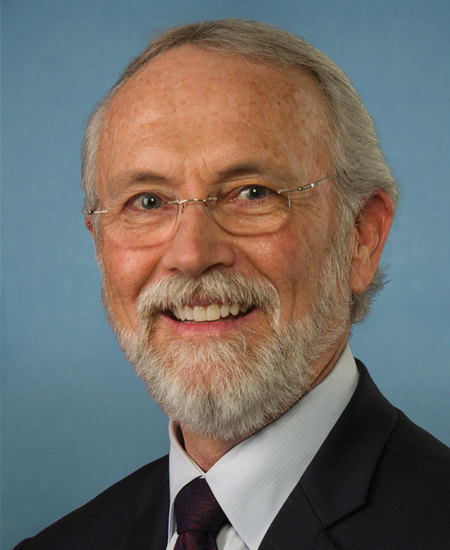
Rep. Dan Newhouse
Sponsored bills
Maddy summaryHR 1330 establishes the Smithsonian National Museum of the American Latino, authorizing its location within the National Mall's "Reserve" area. The bill requires the Smithsonian Board to coordinate with federal agencies managing potential museum sites, including notifying relevant congressional committees before land transfers. It mandates that the museum's exhibits and programs accurately represent the diverse cultures, histories, and viewpoints of Hispanic and Latino communities in the U.S., seeking input from a broad range of community experts. The Smithsonian must also submit regular reports to Congress detailing compliance with these representation requirements.
Maddy summaryThis bill prohibits financial institutions and payment processors from using specific merchant category codes that separately identify businesses selling firearms or ammunition. It directly affects banks, credit card networks, and payment processors that handle transactions for firearm retailers. The key provision amends the Truth in Lending Act to require these covered entities to treat firearm merchants the same as other businesses for transaction categorization purposes. The law does not change gun ownership laws or restrict firearm sales, only addressing how financial transactions are classified.
Maddy summaryThis bill creates a 10% tax credit for businesses that modernize or replace freight railcars, directly affecting railcar owners and manufacturers. To qualify, railcars must meet an 8% improvement standard in capacity or fuel efficiency, be built or modernized after enactment, and replace two scrapped railcars. The credit is limited to 1,000 qualified railcars per business annually, with reporting requirements for the Treasury to track claimed credits, scrapped railcars, and new railcar production. The credit applies to railcars placed in service after December 2024, ending three years after enactment.
Maddy summaryHR 1206, the WEST Act of 2025, cancels a specific Bureau of Land Management (BLM) rule titled "Conservation and Landscape Health" (published in the Federal Register on April 3, 2023). The bill directly affects the BLM and anyone subject to the rule, which governed land management practices on public lands. Its key mechanism is a straightforward provision declaring the rule "shall have no force or effect," effectively removing it from federal regulations without creating new policies. This is a procedural action targeting a specific existing regulation, not a broader policy change.
Maddy summaryHR 1207 transfers the administration of the Food for Peace Act's food aid programs from USAID to the Department of Agriculture. This means the Agriculture Secretary, not the USAID Administrator, will now handle all related functions, including managing assets, grants, and rules for distributing U.S. food aid overseas. The bill requires immediate implementation upon enactment, with references in law automatically updating to the Agriculture Secretary, and allows for swift interim rules to maintain program continuity. It also specifies that the Famine Early Warning Systems Network will continue under Agriculture, and the Department must consult with the State Department on certain aspects of the program.
Maddy summaryThe HALT Fentanyl Act (HR 27) creates a new category of Schedule I controlled substances for "fentanyl-related substances" defined by specific chemical modifications to fentanyl. This law directly affects researchers, medical professionals, and law enforcement by expanding the legal definition of fentanyl-related substances to include many structurally similar compounds. Key provisions include streamlined registration processes for research on these substances, allowing researchers to conduct studies with expedited procedures if related to FDA-approved drug development or government-funded research. The bill requires the Attorney General to issue implementing rules within six months and includes penalties for violations involving these substances.
Maddy summaryHR 1131 exempts certain family farms and small businesses from being counted as assets when calculating financial need for federal student aid under the Higher Education Act. Specifically, it amends the law to exclude the net value of a family farm where the family resides and small businesses (with ≤100 employees) owned by the family from need analysis calculations. This change directly affects students from qualifying family farm or small business households when applying for federal financial aid. The exemption applies to need analysis conducted for award years beginning after the bill's enactment date. The bill modifies Section 480(f)(2) of the Higher Education Act of 1965 to implement this policy change.
Maddy summaryThis bill expands 529 college savings account flexibility by allowing funds to cover costs for industry-recognized postsecondary credentials, not just traditional degrees. It defines "qualified expenses" to include tuition/fees for recognized credential programs (like certifications or apprenticeships), required testing fees, and continuing education needed to maintain credentials. To qualify, programs must meet specific criteria, such as appearing on state lists under the Workforce Innovation and Opportunity Act or being listed in VA or Defense directories. The change applies to 529 distributions made after the law's enactment, giving families more options to use these accounts for job-focused training.
Maddy summaryHR 1086, the Agriculture Export Promotion Act of 2025, increases funding for two key U.S. Department of Agriculture export programs to boost agricultural trade. It raises the Market Access Program budget from $255 million to $489.5 million annually and doubles the Foreign Market Development Cooperator Program base funding from $200 million to $400 million, with cooperator funding increasing from $34.5 million to $69 million. These changes, effective through 2029, address years of stagnant funding while aiming to counter competitive disadvantages from foreign agricultural export programs. The bill directly supports U.S. agricultural producers - from apple growers to seafood exporters - by expanding access to international markets through these programs.