

Maddy summaryThe Pacific Northwest Gray Wolves Relief Act of 2025 requires the Secretary of the Interior to reissue a 2020 federal rule that removed gray wolves from the endangered species list. This reissued rule would apply exclusively to gray wolf populations in Oregon and Washington, ending federal protections for wolves in those states. The bill mandates this reissuance within 60 days of enactment, directly affecting gray wolf management in Oregon and Washington. As a result, gray wolves in these states would no longer be classified as federally endangered under the Endangered Species Act.
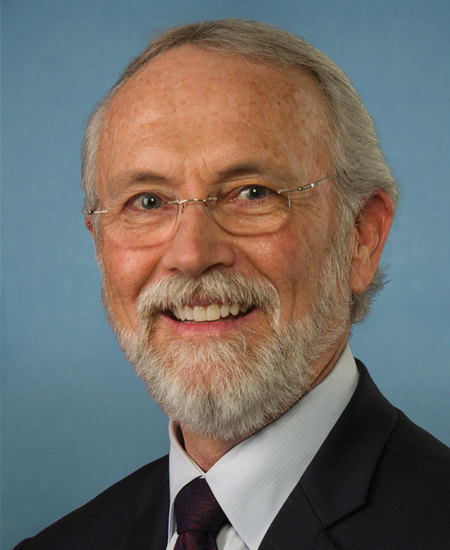
Rep. Dan Newhouse
Sponsored bills
Maddy summaryHR 2073, the Defending our Dams Act, prohibits federal funding for any study, planning, or technical assistance related to removing or altering the Lower Snake River dams in Washington State. It specifically blocks the use of federal funds for evaluating dam removal alternatives, including replacements for power, flood control, or navigation. The bill also restricts spillage operations at these dams without explicit approval from the Army Corps of Engineers and Bonneville Power Administration, requiring consideration of all Columbia River System operations. The law directly affects federal agencies' ability to fund or plan for changes to the four specific dams: Ice Harbor, Lower Monumental, Little Goose, and Lower Granite.
Maddy summaryHRES 631 is a symbolic House resolution (not a law) declaring that the U.S. national debt - citing $36.2 trillion in public debt as of January 2025 - is a threat to national security. It references debt-to-GDP ratios, interest expenses, and warnings from former defense officials like James Mattis and Dan Coats to support this stance. The resolution calls for restoring budget process reforms and addressing fiscal challenges but contains no binding policy changes or new spending rules. It affects no specific groups, as it is a formal congressional declaration without legislative effect.
Maddy summaryThis resolution (HRES 616) is a symbolic, non-binding expression of support for designating July 2025 as "American Grown Flower and Foliage Month." It recognizes the domestic flower and foliage industry’s economic impact - supporting hundreds of growers, thousands of small businesses, and tens of thousands of jobs - while highlighting that only 20% of flowers sold in the U.S. are domestically grown. The resolution urges consumers to choose domestically grown floral products to support U.S. farmers and the agricultural economy, but it does not create new laws, regulations, or funding. As a procedural resolution, it has no direct effect on policy or industry operations.
Maddy summaryHR 4784, the Don Young American Grown Act, requires that cut flowers and cut greens displayed officially in federal buildings - specifically in the Executive Office of the President, State Department, or Defense Department - must be grown in the United States. This affects federal facilities and their display practices, not the general public or commercial markets. The bill includes an exception allowing federal employees to use imported items for personal displays. It defines "produced in the United States" to include all states, the District of Columbia, territories, and federally recognized tribal lands. The rule takes effect one year after enactment.
Maddy summaryThe Biochar Research Network Act of 2025 establishes a national network of up to 20 research sites to study how biochar (a charcoal-like substance) improves soil health, carbon sequestration, and farming practices. It directs the Agriculture Department to fund research testing biochar across diverse soils, climates, and agricultural systems to assess its impact on crop yields, climate mitigation, and profitability for farmers, ranchers, foresters, and land managers. The bill authorizes $50 million annually from 2026 to 2030 for this research, focusing on practical, science-based guidance for sustainable biochar use. The network will generate data to help land managers adopt biochar for soil health, carbon reduction, and resilience to extreme weather.
Maddy summaryThe Parity for Tribal Law Enforcement Act enables tribal law enforcement officers who have contracted federal law enforcement duties under the Indian Self-Determination Act to enforce federal law on tribal lands. To qualify, officers must complete training comparable to Bureau of Justice Services employees, pass a background check, and receive certification from the Bureau. The bill also designates these officers as federal law enforcement officers for legal protections under the Federal Tort Claims Act and retirement benefits. Additionally, it requires the Attorney General to coordinate Department of Justice efforts to improve public safety in tribal communities through better data collection, training, and reporting.
Maddy summaryThis bill establishes a federal right for livestock producers to sell meat and dairy products across state lines without facing conflicting state regulations. It prevents states from imposing production standards (like animal welfare rules) on products not raised within that state, ensuring a uniform national market for covered livestock products. The law specifically covers animals raised for meat or dairy (including milk products), but excludes egg production. This aims to eliminate barriers to interstate commerce for these products while aligning with U.S. trade obligations.
Maddy summaryHR 4655 establishes a grant program to fund joint U.S.-Israel research on post-traumatic stress disorder (PTSD). It directs the Secretary of Defense to award grants to U.S. academic institutions or nonprofits partnering with Israeli organizations to develop new PTSD treatments and diagnostics. The program requires research projects to address specific PTSD needs identified by the Department of Defense and mandates joint agreements between U.S. and Israeli entities. Grants must be used for collaborative research, with reports submitted to Congress within 180 days of project completion, and the program terminates 7 years after the first grant is awarded.
Maddy summary# Summary of "Dignity for Immigrants while Guarding our Nation to Ignite and Deliver the American Dream Act" This comprehensive immigration bill proposes multiple pathways to legal status and permanent residency for undocumented immigrants while creating new employment and workforce development programs. ## Key Provisions: 1. **Dignity Program (Subtitle III)**: - Creates a 7-year program for eligible undocumented immigrants requiring $7,000 in restitution payments to an H-1B fund - Provides deferred action on removal, work authorization, and travel privileges - Requires participants to maintain employment/education, pay taxes, and comply with all laws - Upon completion, participants receive "Dignity Status" valid for 7 years with renewal options 2. **Workforce Development (Division C)**: - Directs restitution payments to fund apprenticeships and work-based learning programs - Establishes industry partnerships to support small- and medium-sized businesses - Focuses on "in-demand industry sectors" with targeted training programs - Requires 12 months of post-employment support services for participants 3. **Family Reunification (Section 3111-3115)**: - Expands discretionary authority for family-based relief - Creates new "family purpose" nonimmigrant visa category (90-day limit) - Modernizes military naturalization for service members - Includes protections for children affected by visa backlogs 4. **Backlog Reduction (Section 3201-3203)**: - Creates premium processing for long-pending cases ($20,000 fee) - Increases per-country caps from 7% to 15% - Protects children from "aging out" of family-based visas 5. **Student and Worker Visas (Section 3301-3305)**: - Modernizes student visa categories with "dual intent" provisions - Recognizes doctoral STEM graduates as "extraordinary ability" - Streamlines visa processing through a new Immigration Agency Coordinator The bill aims to balance immigration reform with workforce development, creating a pathway to legal status while directing funds toward American workers through apprenticeships and training programs in high-demand fields.