

Maddy summaryHR 7438 directs the U.S. Treasury to mint commemorative coins for the 2026 FIFA World Cup, including 100,000 $5 gold coins, 500,000 $1 silver coins, and 750,000 half-dollar coins. The coins will be sold to the public at face value plus surcharges ($35, $10, and $5 per coin, respectively), with all surcharge revenue paid to FWC2026 US, Inc. for U.S. soccer programs. These funds must support soccer initiatives, particularly in underserved communities and youth development, as specified in the bill. The coins are legal tender but will only be issued during 2026, with no net cost to the U.S. government.
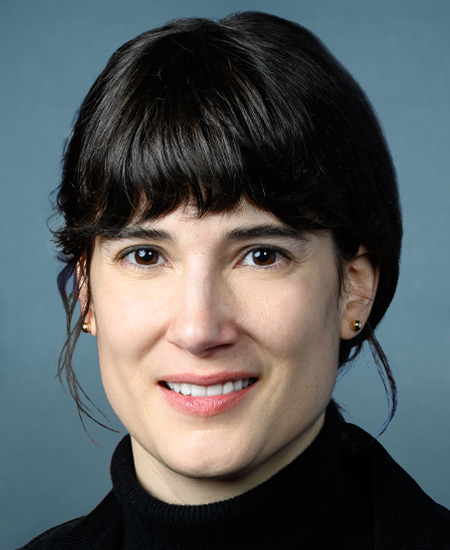
Rep. Marie Gluesenkamp Perez
Sponsored bills
Maddy summaryThis bill extends funding for the existing Public Health Service Act program focused on raising public awareness about Alzheimer's disease and related dementias. It authorizes $33 million annually for fiscal years 2025 through 2029 to support public health education and outreach initiatives. The program directly affects public health organizations and community groups that develop and distribute educational materials about Alzheimer's prevention, diagnosis, and care. The key provision is the multi-year funding extension, ensuring continued support for nationwide awareness efforts without altering the program's core structure.
Maddy summaryHR 6751 authorizes the U.S. Mint to produce commemorative coins honoring Roberto Clemente, a Hall of Fame baseball player and humanitarian, including 50,000 $5 gold coins, 400,000 $1 silver coins, and 750,000 half-dollar coins. The coins must feature Clemente's image and inscriptions like "Roberto Clemente" and "2027," with all sales including a surcharge ($5-$35 per coin) paid to the Roberto Clemente Foundation. The foundation, which supports youth sports, education, and disaster relief programs, will use these funds for its mission, while the U.S. Treasury must recover all production costs. The coins will be sold exclusively in 2027, with no net cost to the government.
Maddy summaryThis bill amends the Robert T. Stafford Disaster Relief Act to explicitly include substance use disorder and alcohol use disorder treatment in federal disaster relief funding. It expands access to addiction services for disaster survivors by requiring that mental health and counseling assistance programs funded under the Act cover these specific needs. Key provisions revise existing language to add "substance use disorder" and "alcohol use disorder" throughout the law, ensuring these services are directly eligible for disaster-related funding. The bill also mandates a federal report within 180 days to update application forms and guidance documents to reflect these changes, ensuring implementation aligns with the new provisions.
Maddy summaryHR 10260 allows the Bonneville Power Administration (BPA) to set its own employee compensation plans, bypassing standard federal pay rules. It requires BPA to develop annual plans comparing salaries to similar roles at private Western utilities, considering local costs, retention needs, and budget limits. The bill also exempts BPA from most federal hiring laws for certain staff and mandates public reporting of compensation data. This directly affects BPA employees (including senior executives) and aims to improve hiring/retention without changing BPA's core mission.
Maddy summaryHR 6241, the FULL Act, requires most federal agencies to report monthly office space occupancy and utilization data to the General Services Administration. If an agency’s space utilization rate falls below 60% for six consecutive months, it must return unused office space to the General Services Administration. The law applies to Executive agencies (excluding the intelligence community) with commercial office leases, mandating annual reports on occupancy, utilization rates, and other relevant data. The requirements take effect six months after the bill’s enactment for new or renewed leases.
Maddy summaryThis bill establishes a Truth and Healing Commission to investigate the history and impacts of U.S. Indian Boarding School policies on Native American communities, including cultural, emotional, and physical effects on survivors, descendants, and tribal communities. The Commission will document these impacts through research, public meetings, and testimony, working with two advisory committees focused on Native American perspectives and Federal agency coordination. The Commission will operate for six years, with annual reports to Congress and a final report containing recommendations for Federal action. The bill also includes provisions for managing burial sites related to boarding schools and ensures the Native American Graves Protection and Repatriation Act applies to remains found on Federal lands related to these schools.
Maddy summaryHRES 1573 establishes a temporary Select Committee on Electoral Reform in the U.S. House of Representatives to study changes to how Congress is elected. The committee, composed of 14 House members (7 appointed by the Speaker after consulting with the minority leader), will examine current election methods and alternatives like proportional representation, ranked-choice voting, open primaries, and independent redistricting commissions. It will hold hearings with experts, state officials, and international representatives to assess how these changes might affect Congress's responsiveness and functionality. The committee must issue a report with recommendations within one year and has no authority to pass laws, only to study and report on electoral reform options.
Maddy summaryThis bill modifies how disability benefits are treated for homeless disabled veterans seeking housing assistance. It excludes certain disability payments (under Chapter 11 or 15 of Title 38, U.S. Code) from income calculations when determining eligibility for HUD-assisted housing programs, including the supported housing program under Section 8(o)(19) and housing on Department property. Specifically, it ensures these benefits are not counted toward income for housing eligibility, though they still count for "adjusted income" definitions. The bill directly affects disabled veterans applying for HUD housing assistance who receive these specific disability benefits. It makes a concrete change to income calculation rules without altering benefit amounts or creating new funding.
Maddy summaryThe Parity for Tribal Law Enforcement Act would allow tribal law enforcement officers working under federal contracts or compacts (via the Indian Self-Determination Act) to enforce federal law on tribal lands, provided they complete equivalent training, pass background checks, and receive Bureau of Indian Affairs certification. It designates these officers as federal law enforcement officers for legal protections under specific federal laws, such as the Federal Tort Claims Act. The bill requires the Secretary of the Interior to establish a credentialing process within 24 months and directs the Attorney General to coordinate federal public safety efforts in Indian communities through improved data collection and training. This policy change directly affects tribal officers and communities by expanding their enforcement authority and legal recognition.