

No Corruption in Government Act This bill lengthens the limitations on former Congress Members' contact with the legislative branch and restricts certain financial transactions by Members and their spouses. Specifically, the bill lengthens the cooling off period that prohibits former Members from contacting Members, officers, or employees of the House or Senate on behalf of a third party. During this post-employment waiting period, a former Member may not communicate with the intent to influence the official actions of a Member, officer, or employee of the House of Representatives or Senate. The bill lengthens the waiting period from one to three years after a Member of the House leaves office and from two to six years after a Senator leaves office. Next, the bill prohibits Members of Congress and their spouses from holding, buying, or selling financial instruments such as stocks, securities futures, and commodities while the Member holds office. However, covered financial instruments may be held in a qualified blind trust. A Member or spouse who violates this provision must disgorge any resulting profits, may not take a related financial loss as an income tax deduction, and may be fined up to $50,000. The supervising ethics office of each chamber must audit Members' compliance with these requirements every two years. Additionally, the bill eliminates automatic annual increases to Members' pay beginning in the 120th Congress.
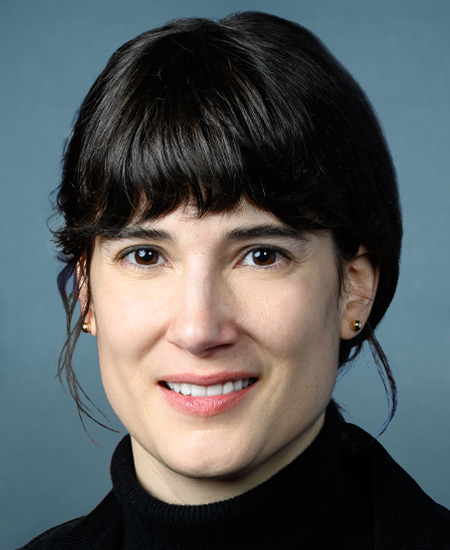
Rep. Marie Gluesenkamp Perez
Sponsored bills
Maddy summaryThis resolution amends House Rule 5 to remove the requirement that committee chairs must approve remote witness testimony. It directly affects committee witnesses and chairs by eliminating the chair's discretion to block remote appearances during committee proceedings. The change ensures witnesses can participate remotely without needing the chair's permission, streamlining committee operations. (Procedural resolution; 2 sentences)
Maddy summaryThe Proxy Voting for New Parents Resolution (HRES 23) would allow U.S. House Members who have given birth or whose spouse has given birth to appoint another Member as a proxy to cast their vote or record their presence in the House and committees for up to 12 weeks after childbirth. To use this, the new parent must submit a signed letter to the Clerk detailing the birth or medical condition and naming the proxy; the proxy must vote exactly as instructed and announce the vote as "by proxy." The proxy vote does not count toward quorum, and the new parent can revoke the proxy at any time by submitting a new letter or casting their own vote. This resolution applies to all House Members, including Delegates and the Resident Commissioner, though they cannot cast votes for the House itself.
Maddy summaryThis bill directs the Department of Homeland Security to implement the Migrant Protection Protocols (MPP) as outlined in a 2019 policy memo. It requires migrants seeking asylum at the U.S. border to remain in Mexico while their cases are processed, rather than being allowed to stay in the U.S. pending a hearing. The bill does not create new rules but mandates the reinstatement of a policy that was previously in effect from 2019 to 2021. This would directly affect asylum seekers arriving at the U.S.-Mexico border. The policy change would apply to all migrants covered by the existing MPP framework.
Maddy summaryThis bill amends the tax code to create a special rule for deducting losses of uncut timber (timber not yet cut for sale) from disasters like fires, storms, pests, or drought. It requires taxpayers to base deductions on the timber's pre-loss appraised value minus salvage value, using a certified appraiser's assessment within one year. Crucially, taxpayers must reforest the affected area with hardwoods or softwoods within five years to keep the tax benefit; failure to reforest results in recapturing the deduction. The rule applies only to timber held for sale in an active business, excluding passive activities. This changes how businesses can claim tax deductions after timber losses while linking the benefit to reforestation efforts.
Maddy summaryHRES 20 establishes a temporary House Select Committee on Electoral Reform to study changes to U.S. election systems. The committee will examine current congressional election methods and alternatives like ranked-choice voting, multi-member districts, and independent redistricting commissions, while assessing federal barriers such as the 1967 Uniform Congressional District Act. It must hold hearings with experts and state officials, then submit a report with recommendations within one year. The committee has no authority to pass legislation but will analyze how reforms might improve congressional responsiveness and functionality. This resolution directly affects House operations and provides a structured process for evaluating electoral system changes.
Maddy summaryThis proposed constitutional amendment would limit Members of Congress to serving a maximum of three terms in the House of Representatives or two terms in the Senate. It directly affects current and future members by preventing those who have already served the maximum terms from seeking re-election. Key provisions include counting vacancies filled for more than a year (House) or three years (Senate) as a full term toward the limit, while excluding terms served before ratification from the count. As a constitutional amendment proposal, it requires approval by three-fourths of state legislatures to become law.
Maddy summaryHR 82, the Social Security Fairness Act of 2023, repeals two provisions that reduce Social Security benefits for certain government workers. It eliminates the Government Pension Offset (GPO), which cuts spousal or survivor benefits for people with pensions from jobs not covered by Social Security (like federal or state government roles), and the Windfall Elimination Provision (WEP), which lowers retirement benefits for those with similar pensions. The law takes effect for benefits paid after December 2023, requiring the Social Security Administration to adjust benefit calculations to remove these reductions. This change directly affects public-sector employees who previously had their Social Security benefits reduced due to their government pensions.
Maddy summaryThis bill (HR 9421) designates the existing United States Postal Service facility at 108 North Main Street in Bucoda, Washington, as the "Mayor Rob Gordon Post Office." It does not create new policies, alter services, or affect any population beyond changing the official name of this specific post office location. The bill simply requires all federal references to this facility to use the new name, honoring former Bucoda Mayor Rob Gordon. As a ceremonial naming resolution, it has no substantive policy impact or operational changes.
Maddy summaryThe Let America Vote Act (HR 155) requires states to allow voters not registered with a political party (unaffiliated voters) to vote in primary elections for federal, state, and local offices, but not in more than one party's primary for the same election. It prohibits states from sharing unaffiliated voters' personal information with political parties for fundraising and prevents states from treating such voters as affiliated with a party after they cast a primary ballot. The bill also bans noncitizens from voting in any taxpayer-funded election for public office (including federal, state, and local races) and ties federal election funding to states' certification of compliance. To support implementation, the bill provides transition grants equal to 2% of a state's federal election funds for four years to cover costs related to these changes.