

Maddy summaryThis bill restricts how credit reporting companies share homebuyers' credit reports during mortgage applications. It prevents companies from sending these reports to third parties (like marketers) just because a lender requested them for a mortgage. Only specific entities can receive the reports: the mortgage lender who originated the loan, the company servicing the loan, or the bank holding the homebuyer's account. This directly protects homebuyers' privacy by limiting unauthorized sharing of their financial data.
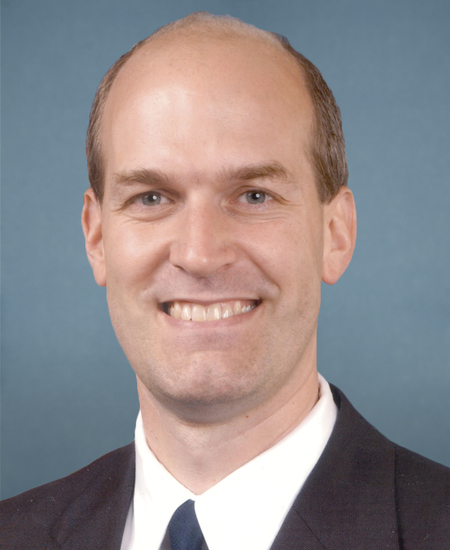
Rep. Rick Larsen
Sponsored bills
Maddy summaryThe JOBS Act of 2023 would expand Federal Pell Grant eligibility to cover certain short-term job training programs that prepare students for high-demand careers. It defines "eligible job training programs" as those offering 150-600 hours of instruction over 8-15 weeks, aligned with in-demand industry sectors, and leading to recognized credentials that help students meet hiring requirements and take licensure exams. The bill would allow students in these programs to receive Pell Grants under standard terms, with the minimum Pell Grant amount reduced from 10% to 5% of the maximum. It also requires accrediting agencies to evaluate these programs and creates data-sharing between Education and Labor departments to track program effectiveness.
Maddy summaryThe SWIMS Act of 2024 bans the captivity of orcas, beluga whales, false killer whales, and pilot whales for public display in the United States. It prohibits exporting, importing, or taking these animals for display - except for relocation to a sanctuary meeting specific welfare standards or release into the wild. The bill also makes it illegal to breed these species for public display. This directly affects marine parks and aquariums that currently display these animals, preventing them from acquiring new animals for exhibits or breeding them for that purpose.
Maddy summaryThe ACCESS Act of 2024 creates a federal grant program to help clinics and health care providers expand abortion and reproductive health services in states where abortion is legal (outside of life or health exceptions). It authorizes $200 million annually for fiscal years 2024-2028 to fund specific capacity-building activities, including facility expansions, hiring clinical staff, telehealth services, and culturally appropriate patient resources. Priority is given to providers in states experiencing the highest increases in out-of-state patients seeking abortion care. The bill directly supports health care entities serving patients who travel across state lines for services, aiming to reduce wait times and improve access for vulnerable communities.
Maddy summary# Summary of the Clean Electricity and Transmission Acceleration Act of 2023 This comprehensive legislation establishes significant reforms across environmental policy, energy infrastructure, and community engagement frameworks. Key provisions include: 1. **Environmental Justice Framework**: - Creates an Office of Environmental Justice and External Civil Rights at EPA - Establishes a White House Environmental Justice Interagency Council - Prohibits disparate impact discrimination under Title VI of the Civil Rights Act - Requires community impact reports for Federal actions affecting environmental justice communities 2. **NEPA Reforms**: - Mandates 90-day public comment periods for environmental justice communities - Requires translation of documents into languages spoken by 5%+ of affected communities - Requires assessment of cumulative impacts, including historical pollution - Requires climate change impact assessments using social cost of carbon - Establishes searchable digital archives of NEPA documents 3. **Community Engagement Requirements**: - Creates "Senior Community Engagement Officers" and "Tribal Community Engagement Officers" at all federal agencies - Requires community benefits agreements for major projects - Establishes grants for capacity building in environmental justice communities - Creates an E-NEPA permitting portal for public access to documents 4. **Energy Policy Provisions**: - Includes reforms for FERC (Federal Energy Regulatory Commission) environmental justice liaison - Establishes requirements for intervenor funding at FERC - Contains provisions for transmission planning and infrastructure 5. **Tribal Consultation**: - Strengthens tribal consultation requirements for projects affecting tribal lands - Requires government-to-government relationships with tribal nations The legislation represents a significant shift toward integrating environmental justice considerations throughout the federal permitting and review process, with specific requirements for meaningful community engagement, transparency, and consideration of cumulative impacts on vulnerable populations. It also establishes new funding mechanisms and administrative structures to support these environmental justice goals.
Maddy summaryHR 7056, the Access to Family Building Act, establishes federal rights for individuals to access assisted reproductive technology (ART) like IVF without unreasonable restrictions, directly affecting patients seeking fertility treatments and health care providers offering ART services. The bill prohibits states from imposing limitations on ART that are more burdensome than those for comparable medical procedures, fail to advance safety, or unduly restrict access, while allowing health and safety regulations that are necessary and least restrictive. It creates federal enforcement mechanisms, including lawsuits by the Attorney General or affected individuals to challenge violating state laws, and preempts conflicting state regulations. The bill explicitly preserves state authority over health/safety regulations and does not alter existing state insurance coverage laws for ART.
Maddy summaryHRES 882 is a non-binding resolution passed by the U.S. House of Representatives on November 21, 2023, declaring support and gratitude to food banks, food pantries, and community-based organizations addressing food insecurity. It recognizes these groups' work in serving over 5 billion meals annually, rescuing wasted food (nearly 118 billion pounds yearly), and supporting vulnerable populations including 44.2 million people in food-insecure households in 2022. The resolution specifically acknowledges their role in providing emergency aid, nutrition education, and disaster response, while highlighting that 55% of food-insecure households did not access federal nutrition programs. It does not create new policies or funding but formally commends these organizations' contributions to reducing food insecurity and improving community health.
Maddy summaryHCONRES 82 is a symbolic resolution recognizing and supporting the New Heights Bid Committee's effort to secure the 2027 FIFA Women's World Cup for a joint U.S.-Mexico bid. It directs Congress to encourage the President and federal agencies to assist the committee in meeting hosting requirements and to consider future legislation if the bid is successful. The resolution does not create new laws or funding but formally expresses congressional backing for the bid committee's work. It directly affects the New Heights Bid Committee by affirming congressional support for their efforts to host the tournament.
Maddy summaryHRES 963 is a symbolic resolution honoring Korean American Day, which commemorates the January 13, 1903 arrival of the first large wave of Korean immigrants to the U.S. It recognizes Korean Americans' contributions to U.S. society, including their economic, cultural, and military impacts, and marks the 121st anniversary of this historic migration. The resolution urges all Americans to observe Korean American Day to appreciate these contributions. As a commemorative measure, it does not create new policies or affect specific groups beyond this ceremonial recognition.
Maddy summaryThe Affordable Connectivity Program Extension Act of 2024 allocates $7 billion in funding for the Affordable Connectivity Program (ACP) during fiscal year 2024. The ACP provides subsidies to low-income households to help cover the cost of internet service and connected devices like laptops or tablets. This funding ensures the program can continue supporting eligible households throughout the year, with the money remaining available until fully spent. The bill extends existing program funding without changing eligibility criteria or service requirements.