

Maddy summaryHR 2029, the "Stop Comstock Act," amends federal obscenity laws to remove outdated restrictions on abortion and contraception. It deletes references to "indecent" materials and abortion-related language from Title 18 (e.g., removing "or means for procuring abortion" from section 552 and revising definitions in sections 1461 and 1462). The bill clarifies that federal law does not prohibit the distribution of materials related to abortion or contraceptives, updating how "obscene" is defined. These changes directly affect federal enforcement of obscenity laws, particularly regarding medical information and devices. The bill focuses on modernizing statutory language to align with current legal standards for protected speech and healthcare access.
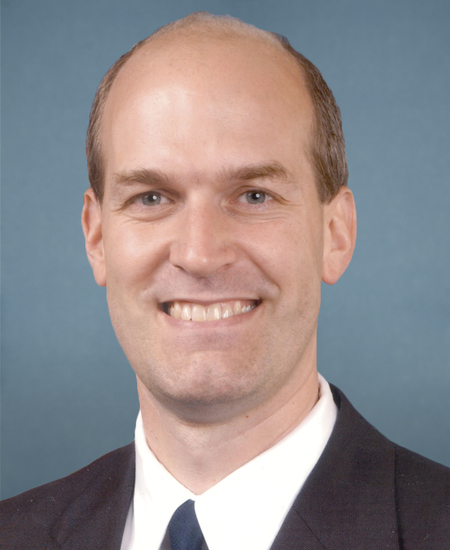
Rep. Rick Larsen
Sponsored bills
Metastatic Breast Cancer Access to Care Act This bill expedites payment of Social Security Disability Insurance (SSDI) benefits and eligibility for Medicare coverage for those with metastatic breast cancer (i.e., breast cancer that has spread to other sites in the body). Specifically, the bill eliminates the 5-month waiting period for SSDI benefits and the subsequent 24-month waiting period for Medicare coverage for individuals with metastatic breast cancer. Under current law, individuals generally must wait 5 months after the onset of disability to begin receiving SSDI benefits and an additional 24 months to become eligible for Medicare.
Maddy summaryThis bill would expand Medicare to cover dental, vision, and hearing services for beneficiaries 65 and older (and some younger people with disabilities), effective January 1, 2026. It would provide 100% coverage for preventative dental services in 2026, with basic and major dental services gradually increasing to 80% coverage by 2029. Vision benefits would include 80% coverage for annual eye exams and specific limits on eyeglasses, frames, and contact lenses ($100 per year for lenses, $100 every two years for frames, $200 every two years for contacts). Hearing services would include 80% coverage for hearing exams and hearing aids, with a limit of one hearing aid per ear every 48 months. The bill also adds oral health professionals to the United States Preventive Services Task Force to help guide coverage decisions.
Maddy summaryHR 2047, the Pink Tariffs Study Act, requires the Treasury Secretary to conduct a study analyzing how U.S. import tariffs impact different consumer groups. The study must examine whether tariffs are regressive (burdening lower-income consumers more), show gender bias (like higher tariffs on women's clothing vs. men's), and break down effects by gender, family type (e.g., single-parent households), and income level. It mandates the study be completed within one year of the bill's enactment and submitted to Congress. This bill directly affects all U.S. consumers by focusing on how tariff policies may unequally impact them based on these demographic and economic factors.
Maddy summaryHR 2033, the Military Spouse Hiring Act, expands the Work Opportunity Tax Credit to include spouses of active-duty military personnel. It adds "qualified military spouse" as an eligible category for the tax credit, meaning employers who hire such spouses can claim the credit. A "qualified military spouse" is defined as someone certified by a local agency as married to an active-duty service member at the time of hire. The credit applies to hires occurring after the bill's enactment date. This directly affects military spouses seeking employment and employers hiring them, providing a tax incentive to encourage their hiring.
Maddy summaryThis bill terminates a national emergency declared by the President on February 1, 2025, under Executive Order 14194. It directly ends the legal status of that emergency by invoking Section 202 of the National Emergencies Act (50 U.S.C. 1622). The key mechanism is a formal congressional resolution to revoke the emergency designation, which would end any special authorities granted under that emergency. This is a procedural action affecting only the emergency status itself, not new policies or affected groups.
Maddy summaryThis bill requires states to ignore income earned during the first year of a registered apprenticeship when determining eligibility for Temporary Assistance for Needy Families (TANF) welfare benefits. It directly affects low-income individuals entering apprenticeships who might otherwise lose welfare support due to their first-year earnings. The law mandates states to disregard this income in eligibility calculations, with a penalty of a 1% reduction in federal TANF funding for states that fail to comply. The policy change takes effect in the first federal fiscal year after the bill becomes law, ensuring apprentices can maintain welfare access while starting their training.
Protecting Americans’ Social Security Data Act This bill prohibits political appointees and special government employees from accessing Social Security data systems that contain personally identifiable information about Social Security beneficiaries. Specifically, political appointees and special government employees may not access systems maintained by the Social Security Administration (SSA) that issue or record Social Security account numbers, that are used to determine eligibility for or to pay Social Security benefits, or that otherwise contain personally identifiable information about individuals receiving or applying for benefits. The bill also establishes a civil right of action for an individual whose information was negligently accessed or disclosed in violation of these provisions. The individual may bring suit against the United States if the violator was a U.S. employee or officer, or against the violator if they were not a U.S. employee or officer. Such a claim must be brought within two years of the affected individual’s discovery of the violation. Upon a finding of liability, defendants are liable for specified monetary damages. If an individual is criminally charged or subject to proposed disciplinary or adverse action by a federal or state agency for having accessed or disclosed information in violation of these provisions, SSA must notify the individual whose information was accessed or disclosed of the violation as soon as practicable. Finally, the bill requires the SSA Office of the Inspector General to investigate and report to Congress on any unauthorized access to or disclosure of information in a beneficiary data system.
Maddy summaryHR 1876, the "Keeping Our Field Offices Open Act," prevents the Social Security Administration (SSA) from closing, consolidating, or restricting access to its field offices, hearing offices, or resident stations for 180 days after enactment, with exceptions for emergencies. The bill requires the SSA Commissioner to submit a detailed report to Congress by January 2029, analyzing closure criteria, transportation burdens for elderly/disabled users, cost-benefit impacts, and plans to replace lost services. For future closures, it mandates 120 days of public notice, two public hearings, and a final report to Congress, while ensuring total office numbers don’t fall below 2025 levels. This directly affects SSA field offices, their users (including elderly and disabled individuals), and employees. The bill’s key mechanism is a procedural safeguard to ensure transparency and minimize disruption before any office changes take effect.
Maddy summaryThis bill strengthens the Voting Rights Act of 1965 by clarifying how to prove voting discrimination and expanding requirements for preclearance of voting changes. It establishes new standards for determining when voting practices dilute minority voting strength or deny/abridge voting rights, requiring plaintiffs to show specific conditions for vote dilution claims and including factors like historical discrimination and racial polarization in court analyses. The bill modifies the criteria for determining which states and political subdivisions must seek preclearance for voting changes, and adds new transparency requirements for jurisdictions to publicly disclose changes to voting qualifications, polling locations, and election districts. It directly affects states and local governments that implement voting policies, particularly those with a history of voting rights violations or that make changes to voting qualifications, procedures, or district boundaries. The bill aims to prevent discriminatory voting practices by providing clearer standards for courts and requiring greater transparency in voting rule changes.