

Maddy summaryHR 4893, the Scientific Integrity Act, requires federal agencies that fund, conduct, or oversee scientific research to adopt policies preventing political interference in science. The bill mandates these agencies to prohibit suppression or distortion of research findings, establish Scientific Integrity Officers to enforce policies, and implement training and reporting systems. It directly affects scientists and engineers employed by or contracted with covered agencies (like the EPA or NIH), ensuring their work remains free from political pressure. Key mechanisms include annual public reporting on misconduct complaints, whistleblower protections, and requiring scientific conclusions to be based on evidence, not ideology.
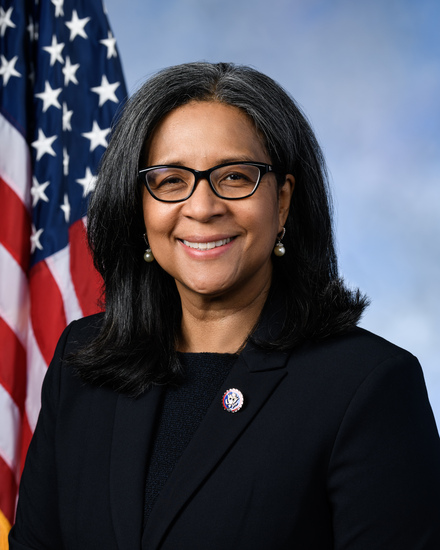
Rep. Marilyn Strickland
Sponsored bills
Maddy summaryHR 4889, the Raise the Wage Act of 2023, would gradually increase the federal minimum wage for most workers to $15.50 per hour by 2027, with specific annual targets: $9.50 starting in 2023, rising to $11.00 after one year, $12.50 after two years, and $15.50 after four years. It would also phase out the separate lower minimum wage for tipped employees (starting at $6.00/hour) by aligning their pay with the regular minimum wage by 2028, while requiring employers to let workers keep all tips. The bill includes similar phased increases for workers under 20 and transitions toward fairer wages for workers with disabilities under special certificates, which would sunset after 2028. Future annual increases after 2028 would tie the minimum wage to the median hourly wage of all workers.
Maddy summaryHR 4157, the "Not Just a Number Act," requires the Department of Veterans Affairs (VA) to produce annual reports on veteran suicide rates and their connection to VA healthcare and benefits. The reports must break down suicide rates by age, gender, and race, and examine how engagement with VA services (like Vet Centers, healthcare enrollment, benefits claims, and housing loans) correlates with suicide trends. The bill also mandates a VA toolkit for state/local coroners to improve veteran suicide death reporting, and a study on creating a dedicated VA suicide prevention office. These measures aim to standardize data collection and identify effective prevention strategies, directly affecting VA operations, congressional oversight, and veteran care systems.
Maddy summaryThe CHIPP Act (HR 4771) permanently extends federal funding for the Children's Health Insurance Program (CHIP), which provides health coverage to low-income children in families that earn too much to qualify for Medicaid but cannot afford private insurance. It removes previous expiration dates (like 2029) from CHIP funding provisions, ensuring continuous support for states administering the program. The bill also permanently extends related programs, including pediatric quality measures funding with automatic inflation adjustments, and modifies eligibility rules to allow states to expand coverage for children in higher-income households. This affects all 50 states that run CHIP programs and the millions of children and families who rely on this coverage.
Maddy summaryHRES 608 is a non-binding House resolution recognizing the value of diversity, equity, and inclusion (DEI) efforts at colleges and universities. It affirms that DEI initiatives help create supportive learning environments where all students, faculty, and staff thrive, and specifically supports programs like implicit bias training and cultural competence resources. The resolution emphasizes that DEI efforts strengthen institutions’ ability to recruit diverse talent and align with academic freedom principles. It also notes concerns about state-level efforts to restrict DEI programs and states that such restrictions threaten campus inclusivity. As a symbolic resolution, it does not create new laws or funding but expresses congressional support for DEI work in higher education.
Maddy summaryThe SHADE Act creates a federal grant program to plant trees in historically disadvantaged neighborhoods, primarily targeting redlined areas (former HOLC "hazardous" zones) and overburdened areas (where at least 35% of households are low-income, or 40% identify as minority/tribal, or 40% are limited English proficiency). Eligible entities - like cities, tribes, or nonprofits - must submit applications with 5-year plans, community input strategies, and evidence of housing policies preventing displacement. Grants cover tree planting, maintenance for 5 years, and training, with $50 million annually authorized through 2034. The bill directly affects communities facing environmental inequities by linking tree planting to neighborhood revitalization efforts.
Maddy summaryH.J.Res. 25 would remove the 1979 deadline for states to ratify the Equal Rights Amendment (ERA), which was originally proposed in 1972. This bill directly affects states that ratified the ERA after the deadline (such as Nevada, Illinois, and Virginia in 2017-2018) by making their ratifications legally valid. The key provision states that the ERA is valid as part of the Constitution if ratified by three-fourths of states, regardless of the original deadline. The bill does not create new rights but aims to finalize the constitutional amendment process by eliminating the time limit.
Maddy summaryThis bill, HR 1282 (Major Richard Star Act), expands benefits for certain military retirees by allowing them to receive both veterans' disability compensation and military retirement pay simultaneously. It specifically affects combat-related disabled retirees under Chapter 61 of the military retirement system who have fewer than 20 years of service. The key change removes the automatic reduction of military retirement pay when these retirees also receive disability compensation, as amended in Section 1413a(b)(3) of Title 10. Technical updates to the law’s structure and effective date (starting after enactment) complete the provisions.
Maddy summaryHR 813, the Global Investment in American Jobs Act of 2023, requires the Secretary of Commerce to conduct a comprehensive review of U.S. competitiveness in attracting foreign business investments from "trusted countries" (those not deemed adversaries by the U.S.). The review will examine economic impacts, barriers like data localization and intellectual property issues, and address concerns about investments linked to the Chinese Communist Party, while focusing on sectors like technology and manufacturing. This procedural bill does not create new laws but mandates a report to Congress within one year, detailing findings and recommendations to improve the U.S. investment climate. It directly affects U.S. economic competitiveness, foreign investors from allied nations, and policies governing international business engagement. The review explicitly excludes matters handled by the Committee on Foreign Investment in the United States.
Maddy summaryHRES 580 is a symbolic resolution expressing the House's support for designating "Journeyman Lineworkers Recognition Day." It honors lineworkers who work in hazardous conditions (such as at heights near live wires) and respond to disasters like hurricanes and wildfires, while recognizing their contributions and the legacy of Henry Miller, an early electrical worker who died on the job. The resolution has no legal effect - it solely encourages public recognition and reflection on these workers' service.