

Maddy summaryThe Safe Schools Improvement Act (HR 6031) requires public elementary and secondary schools to implement comprehensive anti-bullying policies that specifically prohibit harassment based on protected characteristics like race, gender identity, disability, religion, and sexual orientation. It mandates schools to collect and publicly report annual data on bullying incidents while establishing clear grievance procedures for students and parents. The bill also requires states to submit biennial reports on school compliance and supports evidence-based interventions, such as restorative practices, to reduce exclusionary discipline. This legislation directly affects all public K-12 schools and students in the U.S., aiming to create safer learning environments through standardized policy requirements and data transparency.
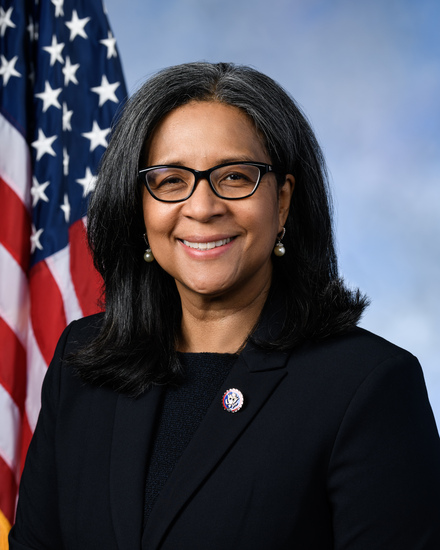
Rep. Marilyn Strickland
Sponsored bills
Maddy summaryThis bill removes a previous exclusion that prevented temporary federal employees (including U.S. Postal Service staff and Members of Congress) from counting service after January 1, 1988, toward their retirement benefits. It allows these workers to have their post-1988 temporary service counted toward retirement eligibility if they pay a deposit to the retirement system. The change applies to anyone employed by the federal government on or after the bill's enactment date. The Office of Personnel Management must notify affected employees and create rules to implement this change.
Maddy summaryHR 5667, the Pay Our Military Act, ensures continued pay and allowances for active-duty military members, reservists, Department of Defense civilians, and qualifying contractors during any government funding gap in fiscal year 2024. It appropriates funds from the Treasury to cover these payments if regular appropriations bills aren't passed before the end of the fiscal year. The funding automatically terminates once regular appropriations are enacted or by January 1, 2025, whichever comes first.
Maddy summaryThis bill requires federal agencies to adjust contract prices to reimburse contractors for paying employees during government funding lapses (e.g., shutdowns). It covers costs for furloughed, laid-off, or reduced-hour workers, or for restoring paid leave used during the lapse, with a weekly cap of $1,442 per employee. Directly affecting federal contractors and their employees who experienced work disruptions due to funding gaps, it mandates agencies to make these adjustments promptly after enactment. Contractors must provide proof of costs, and the Office of Federal Procurement Policy must report on implementation to Congress within a year.
Maddy summaryThis bill, the CSA OPPORTUNITY Act, requires federal assistance programs to exclude children's savings accounts (CSAs) from asset calculations. Specifically, it amends the Social Security Act, Food and Nutrition Act, and Low-Income Home Energy Assistance Act to ensure CSAs - accounts for children under 18 used for education, first-home purchases, or business startup - do not count as assets that could disqualify families from benefits. It directly affects low-income families receiving Temporary Assistance for Needy Families (TANF), Supplemental Security Income (SSI), SNAP (food stamps), or LIHEAP (energy assistance). The bill mandates states to disregard CSA values in eligibility determinations and imposes penalties for noncompliance, ensuring these accounts support long-term goals without penalizing families.
Maddy summaryHR 5666 would create a new Office of Public Engagement within the Pipeline and Hazardous Materials Safety Administration (PHMSA). The office would proactively engage with the public and pipeline stakeholders to promote safety programs, provide technical expertise, raise awareness about pipeline safety, and answer public inquiries. It requires $12 million annually (2024-2027) for establishment and operations. The bill directly affects PHMSA's public communication and outreach efforts regarding pipeline safety.
Maddy summaryHR 5652, the Stop Overdose in Schools Act, establishes a federal pilot program to help schools respond to opioid overdoses. It provides grants to school districts to train staff (like resource officers and nurses) in administering opioid reversal medications, purchase necessary kits, and raise awareness about opioid use disorder. The bill prioritizes rural schools (50% of grants) and districts in areas with high youth overdose rates (the other 50%). It also sets aside $5 million annually for fiscal years 2024 and 2025 to fund this program, requiring grant recipients to train designated school personnel in opioid reversal agent use.
Maddy summaryHRES 720 designates the week of September 24-30, 2023 (and annually thereafter) as "Gold Star Families Remembrance Week" to honor families who have lost loved ones in military service. It specifically recognizes the sacrifices of families of fallen service members and veterans, and encourages Americans to observe the week through community service and celebrating the lives of those who died protecting the nation. This resolution is procedural and symbolic, with no new funding, regulations, or policy changes - only a formal designation to honor these families. It directly affects Gold Star families (those with members who died in military service) and the broader public through its call for observance.
Maddy summaryThis bill strengthens SNAP employment and training programs by expanding eligibility to include more job training options, such as vocational rehabilitation and refugee employment programs. It extends the maximum participation period from 90 to 180 days and increases funding authorization from $103.9 million to $119.9 million for state employment programs. States can now cover costs to help participants overcome barriers like transportation or childcare to stay in training. The changes directly affect SNAP recipients enrolled in state-administered job training programs and the state agencies that run them.
Maddy summaryThis bill establishes a new Office within the Department of Justice to address racial disparities in missing and murdered Black women and girls cases. The Office will collect data on case resolution times, coordinate with law enforcement, and create a public dashboard tracking these cases. It also creates grants for community organizations to provide culturally appropriate services, prevention programs, and training for law enforcement targeting violence against Black women and girls. The bill directly affects Black women and girls who are victims of violence and their communities, focusing on improving data collection and support systems rather than changing criminal laws.