

Maddy summaryThis bill modifies tax rules to make housing more affordable for military members and boost housing near military bases. It excludes military housing allowances (payments for housing) from income calculations when determining eligibility for low-income housing tax credits, helping more service members qualify. Additionally, it creates a new tax credit for rental housing built within 15 miles of large military installations (valued over $2.8 billion), treating these areas as "difficult development zones" for tax purposes. The bill does not require such housing to be occupied solely by military personnel. These changes directly affect military members seeking affordable housing and developers building near major installations.
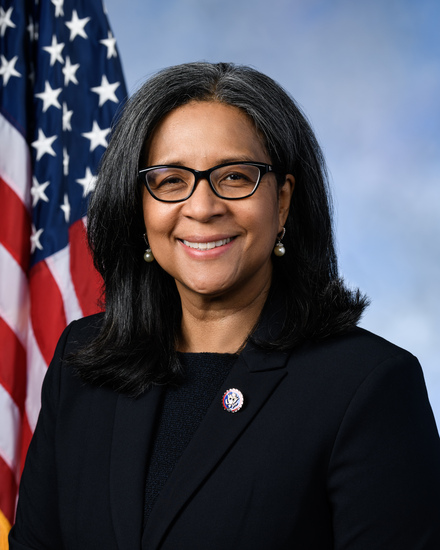
Rep. Marilyn Strickland
Sponsored bills
Maddy summaryThe Fairness for Servicemembers and their Families Act of 2024 requires the Department of Veterans Affairs to review the automatic maximum coverage amount for Servicemembers’ Group Life Insurance (SGLI) and Veterans’ Group Life Insurance (VGLI) every three years, starting January 1, 2024. The review compares the current coverage amount to a new inflation-adjusted figure calculated as $400,000 multiplied by the cumulative increase in the Consumer Price Index (CPI) since 2005. The results of each review must be submitted to Congress. This provision directly affects active-duty service members and veterans enrolled in SGLI or VGLI by establishing a process to potentially increase their automatic coverage to keep pace with inflation.
Maddy summaryHRES 1448 is a non-binding House resolution stating that the House believes every person has the right to emergency health care, including abortion care, during medical emergencies. It specifically addresses concerns that abortion restrictions force medical providers to choose between treating patients in life-threatening situations or risking criminal charges. The resolution highlights that such restrictions disproportionately harm Black, Indigenous, people of color, immigrants, low-income individuals, and LGBTQI+ patients. It does not change existing laws but expresses congressional support for ensuring access to emergency care without legal barriers. The resolution was introduced by multiple House members and referred to the Energy and Commerce Committee.
Maddy summaryHR 7159, the Pacific Partnership Act, mandates the U.S. government to develop a comprehensive strategy for engagement with Pacific Island nations. It requires the President, by January 1, 2026, and every four years thereafter, to submit a detailed strategy to Congress outlining U.S. diplomatic, defense, and economic goals in the region, including assessments of threats like natural disasters, illegal fishing, and foreign military activity. The strategy must detail plans to address these threats, coordinate with Pacific Island governments and regional organizations like the Pacific Islands Forum, and outline required resources and staffing. This bill directly affects U.S. foreign policy operations and shapes how the federal government engages with Pacific Island nations on shared security, economic, and environmental priorities.
Maddy summaryHRES 1423 expresses the U.S. House of Representatives' support for designating the week of September 21-28, 2024, as "National Estuaries Week." The resolution highlights estuaries' economic and ecological importance, noting they support over 3.5 million jobs, contribute $476 billion to the U.S. GDP, and provide critical services like flood control and water filtration. It does not create new laws or funding but aims to raise public awareness about protecting estuaries, which face threats like pollution and habitat loss. The resolution acknowledges ongoing restoration efforts by federal, state, tribal, and community partners.
Maddy summaryThis bill establishes a new pilot loan program to help beginning farmers and ranchers make long-term business investments. It directly affects new agricultural producers (defined as those with less than 10 years of experience) by providing loans for specific "development expenditures" like equipment, soil health improvements, branding, and business systems - items currently excluded from standard operating loans. Key provisions include loans up to $100,000 with repayment terms of 3-10 years, interest rates between 0-3%, and mandatory business management training covering bookkeeping, risk management, and compliance. The program requires annual interest payments but offers flexible principal repayment and aims to reduce under-investment in critical startup capacities.
Maddy summaryHR 3507, the "Yes In My Backyard Act," requires local governments receiving certain federal Community Development Block Grants (CDBG) to report on their progress toward adopting specific housing-friendly land use policies. It directly affects cities and counties that administer CDBG funds by mandating they submit plans tracking 22+ policy changes, such as allowing duplexes in single-family zones, reducing parking requirements, or streamlining permits. The bill does not require local governments to adopt these policies but requires them to document their current status and plans for implementation. This reporting mechanism aims to identify barriers to affordable housing without binding local governments to specific actions. The requirement applies to CDBG recipients starting one year after the bill's enactment.
Maddy summaryThis bill creates a new grant program to fund climate-focused projects on agricultural land. It provides up to $150 million annually (2023-2031) to eligible groups like state agricultural departments, tribal governments, farmer cooperatives, and conservation districts. These groups can use funds to develop or implement projects that increase carbon sequestration, reduce emissions, or improve farm resilience to extreme weather - prioritizing historically underserved farmers, tribal knowledge, and practices like soil health management. Grants require projects to align with USDA climate plans and include performance measures to track outcomes.
Maddy summaryThis bill (HR 9391) designates the U.S. Postal Service facility at 108 North Main Street in Bucoda, Washington, as the "Mayor Rob Gordan Post Office." It updates all official references to this location to reflect the new name, affecting only the postal facility's official designation. The bill is purely ceremonial and does not change any postal services, policies, or obligations.
Maddy summaryThis bill establishes a 5-year pilot program to provide midwife services through TRICARE, the military healthcare system, for service members and their families. It requires the Secretary of Defense to begin the pilot within one year of enactment and mandates detailed annual reports on costs, beneficiary demographics, health outcomes (like pre-term births), patient satisfaction, and access metrics. The program would only include midwives certified under international standards and state licensing requirements. If the pilot demonstrates success in improving care and outcomes, the Secretary may make the program permanent.