

Workplace Violence Prevention for Health Care and Social Service Workers Act This bill requires the Department of Labor to address workplace violence in health care, social service, and similar sectors. Specifically, Labor must issue an occupational safety and health standard that requires certain employers to take actions to protect workers and other personnel from workplace violence. The standard applies to employers in the health care sector, in the social service sector, and in sectors that conduct activities similar to those in the health care and social service sectors. Among other elements, the standard must require each employer to (1) develop a workplace violence prevention plan, (2) promptly investigate incidents of workplace violence, and (3) provide relevant training and education to employees. The bill requires certain hospitals and skilled nursing facilities to comply with this standard as a condition of Medicare participation.
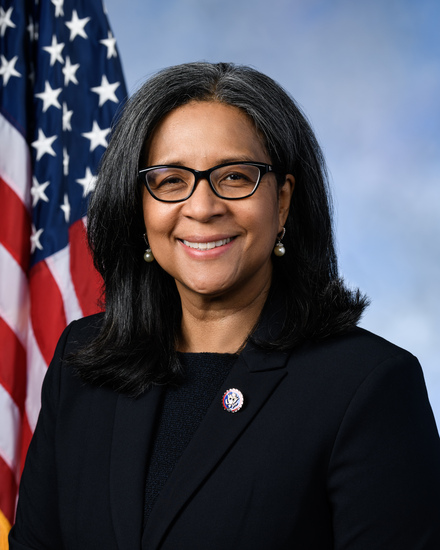
Rep. Marilyn Strickland
Sponsored bills
Maddy summaryThis bill (HR 2532) blocks federal funding for large-scale layoffs at the Department of Health and Human Services (HHS) and its sub-agencies. It prohibits using federal funds to remove 3% or more of all HHS employees, or 3% or more at any single sub-agency, within a 60-day period. This applies to actions like layoffs under federal workforce rules (Title 5) or agency reorganizations. The bill directly affects HHS employees and its operating divisions by preventing rapid, widespread workforce reductions. It does not change HHS policies but restricts how personnel actions can be funded.
Maddy summaryThe Nutrition CARE Act of 2025 requires Medicare to cover medical nutrition therapy services for beneficiaries with eating disorders starting January 1, 2026. It directly affects Medicare beneficiaries with eating disorders, including an estimated 1.6 million people on Medicare Part B, with specific focus on underserved groups like 420,500-560,700 Black, Indigenous, and People of Color beneficiaries. The bill mandates coverage through registered dietitians or nutrition professionals, requiring at least 13 hours of services in the first year (including initial assessment) and 4 hours annually thereafter, with referrals from physicians or psychologists. This addresses a current gap where Medicare does not cover medical nutrition therapy for eating disorders at any treatment level. The policy change aims to improve access to a critical treatment pillar for a condition with high mortality rates and significant healthcare costs.
Save America's Forgotten Equines Act of 2025 or the SAFE Act of 2025 This bill permanently prohibits the slaughter of equines (e.g., horses and mules) for human consumption. (Current law prohibits the slaughter of dogs and cats for human consumption. This bill extends the prohibition to equines.) Specifically, this bill prohibits a person from knowingly (1) slaughtering an equine for human consumption; or (2) shipping, transporting, possessing, purchasing, selling, or donating an equine to be slaughtered for human consumption or equine parts for human consumption. The bill subjects a violator to a fine. The bill applies to conduct in or affecting interstate or foreign commerce or within the special maritime and territorial jurisdiction of the United States. However, it does not apply to an activity carried out by an Indian for a religious ceremony. As background, in recent years, the appropriations acts have prohibited the Department of Agriculture (USDA) from using federal funds to inspect horses before they are slaughtered for human consumption. Therefore, there are currently no USDA-inspected horse slaughter facilities in the United States.
Maddy summaryHR 2439 authorizes $50 million for fiscal year 2026 and $55 million for 2027 to fund the United Nations Population Fund (UNFPA), directly supporting its global programs. The bill specifies that these funds will help end preventable maternal deaths, address unmet contraceptive needs, combat gender-based violence, and end harmful practices like child marriage and female genital mutilation. UNFPA operates in over 150 countries, primarily aiding women and girls in developing nations and crisis zones, including those affected by conflict or natural disasters. The bill emphasizes UNFPA’s compliance with U.S. restrictions (not funding abortion) and its role in advancing U.S. strategic interests through voluntary family planning and reproductive health services.
Maddy summaryHR 2469, the Abortion DOULAS Act, mandates a study by the Secretary of Health and Human Services on abortion doula care - non-clinical support provided by trained professionals before, during, and after abortions. The study will collect data from patients, doulas, and providers to assess benefits, barriers (like cost and limited Medicaid coverage), and accessibility, especially for marginalized communities. It requires a report to Congress within 18 months, including recommendations for integrating abortion doula care into state Medicaid programs. The bill directly affects patients seeking abortion care, abortion doulas, and state Medicaid systems by focusing on evidence-based policy development. It does not alter current coverage but aims to inform future policy changes.
Maddy summaryHR 2467, America's Red Rock Wilderness Act, would designate approximately 1.3 million acres of public land across Utah as wilderness areas, protecting them from development and managing them for conservation. The bill specifically designates 77 wilderness areas in the Great Basin and Colorado Plateau regions, including lands within existing national monuments like Grand Staircase-Escalante and Bears Ears. It includes provisions for water rights protection, allows continued livestock grazing under certain conditions, and withdraws the designated lands from mining and mineral leasing. The bill also ensures Tribal rights are protected and requires the Secretary of the Interior to administer these areas according to wilderness management standards.
Reclaim Trade Powers Act This bill repeals the statute that directs the President to take certain actions, such as imposing a tariff of up to 15% for up to 150 days on articles imported into the United States, when necessary to address large and serious U.S. balance-of-payments deficits or certain other situations that present fundamental international payments problems.
Maddy summaryThe Providing Veterans Essential Medications Act requires the Department of Veterans Affairs to reimburse State homes or provide medications directly for certain high-cost drugs used by veterans in State-run nursing homes. A medication is defined as high-cost if its price (including a 3% fee) exceeds 8.5% of the VA's monthly payment for the veteran's care at that home. This applies specifically to State homes that provide such medications to veterans under VA contracts. The bill ensures veterans receive essential medications without financial burden on the State homes, using clear cost thresholds to determine eligibility.
Maddy summaryThis bill provides housing loans and education assistance to Black World War II veterans who were denied GI Bill benefits due to racial discrimination, or to their surviving spouses, children, or direct descendants. To qualify, applicants must certify they were denied benefits on racial grounds under the original 1944 GI Bill and apply within five years of the law's enactment. The Department of Veterans Affairs must implement these provisions within 90 days and report to Congress on participation and program costs. It specifically addresses documented historical discrimination where Black veterans were steered toward vocational training instead of college, with only 6% earning degrees compared to 19% of White veterans.