

Maddy summaryHRES 407 is a symbolic House resolution designating May 10, 2025, as "National Asian American, Native Hawaiian, and Pacific Islander Mental Health Day." It directly recognizes the mental health disparities faced by AANHPI communities, including lower service utilization rates and higher youth suicide rates. The resolution encourages federal, state, and local health agencies to improve mental health awareness and access for these communities. It does not create new laws or funding but formally supports efforts to address cultural barriers in mental health care. The designation aligns with May's existing observances of AANHPI Heritage Month and Mental Health Awareness Month.
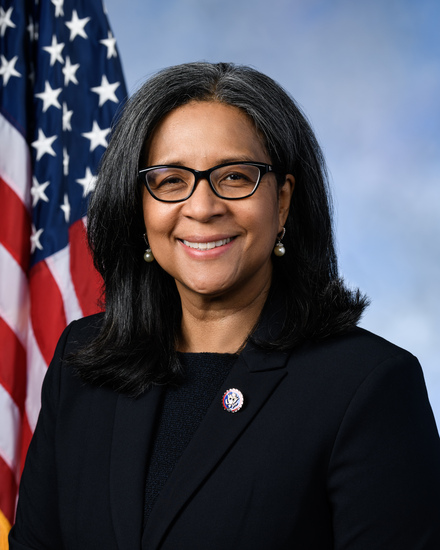
Rep. Marilyn Strickland
Sponsored bills
Maddy summaryThe CHEERS Act creates a new tax deduction for restaurants, bars, and entertainment venues that purchase energy-efficient draft beer equipment. It amends tax code Section 179D to treat stainless steel or aluminum draft containers and tap systems as "qualified energy-efficient property," allowing businesses to deduct these costs. The deduction applies only to equipment used specifically for distributing and selling alcohol in eligible venues, meeting existing energy efficiency standards. The provision takes effect for equipment placed in service after December 31, 2024.
Maddy summaryHR 3371, the Ensuring Security for Military Spouses Act, removes a residency requirement for military spouses seeking U.S. citizenship. It specifically waives the three-month state residency rule under immigration law for spouses of active-duty service members stationed in the U.S. who are already lawfully admitted for permanent residence. This change allows these spouses to apply for citizenship without having to live in the state where they file their application for three months. The bill directly affects military spouses of active-duty personnel serving within the United States.
Maddy summaryHR 3332, the Pacific Partnership Act, requires the U.S. President to develop a formal strategy for engagement with Pacific Island nations by 2026 and again by 2030. The strategy must outline U.S. diplomatic, defense, and economic goals; assess regional threats like natural disasters and foreign military activity; and detail resource plans for addressing these challenges. It mandates consultation with Pacific Island governments, regional organizations like the Pacific Islands Forum, and U.S. allies such as Australia and Japan. The bill does not create new programs but establishes a structured framework for U.S. policy coordination in the region, directly affecting U.S. government agencies and indirectly shaping U.S. relations with Pacific Island nations.
Maddy summaryHR 3316, the Stop Mental Health Stigma in Our Communities Act of 2025, requires the HHS Secretary to develop a national outreach strategy and conduct two systematic reviews targeting mental health disparities in Asian American, Native Hawaiian, and Pacific Islander (AANHPI) communities. The strategy mandates culturally tailored materials to reduce stigma, increase awareness of mental health services, and engage community members, funded at $3 million annually from 2026-2030. It also directs a year-long review of AANHPI youth mental health crises (including suicide rates) and a review of AANHPI behavioral health workforce shortages, both requiring disaggregated data reporting. The bill directly affects AANHPI individuals - particularly youth and underserved subgroups - by mandating federal action to address systemic barriers like language gaps and underrepresentation in care.
Maddy summaryHRES 400 is a ceremonial resolution recognizing May as Asian American, Native Hawaiian, and Pacific Islander Heritage Month. It formally celebrates the historical contributions of these communities to U.S. history and society, as documented in the resolution’s preamble. The resolution does not create new laws, allocate funding, or change policies - it serves solely as a symbolic acknowledgment by the House of Representatives. It highlights the diversity of these communities and their ongoing impact, referencing their growth, cultural milestones, and historical challenges. This recognition aligns with the existing statutory designation of May for Heritage Month under U.S. Code.
Maddy summaryHR 3290 designates the Museum of Pop Culture in Seattle, Washington, as the National Museum of Pop Culture. The bill clarifies that this designation does not make the museum part of the National Park System and explicitly states it does not require or permit federal funding for the museum. This is a purely procedural bill with no new funding, regulatory changes, or policy impacts. The museum remains a privately operated institution under its current structure.
Maddy summaryHR 3277, the Ensuring Lasting Smiles Act, requires group health plans and health insurance issuers to cover medically necessary outpatient and inpatient treatments for congenital anomalies or birth defects primarily affecting the eyes, ears, teeth, mouth, or jaw. This includes reconstructive procedures, dental/orthodontic support during treatment, and follow-up care, but excludes purely cosmetic surgery not tied to a medical diagnosis. Cost-sharing (like copays) for these services must not be stricter than for other medical benefits. The law takes effect for plan years beginning January 1, 2026, and mandates insurers to provide notice about this coverage to beneficiaries.
Maddy summaryHR 1030, the Flight 293 Remembrance Act, creates a program to support families of U.S. military personnel who died in non-combat plane crashes since 1984 (and earlier crashes with documented records). The bill requires the Defense and Veterans Affairs Secretaries to build a public database of crash victims' details, provide families with personalized guidance on accessing benefits and support services, and establish a dedicated contact point for ongoing assistance. It also mandates a two-year report to Congress assessing the program's progress, family satisfaction, and recommendations for improvement. The law ensures non-discrimination protections apply to all assistance provided under the program. This bill directly affects families of service members lost in non-combat aviation incidents.
Maddy summaryHR 3243, the Therapeutic Fraud Prevention Act of 2025, bans the provision of paid conversion therapy aimed at changing a person's sexual orientation or gender identity, and prohibits advertising such therapy as effective, safe, or without risk. It directly affects LGBTQ+ individuals and their families who might be targeted by these practices, as professionals have determined conversion therapy is ineffective and harmful. The law treats violations as deceptive acts under consumer protection laws, empowering the Federal Trade Commission and state attorneys general to enforce it through civil actions. It explicitly excludes legitimate gender transition support and non-discriminatory counseling from the ban.