

Uyghur Human Rights Protection Act This bill designates certain residents of the Xinjiang region in China as prioritized refugees of special humanitarian concern and addresses other related issues. This priority designation shall apply to individuals (and the spouses, children, and parents of such individuals) who (1) reside in or fled Xinjiang and who suffered persecution on account of their peaceful political, religious, or cultural activities or associations, or have a well-founded fear of such persecution; or (2) have been formally charged, detained, or convicted for certain peaceful actions related to Xinjiang. Such an individual may not be denied admission into the United States based primarily on an arrest or other adverse government action due to that individual's participation in protests. The bill also waives certain immigration-related requirements for such individuals. Furthermore, a Chinese national seeking refugee status shall be considered to have been persecuted on account of political opinion if the Chinese government revoked that individual's residency in any region of China because the individual submitted a nonfrivolous application for a U.S. immigration benefit. Similarly, if the Chinese government revoked a Chinese national's citizenship, nationality, or residency because that individual filed for a U.S. immigration benefit, that revocation shall constitute a changed circumstance. (Among other things, a changed circumstance may allow an individual who has been rejected for asylum to apply again.)
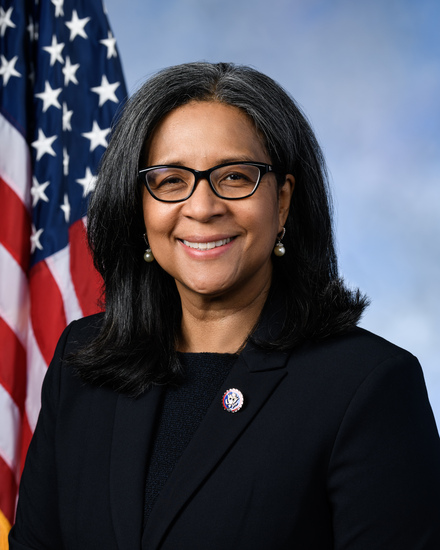
Rep. Marilyn Strickland
Sponsored bills
Non-Opioids Prevent Addiction In the Nation Act or the NOPAIN Act This bill temporarily establishes separate payments for certain non-opioid treatments under the Medicare prospective payment system for hospital outpatient department services and the payment system for ambulatory surgical center services. The bill applies to pain management treatments that are able to replace or reduce opioid consumption, as shown through clinical trials or data.
Pregnant Workers Fairness Act This bill prohibits employment practices that discriminate against making reasonable accommodations for qualified employees affected by pregnancy, childbirth, or related medical conditions. A qualified employee is an employee or applicant who, with or without reasonable accommodation, can perform the essential functions of the position, with specified exceptions. Specifically, the bill declares that it is an unlawful employment practice to fail to make reasonable accommodations to known limitations of such employees unless the accommodation would impose an undue hardship on an entity's business operation; require a qualified employee affected by such condition to accept an accommodation other than any reasonable accommodation arrived at through an interactive process; deny employment opportunities based on the need of the entity to make such reasonable accommodations to a qualified employee; require such employees to take paid or unpaid leave if another reasonable accommodation can be provided; or take adverse action in terms, conditions, or privileges of employment against a qualified employee requesting or using such reasonable accommodations. The bill sets forth enforcement procedures and remedies that cover different types of employees in relation to such unlawful employment practices. The Equal Employment Opportunity Commission must provide examples of reasonable accommodations that shall be provided to affected employees unless the employer can demonstrate that doing so would impose an undue hardship. The bill prohibits state immunity under the Eleventh Amendment to the Constitution from an action for a violation of this bill.
Providing Resources for Emergency Preparedness And Resilient Enterprises Act or the PREPARE Act This bill reauthorizes through FY2026 a pre-disaster mitigation program, administered by the Small Business Administration, for disbursing economic injury disaster loans to small businesses for protection of real estate, equipment, inventory, supplies, and materials. The bill also increases the amount for loans to take mitigating actions to protect damaged or destroyed property from possible future disasters.
Metastatic Breast Cancer Access to Care Act This bill expedites payment of Social Security Disability Insurance (SSDI) benefits and eligibility for Medicare coverage for those with metastatic breast cancer (i.e., breast cancer that has spread to other sites in the body). Specifically, the bill eliminates the 5-month waiting period for SSDI benefits and the subsequent 24-month waiting period for Medicare coverage for individuals with metastatic breast cancer. Under current law, individuals generally must wait five months after the onset of disability to begin receiving SSDI benefits and an additional 24 months to become eligible for Medicare.
I am Vanessa Guillén Act of 2021 This bill addresses the policies and procedures of the Department of Defense (DOD) for cases or allegations of sex-related offenses.
Renewable Energy Investment Act This bill allows taxpayers, including certain pass-thru entities such as partnerships and S corporations, to elect to receive tax excludable payments in lieu of amounts attributable to the tax credits for energy property and for electricity produced from certain renewable resources.
This bill increases the applicable threshold amount for heads of household in 2021 to $150,000 for purposes of the income phaseout in the child tax credit (thus making it equal to the threshold amount for married individuals filing joint tax returns).
Health Equity and Access under the Law for Immigrant Women and Families Act of 2021 or the HEAL Immigrant Women and Families Act of 20 21 This bill extends Medicaid and Children's Health Insurance Program coverage to individuals lawfully present in the United States who otherwise meet eligibility requirements. Individuals granted federally authorized presence also are required to maintain minimum essential health insurance coverage and are eligible for health insurance exchanges, reduced cost sharing, premium subsidies, and premium tax credits.
North Pacific Ocean Protection Act This bill prohibits the Department of the Interior from issuing a lease for the exploration, development, or production of oil or natural gas in specified areas of the Outer Continental Shelf off the coasts of Washington, Oregon, and California.