

Eliminating a Quantifiably Unjust Application of the Law Act of 2021 or the EQUAL Act of 2021 This bill eliminates the federal sentencing disparity between drug offenses involving crack cocaine and powder cocaine. Currently, different threshold quantities of crack cocaine and powder cocaine (e.g., 28 grams of crack cocaine and 500 grams of powder cocaine) trigger the same statutory criminal penalties. This bill eliminates the lower quantity thresholds for crack cocaine offenses. Under the bill, the same threshold quantities of crack cocaine and powder cocaine trigger the same statutory criminal penalties. The change applies to future cases and cases pending on the date of enactment. With respect to past cases, the bill authorizes a sentencing court to impose a reduced sentence on a defendant who was convicted or sentenced for a specified crack cocaine offense before this bill's enactment. A defendant does not have to be present at the sentence reduction hearing. Finally, the bill prohibits the reduction of a sentence that was previously reduced.
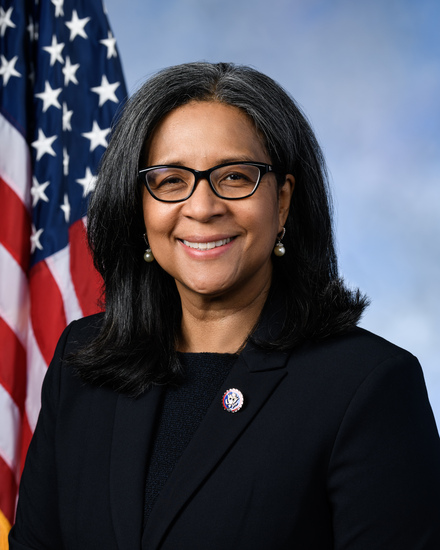
Rep. Marilyn Strickland
Sponsored bills
This bill requires the Department of the Interior to establish a grant program for plant genetics and genomics research related to (1) making riparian forests (e.g., forests on river banks) become more resilient to climate change and invasive species; and (2) providing critical habitat for animals and plants that are suffering from lost, degraded, or threatened habitat.
2020 WHIP+ Reauthorization Act This bill expands disaster indemnity programs through which the Department of Agriculture provides payments to agricultural producers for crop and milk losses resulting from hurricanes, wildfires, and other qualifying natural disasters. In particular, the bill extends the Wildfire and Hurricane Indemnity Program Plus (WHIP+), the On-Farm Storage Loss Program, and the Milk Loss Program to make losses that occurred in the 2021 and 2022 calendar years eligible for payments. Under current law, these programs provide disaster payments to agricultural producers with crop and milk losses resulting from qualifying natural disasters that occurred in the 2018 and 2019 calendar years.
Reducing Obesity in Youth Act of 2021 This bill requires the Centers for Disease Control and Prevention, in coordination with the Administration for Children and Families, to award grants to nonprofits, institutions of higher education, or consortia of these entities to promote healthy eating and physical activity and address food insecurity among children in early care and education settings.
This bill reauthorizes through FY2026 certain activities under the Impact Aid Program. The program provides funding to local educational agencies that have lost property tax revenue due to the presence of tax-exempt federal property or to those that have experienced increased expenditures due to enrollment of federally connected children (e.g., children living on Indian lands or military bases).
Streamlining Nutrition Assistance Paperwork Act of 2021 or the SNAP Act of 2021 This bill provides statutory authority for a Department of Agriculture (USDA) waiver that allows states to use a written record to document telephonic signatures for Supplemental Nutrition Assistance Program (SNAP) applications. Under current law, states may allow individuals to sign their SNAP applications over the telephone, but states must preserve audio recordings of those telephonic signatures. During the COVID-19 emergency, USDA waived the requirement to preserve the audio recording and allowed states to document the telephonic signatures through written records.
John R. Lewis Voting Rights Advancement Act of 2021 This bill establishes new criteria for determining which states and political subdivisions must obtain preclearance before changes to voting practices may take effect. Preclearance is the process of receiving preapproval from the Department of Justice (DOJ) or the U.S. District Court for the District of Columbia before making legal changes that would affect voting rights. A state and all of its political subdivisions shall be subject to preclearance of voting practice changes for a 10-year period if 15 or more voting rights violations occurred in the state during the previous 25 years; 10 or more violations occurred during the previous 25 years, at least 1 of which was committed by the state itself; or 3 or more violations occurred during the previous 25 years and the state administers the elections. A political subdivision as a separate unit shall also be subject to preclearance for a 10-year period if three or more voting rights violations occurred there during the previous 25 years. States and political subdivisions that meet certain thresholds regarding minority groups must preclear covered practices before implementation, such as changes to methods of election and redistricting. Further, states and political subdivisions must notify the public of changes to voting practices. Next, the bill authorizes DOJ to require states or political subdivisions to provide certain documents or answers to questions for enforcing voting rights. The bill also outlines factors courts must consider when hearing challenges to voting practices, such as the extent of any history of official voting discrimination in the state or political subdivision.
This resolution expresses the sense of the House of Representatives that the United States shall recognize kind actions in our country, encourage kindness, spread love, and foster a culture of being kind to one another.
Fair COLA for Seniors Act This bill bases cost-of-living adjustments for certain benefits available through federal and military retirement programs, Social Security, and specified programs for veterans on a price index that tracks the spending patterns of older consumers. The Bureau of Labor Statistics of the Department of Labor must publish that price index on a monthly basis.
Voices for Veterans Act This bill expands the membership of the Advisory Committee on Minority Veterans to include veterans who are lesbian, gay, bisexual, transgender, gender diverse, gender non-conforming, intersex, or queer. Among other responsibilities, the committee advises the Department of Veterans Affairs on the administration of benefits and provision of health care, benefits, and services to minority veterans.