

Maddy summaryHRES 344 is a non-binding resolution that declares racism a public health crisis in the United States, directly affecting Black, Latino, Native American, and other communities of color who experience severe health disparities. It cites historical and ongoing systemic racism as a root cause of unequal health outcomes, including higher infant mortality, chronic disease rates, and barriers to care. The resolution commits the federal government to developing a national strategy to address health inequities, dismantle systemic racism, and tackle social determinants of health affecting marginalized groups. It does not create new laws or funding but urges cross-government action based on established public health criteria.
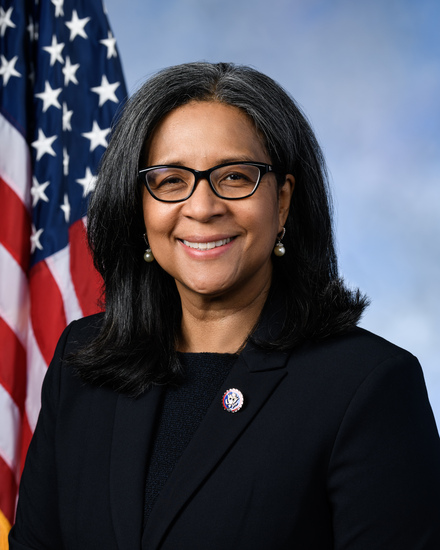
Rep. Marilyn Strickland
Sponsored bills
This resolution recognizes the opportunity for Black Maternal Health Week to raise national awareness of the state of Black maternal health in the United States.
PFAS Accountability Act of 2021 This bill provides a cause of action under the Toxic Substances Control Act for individuals or classes of individuals who were significantly exposed to perfluoroalkyl or polyfluoroalkyl substances, commonly referred to as PFAS. These substances are man-made and may have adverse human health effects. A variety of products contain the compounds, such as nonstick cookware or weatherproof clothing. Specifically, the bill provides a cause of action those who were significantly exposed to PFAS (or have reasonable grounds to believe they were exposed) against persons who engaged in any portion of a manufacturing process that created the PFAS and foresaw (or reasonably should have foreseen) the creation or use of PFAS would result in human exposure. The bill authorizes a court to award medical monitoring to claimants if (1) they have been significantly exposed to PFAS, (2) they have an increased risk of developing a disease associated with such exposure, (3) the increased risk provides a reasonable basis to conclude that periodic diagnostic medical examinations is necessary, and (4) the medical examinations are effective in detecting a disease associated with PFAS exposure. The bill establishes a presumption of significant exposure to PFAS if the claimant (1) provides medical results proving the presence of PFAS in the body, or (2) demonstrates the defendant's manufacturing process created the PFAS to which the claimant was exposed and the PFAS were released into one or more areas where the claimant would have been exposed for at least one year.
Honoring Our Fallen TSA Officers Act This bill extends public safety officers' death benefits to Transportation Security Administration employees performing official duties related to protecting the nation's transportation systems.
Gay and Trans Panic Defense Prohibition Act of 2021 This bill generally prohibits a federal criminal defendant from asserting, as a defense, that the nonviolent sexual advance of an individual or a perception or belief of the gender, gender identify or expression, or sexual orientation of an individual excuses or justifies conduct or mitigates the severity of an offense.
Veterans Medical Marijuana Safe Harbor Act This bill provides guidance related to veterans and medical marijuana that shall be effective for five years. Specifically, the bill authorizes (1) a veteran to use, possess, or transport medical marijuana in accordance with applicable state or Native American tribal law; (2) a Department of Veterans Affairs (VA) physician to discuss with a veteran the use of medical marijuana as a treatment if the physician is in a state or on tribal land that authorizes such treatment; or (3) a VA physician to recommend, complete forms for, or register veterans for participation in a medical marijuana treatment program in accordance with applicable state or tribal law. The bill requires the VA to report on (1) the effects of medical marijuana on veterans in pain; and (2) the relationship between state-approved medical marijuana treatment programs, program access, and opioid use and abuse reduction.
Camp Lejeune Justice Act of 2021 This bill allows certain individuals to sue and recover damages for harm from exposure to contaminated water at Camp Lejeune in North Carolina between August 1, 1953, and December 31, 1987. This action is available only to individuals who were exposed to contaminated water for at least 30 days. The bill prohibits the U.S. government from asserting specified immunity from litigation in response to such a lawsuit. The bill also prohibits an individual who brings such an action from bringing a separate tort action against the United States based on the same harm.
Equal Access to Abortion Coverage in Health Insurance Act of 2021 or the EACH Act of 2021 This bill requires federal health care programs to provide coverage for abortion services and requires federal facilities to provide access to those services. The bill also permits qualified health plans to use funds attributable to premium tax credits and reduced cost sharing assistance to pay for abortion services.
PrEP Assistance Program Act This bill establishes a grant program to provide pre-exposure prophylaxis (PrEP) and related services to individuals at no cost. PrEP is medication given to individuals at risk of HIV to reduce their likelihood of contracting the virus. The Department of Health and Human Services must award the grants to state, tribal, and local governments; certain health clinics; and community-based organizations.
Outdoors for All Act This bill directs the Department of the Interior to establish an outdoor recreation legacy partnership grant program under which Interior may award grants to states, certain political subdivisions of a state, special purpose districts, Indian tribes, or Alaska Native or Native Hawaiian communities or organizations. Funds must be used for projects to (1) acquire land and water for parks and other outdoor recreation purposes in qualifying areas, and (2) develop new or renovate existing outdoor recreation facilities that provide outdoor recreation opportunities to the public in qualifying areas. A qualifying area is an area that has a population of 30,000 or more in the most recent census, or that is administered by an Indian tribe or an Alaska Native or Native Hawaiian community organization. Interior shall give priority to projects that create or significantly enhance access to park and recreational opportunities in an urban neighborhood or community, engage and empower underserved communities and youth, provide opportunities for employment or job training for youth or underserved communities, establish or expand public-private partnerships, and take advantage of coordination among various levels of government.