

Maddy summaryHJRES 72 proposes a constitutional amendment to remove the exception in the Thirteenth Amendment that allows slavery and involuntary servitude as punishment for a crime. If ratified, this amendment would ban the use of forced labor in prisons as a criminal penalty, directly affecting how the U.S. criminal justice system handles sentencing. The resolution clarifies it does not interfere with voluntary work programs in correctional facilities, existing employment protections for incarcerated people, or community service alternatives. This change aims to eliminate a historical loophole that has disproportionately impacted Black Americans since the 1860s.
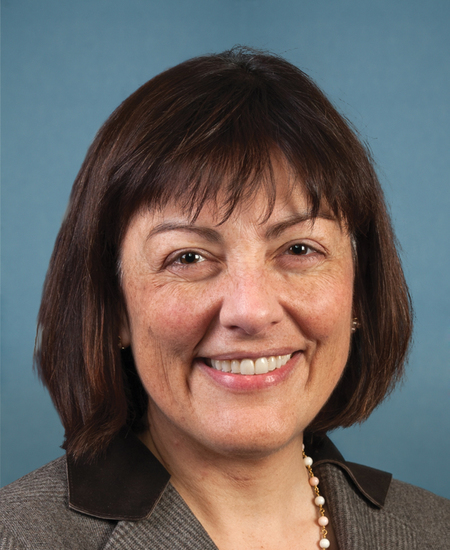
Rep. Suzan K. DelBene
Sponsored bills
Maddy summaryHRES 505 is a non-binding resolution recognizing June 19, 2023, as the annual observance of Juneteenth Independence Day. It acknowledges the historical significance of June 19, 1865, when Union troops announced the end of slavery in Texas, marking the first widespread celebration of freedom for formerly enslaved people in the U.S. The resolution encourages all Americans to observe the day through ceremonies and educational activities to honor this milestone in U.S. history. It does not create new policy or benefits but formally supports public recognition of Juneteenth as part of the nation's heritage.
Maddy summaryHR 4074, the 3D Printed Gun Safety Act of 2023, prohibits distributing online digital instructions (like 3D printer files) that can automatically create firearms or firearm parts. It directly affects individuals or entities sharing such digital files over the internet. The bill adds a new federal law making it unlawful to intentionally distribute these files, aiming to prevent untraceable firearms from being made without serial numbers, which law enforcement cannot track in criminal investigations. This addresses concerns that 3D-printed guns evade detection and undermine firearm tracing systems.
Maddy summaryHR 4021, the Fair and Open Skies Act, amends U.S. aviation law to require that the Department of Transportation consider labor standards when reviewing international air transport agreements. Specifically, it adds "preventing the undermining of labor standards" as a mandatory factor in the public interest test for approving such agreements under 49 U.S.C. § 40101. This change directly affects international airlines seeking to operate flights to or from the U.S. and the DOT, which must now evaluate whether proposed agreements could weaken U.S. labor protections. The bill updates existing provisions by replacing outdated language about "agreements with the United States Government" and explicitly including labor standards in the evaluation criteria.
Maddy summaryThis bill requires federal research agencies to develop guidelines addressing financial instability for graduate and postdoctoral researchers at institutions receiving federal funding. It mandates agencies to consider increasing stipends (adjusted for location and cost of living), improving access to healthcare, housing, transportation, and childcare, and reducing food insecurity. The bill also directs data collection on researcher financial struggles (disaggregated by demographics), funds a National Academies study on these issues, and requires a GAO report on agency implementation within three years. These provisions directly affect thousands of graduate students and postdocs conducting federally funded research across U.S. universities.
Maddy summaryThe CARE Act of 2023 strengthens protections for child farmworkers by amending the Fair Labor Standards Act. It raises minimum age requirements (restricting 14-15 year olds to family farms outside school hours, and limiting 16-17 year olds to family farm work outside school hours), repeals a waiver allowing children in hand-harvest labor, and increases penalties for violations (up to $60,115 for serious injury or death). The bill requires employers to report work-related injuries or deaths of child farmworkers under 18 and mandates annual reports to Congress on child farmworker safety data. It also prohibits children under 18 from working as pesticide handlers, directly affecting an estimated 100,000+ child farmworkers in the U.S.
Maddy summaryThis bill modifies airport funding rules to allow use of federal airport improvement funds for hydrogen storage and distribution infrastructure at airports. It also updates research partnerships to include hydrogen and battery technologies for aircraft, and requires the ASCENT research center to expand its work on hydrogen to reduce aviation emissions. The bill directly affects airports seeking to build hydrogen infrastructure, aviation research institutions, and aircraft manufacturers developing hydrogen-powered technologies. Key provisions include expanding eligible airport projects, updating technology partnership language, and mandating hydrogen research in national aviation plans.
Maddy summaryHR 3489, the Restore Veterans’ Compensation Act of 2023, prevents the military from reducing or taking back veterans’ disability compensation when they receive separation pay or voluntary separation benefits upon leaving service. The bill amends federal law to ensure veterans’ disability compensation (paid by the Department of Veterans Affairs) cannot be reduced because they received separation pay, and limits deductions from retirement pay to 25% per month, with hardship considerations. It requires the military to provide clear 90-day notice before deductions and allows waivers if repayment would cause financial hardship. This directly affects veterans who received separation pay and later qualify for disability compensation or retirement pay under VA or military programs.
Maddy summaryThis resolution designates May 5, 2023, as the "National Day of Awareness for Missing and Murdered Indigenous Women and Girls" to honor victims and support families. It asks the public to commemorate affected individuals and demonstrates solidarity with impacted communities. The bill also recommends the Justice Department commission a new study to update statistics on violence against Indigenous women, referencing the 2016 DOJ study that found 84.3% experienced violence in their lifetime. This symbolic measure aims to raise awareness and encourage federal action, without changing laws or allocating new funding.
Maddy summaryThis bill requires federal agencies collecting demographic survey data to begin including questions on sexual orientation, gender identity, and variations in sex characteristics (intersex traits) within 360 days of enactment. Agencies must review existing surveys to identify gaps, develop privacy-protective methods for collecting this data (including anonymization and data destruction protocols), and incorporate it into relevant reports within three years. The law applies to all federal surveys that collect standard demographic data (like race, ethnicity, and age), such as the census or health surveys, but does not compel individuals to disclose their status. It emphasizes maintaining confidentiality, allows limited agency waivers if standards can't be met, and mandates a congressional report on implementation within two years.