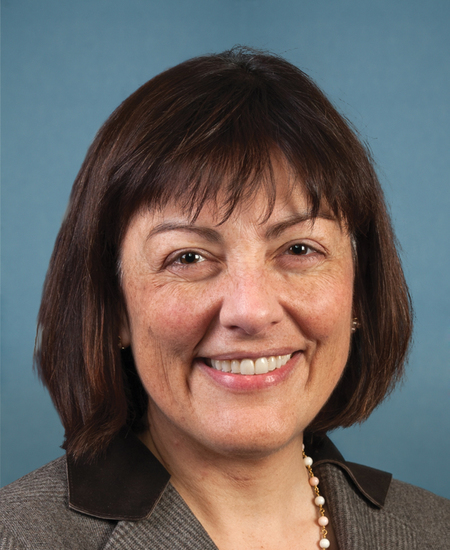
Photo of Suzan K. DelBene
D United States House · District 1 · Washington On the 2026 ballot

Rep. Suzan K. DelBene

Compare
Total votes
2,837
all sessions
Attendance
99%
16 missed
Near the chamber average
With party
98%
of cast votes
Higher than 89% of chamber peers
Bipartisan score
1%
crosses aisle rarely
Lower than 90% of chamber peers
Sponsored
1,712
bills & resolutions
Higher than 88% of chamber peers
Committees
4
assignments
1,712 bills and resolutions

Sponsored bills

Total
1,712
Primary
60
Co-sponsor
1,652
This page
1,712
matching current filters
Co-sponsor HRES 394
In committee · United States House · Co-sponsor
Expressing support for the designation of July 16, 2025, as "Glioblastoma Awareness Day".

Maddy summaryThis resolution (HRES 394) expresses congressional support for designating July 16, 2025, as "Glioblastoma Awareness Day." It aims to raise public awareness about glioblastoma, a highly aggressive and deadly brain cancer with a 6.9% 5-year survival rate. The resolution encourages greater attention to the disease's urgent unmet medical needs and supports research efforts, including the Glioblastoma Therapeutics Network. It directly affects patients, caregivers, and researchers by promoting recognition of the disease and urging collaborative efforts to improve treatments.

In committee May 6, 2025 1 co-sponsor
Co-sponsor HR 3218
In committee · United States House · Co-sponsor
Reproductive Data Privacy and Protection Act

Maddy summaryHR 3218, the Reproductive Data Privacy and Protection Act, requires law enforcement and government agencies to swear under oath that they will not use reproductive or sexual health information in investigations or legal proceedings. It amends federal wiretap laws (18 U.S.C. § 2518) and communication disclosure rules (18 U.S.C. § 2703) to mandate this protection. The bill defines "reproductive or sexual health information" broadly to include details about abortion, contraception, IVF, pregnancy, sexual health conditions, and related medical services. This directly affects law enforcement, courts, and service providers by legally restricting how sensitive health data can be used in investigations. The law aims to prevent government use of such data to target individuals seeking or providing reproductive care.

In committee May 6, 2025 1 co-sponsor
Co-sponsor HR 3223
In committee · United States House · Co-sponsor
To amend the Internal Revenue Code of 1986 to establish procedures relating to the attribution of errors in the case of third party payors of payroll taxes, and for other purposes.

Maddy summaryThis bill clarifies liability for payroll tax errors when third-party payroll services (like professional employer organizations) rely on employer certifications. It allows these services to depend on employer-provided information unless they knew or should have known of an error. If an error is discovered, the employer bears full liability unless the third party had "constructive knowledge" of the error, in which case liability is shared based on the portion of the error the third party knew about. The bill also prevents the IRS from delaying payroll tax credits or auditing employers solely because a third party relied on an erroneous certification from that employer. It directly affects third-party payroll services and the businesses that use their services for tax filings.

In committee May 6, 2025 1 co-sponsor
Co-sponsor HR 3199
In committee · United States House · Co-sponsor
Captive Primate Safety Act of 2025

Maddy summaryHR 3199, the Captive Primate Safety Act of 2025, bans the import, export, sale, breeding, and possession of certain nonhuman primates (including chimpanzees, gorillas, and lemurs) in interstate or foreign commerce. It directly affects pet owners, breeders, zoos, and wildlife facilities that currently handle these primates. The bill allows limited exceptions for existing owners who register their primates with the U.S. Fish and Wildlife Service within 180 days, agree to stop breeding/selling, and prevent public contact. It amends the Lacey Act to implement these restrictions, with enforcement beginning immediately regardless of regulatory timelines.

In committee May 5, 2025 1 co-sponsor
Co-sponsor HR 3178
In committee · United States House · Co-sponsor
Save Healthcare Workers Act

Maddy summaryHR 3178, the Save Healthcare Workers Act, creates a new federal crime for assaulting hospital staff while they are performing their duties, with penalties including fines and up to 10 years in prison (up to 20 years for aggravated cases involving weapons or injuries). The bill directly affects hospital employees - including nurses, doctors, and support staff - across all covered facilities (such as emergency rooms, long-term care centers, and children’s hospitals) by criminalizing violence that disrupts patient care. It also establishes a $25 million annual grant program (2025-2034) to help hospitals implement safety measures like staff de-escalation training, security technology, and coordination with local law enforcement. These provisions aim to address workplace violence in healthcare settings, which the bill cites as a growing problem affecting service delivery and staff retention.

In committee May 5, 2025 1 co-sponsor
Co-sponsor HR 3139
In committee · United States House · Co-sponsor
Public Service Worker Protection Act

Maddy summaryThis bill expands OSHA safety protections to cover public employees, including teachers, police, and sanitation workers, who were previously excluded from federal workplace safety regulations. It directly affects state and local government workers by amending the Occupational Safety and Health Act to explicitly include "the United States, a State, or a political subdivision of a State" under OSHA coverage. The key mechanism is a technical amendment to the law’s definition of covered employees, ensuring public service workers fall under the same safety standards as private-sector employees. The bill takes effect 90 days after enactment for most workplaces, with a 36-month delay for state/local governments without existing OSHA plans.

In committee May 1, 2025 1 co-sponsor
Co-sponsor HR 3112
In committee · United States House · Co-sponsor
Better CARE for Animals Act of 2025

Maddy summaryHR 3112, the Better CARE for Animals Act of 2025, strengthens enforcement of the federal Animal Welfare Act by requiring dealers and exhibitors to hold valid licenses for animal sales or transport (Section 4). It expands enforcement authority by allowing the Attorney General to sue violators for up to $10,000 per day, seize animals, and seek injunctions (Section 20), while clarifying that courts can address violations of related rules and regulations. The bill directly affects animal dealers, exhibitors, the USDA, and the Department of Justice, creating clearer pathways for holding violators accountable. Key provisions include updating definitions, broadening inspection powers to cover all regulations, and directing penalty funds toward temporary animal care costs during legal proceedings.

In committee Apr 30, 2025 1 co-sponsor
Co-sponsor HR 3115
In committee · United States House · Co-sponsor
Assault Weapons Ban of 2025

Assault Weapons Ban of 2025 This bill makes it a crime to knowingly import, sell, manufacture, transfer, or possess a semiautomatic assault weapon (SAW) or large capacity ammunition feeding device (LCAFD). The prohibition does not apply to a firearm that is (1) manually operated by bolt, pump, lever, or slide action, except for certain shotguns; (2) permanently inoperable; (3) an antique; (4) only capable of firing rimfire ammunition; or (5) a rifle or shotgun specifically identified by make and model. The bill also exempts from the prohibition the following, with respect to a SAW or LCAFD: importation, sale, manufacture, transfer, or possession related to certain law enforcement efforts, or authorized tests or experiments; importation, sale, transfer, or possession related to securing nuclear materials; and possession by a retired law enforcement officer. The bill permits continued possession, sale, or transfer of a grandfathered SAW, which must be securely stored. A licensed gun dealer must conduct a background check prior to the sale or transfer of a grandfathered SAW between private parties. The bill permits continued possession of, but prohibits sale or transfer of, a grandfathered LCAFD. Newly manufactured LCAFDs must display serial number identification. Newly manufactured SAWs and LCAFDs must display the date of manufacture. The bill also allows a state or local government to use Edward Byrne Memorial Justice Assistance Grant Program funds to compensate individuals who surrender a SAW or LCAFD under a buy-back program.


In committee Apr 30, 2025 1 co-sponsor
Co-sponsor HR 3104
In committee · United States House · Co-sponsor
Ukrainian Adjustment Act of 2025

Ukrainian Adjustment Act of 2025 This bill provides a streamlined process for certain Ukrainian nationals (including accompanying spouse and children) who are living in the United States to receive lawful permanent resident status. Specifically, the bill permits Ukrainian nationals who have been paroled into the United States after February 20, 2014, to apply for and receive lawful permanent resident status. Additionally, the Department of Homeland Security (DHS) may waive grounds for inadmissibility (excluding certain crimes or security related grounds) for individuals who apply for status adjustment. DHS must establish vetting requirements (including an interview) for applicants that are equivalent to those under the United States Refugee Admissions Program. The bill also preserves eligibility for the status adjustment of certain battered spouses whose eligibility for such status stemmed from a marriage that has terminated. Finally, the bill requires DHS to issue guidance to implement these requirements and establishes a deadline for eligible individuals to apply for adjustment.

In committee Apr 30, 2025 1 co-sponsor
Co-sponsor HR 3098
In committee · United States House · Co-sponsor
FAIR Fleets Act

Maddy summaryThis bill requires the U.S. Postal Service to assess and improve its fleet vehicle distribution, focusing on underserved areas like rural communities, regions with outdated vehicles, counties with excessive mail delivery delays, high-poverty neighborhoods, and tribal lands. It mandates a strategic plan to increase vehicle availability nationwide and modernize the fleet with fuel-efficient vehicles as soon as practicable. The Postal Service must submit annual reports to Congress detailing vehicle distribution by state, progress on underserved areas, and improvement recommendations using specific definitions for "underserved areas" established in the bill. These reports will track metrics like vehicle age in postal regions and delivery delay comparisons to national averages.

In committee Apr 30, 2025 1 co-sponsor
Showing 391 to 400 of 1,712 bills
Previous 1 … 39 40 41 … 172 Next