

Maddy summaryThis bill establishes federal worker heat protection standards to prevent heat-related illness and injury. It requires employers to provide a workplace free from heat stress hazards, including access to cool water, scheduled rest breaks, shaded cooling areas, and training on heat illness symptoms. The Secretary of Labor must create these standards within one year, incorporating evidence-based practices like engineering controls (e.g., ventilation), administrative measures (e.g., adjusted schedules), and employer-paid personal protective equipment. The law directly affects all employers in high-heat work environments - such as construction, agriculture, and manufacturing - and strengthens whistleblower protections for workers reporting safety violations.
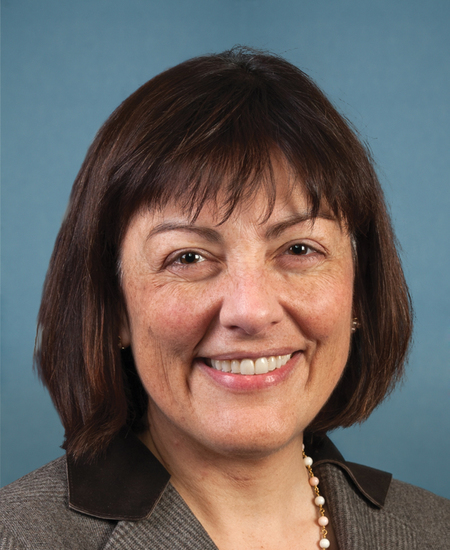
Rep. Suzan K. DelBene
Sponsored bills
Maddy summaryHR 4470, the *Removing Burdens From Organ Donation Act*, requires hospitals to electronically notify organ procurement agencies when a potential donor is deceased or near death, with remote access to updated electronic health records (EHRs). This applies to most hospitals starting two years after the law's enactment, but allows exemptions for rural hospitals lacking reliable internet, those hit by cyberattacks, or disaster-affected facilities. The bill mandates federal guidance for hospitals and EHR companies on implementation, plus annual reports on exemptions and a GAO study on costs, rural challenges, and transplant outcomes. It directly affects hospitals, organ procurement agencies, and EHR providers by streamlining donor notification processes.
Maddy summaryThe Child Care for Working Families Act creates a federal program to provide affordable, high-quality child care for working families with children under age 6. It would provide direct child care assistance through certificates or grants to parents, with no copayment required for families at or below 85% of state median income. The program requires states to implement quality standards for child care providers, including a tiered quality system and minimum wage requirements for staff (at least a living wage equivalent to elementary educators). The bill appropriates $20 billion for the program over five years, with additional funding for quality improvement initiatives and universal preschool services.
Maddy summaryThis non-binding House resolution (HRES 577) demands that the current administration immediately release all unclassified federal documents related to Jeffrey Epstein, including flight logs, correspondence, and evidence. It specifically requires the release of materials involving Epstein, Ghislaine Maxwell, and known associates, with redactions only to protect minor victims' identities and ongoing prosecutions. The resolution also calls for the Department of Justice and FBI to submit a report on any delays or evidence suppression related to the case. As a resolution, it does not create new law but serves as a formal congressional demand for transparency regarding Epstein-related investigations.
Maddy summaryHR 4382 authorizes the U.S. Mint to produce commemorative coins for the 2028 Los Angeles Olympics/Paralympics and 2034 Salt Lake City Winter Olympics/Paralympics. It specifies gold, silver, and half-dollar coin designs with defined mintage limits (e.g., up to 100,000 $5 gold coins for each event), all bearing inscriptions like "2028" or "2034" and standard coin features. A surcharge ($5-$50 per coin) is added to sales, with all funds directed to the respective Olympic committees to support event hosting and legacy programs like youth sports. The bill ensures no net cost to the government by requiring surcharge revenues to cover all design, production, and marketing expenses before funds are disbursed.
Maddy summaryHCONRES 42 is a symbolic congressional resolution recognizing the persistent wage gap between Black women and White, non-Hispanic men in the U.S. It highlights that Black women earn 66 cents for every dollar earned by White, non-Hispanic men working full-time year-round, with the gap taking over 200 years to close at current rates. The resolution emphasizes how this disparity - rooted in both racial and gender discrimination - impacts Black women’s ability to afford essentials like education, childcare, and housing. It does not create new laws or policies but formally acknowledges the issue on Black Women’s Equal Pay Day (July 10, 2025) and reaffirms support for equal pay.
Maddy summaryHRES 575 is a symbolic resolution designating July 10th as "Journeyman Lineworkers Recognition Day." It honors lineworkers who face significant risks daily - working at heights near live wires and responding to disasters like hurricanes and wildfires. The resolution specifically references Henry Miller, an early leader of the International Brotherhood of Electrical Workers, who died on July 10, 1896, while troubleshooting an outage. It encourages the public to recognize these workers' contributions but does not create new laws or allocate funding.
Maddy summaryThe Expanding Access to Mental Health Services in Schools Act of 2025 creates a federal grant program to help high-need schools hire and retain mental health professionals like counselors, psychologists, and social workers. It targets schools in the top 15% of need (based on student poverty or counts) that lack required staff ratios, such as one counselor per 250 students. Grants fund recruitment incentives (e.g., student loan repayment), retention programs, and evidence-based mental health services, with recipients required to contribute 25% of costs from non-federal funds. Schools must report annually on staff numbers, student-to-staff ratios, and retention rates to track progress toward improved mental health access.
Maddy summaryHR 4265, the Reproductive Health Travel Fund Act of 2025, would provide $350 million annually (2026-2030) in federal grants to cover travel and logistical costs for people seeking abortion care in states with bans or severe restrictions. The bill directly affects individuals who must travel across state lines for abortion services, particularly those facing systemic barriers like Black, Indigenous, and low-income people. Grants can cover round-trip travel, lodging, childcare, meals, translation, and lost wages, but cannot fund the abortion procedure itself. Eligible recipients are community-based abortion funds meeting specific criteria, with priority given to organizations serving those impacted by state abortion bans.
Maddy summaryHRES 550 is a non-binding House resolution recognizing June 2025 as LGBTQIA+ Pride Month. It formally encourages all U.S. citizens to celebrate Pride Month to learn about LGBTQIA+ history, including the Stonewall Inn and Compton's Cafeteria uprisings. The resolution affirms that LGBTQIA+ rights are human rights and emphasizes the ongoing struggle for equality. It has no legal effect but serves as a symbolic statement of support for the LGBTQIA+ community and its history.