

Maddy summaryThis bill requires federal agencies to clarify how they recognize special districts (like water, fire, or school districts operating separately from cities or counties) as eligible for federal grants. It mandates the OMB Director to issue guidance within 180 days, directing agencies to adopt this standard within one year for all federal financial assistance programs. The bill ensures special districts - defined as state-created entities with budgetary autonomy for specific services - can consistently access existing federal funding they currently face barriers to. A report on agency implementation must be submitted to Congress two years after enactment.
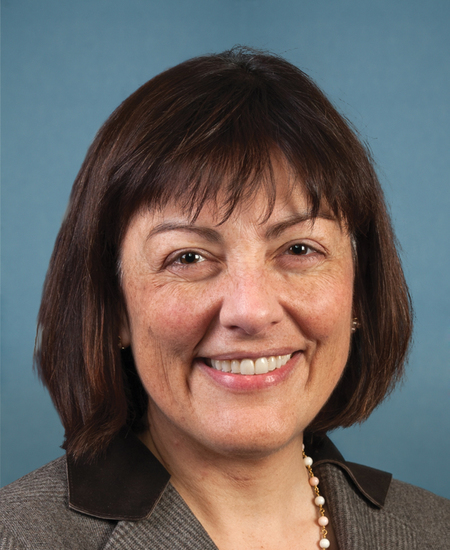
Rep. Suzan K. DelBene
Sponsored bills
Governing Unaccredited Representatives Defrauding VA Benefits Act or the GUARD VA Benefits Act This bill imposes fines on individuals for soliciting, contracting for, charging, or receiving any unauthorized fee or compensation with respect to the preparation, presentation, or prosecution of any claim for Department of Veterans Affairs benefits. The attempted commission of such offenses is also punishable by fine.
Maddy summaryThe Hospice CARE Act of 2026 introduces stricter oversight and payment reforms for Medicare hospice programs. It temporarily halts enrollment of new hospice programs for five years, with exemptions for areas lacking adequate care access, while requiring enhanced surveys and ownership reporting for existing programs. The bill also mandates that physicians certifying terminal illness must not have financial ties to the hospice program, expands who can make these certifications, and requires face-to-face patient encounters before recertification. Payment adjustments include higher rates for specific palliative services and new rules for respite care, alongside stricter penalties for programs that fail to meet quality reporting standards.
Maddy summaryThis bill exempts H-1B visa holders working in healthcare from a presidential restriction that requires a $100,000 payment for entry into the United States. It directly affects foreign medical professionals and healthcare workers who hold H-1B nonimmigrant visas. The legislation removes the additional fee requirement for these workers while limiting any fees that may be charged to the standard amount already established under immigration law. The bill defines healthcare workers using the existing definition from the Affordable Care Act and was introduced in the 119th Congress in March 2026.
Maddy summaryHR 2294 reauthorizes the Integrated Coastal and Ocean Observation System Act of 2009, extending funding and updating governance for the nation's ocean and coastal observation network. It changes references from "Council" to "Committee" throughout the law and adds requirements for federal agencies to collaborate with regional coastal observing systems on data sharing. The bill specifically directs agencies to conduct operational oceanography measurements and establishes $56 million annually for fiscal years 2026 through 2030 to support this system. This bill directly affects federal agencies managing ocean observation programs and regional coastal data networks.
Maddy summaryThis bill, known as the Fair Wages for Home Care Workers Act, would change federal labor rules to require overtime pay and minimum wage protections for certain babysitters. It specifically targets casual babysitting work that is irregular or intermittent, while excluding trained medical professionals like nurses and home health aides from these changes. The law would also allow babysitters to perform up to 20% of their work time on unrelated household tasks without losing their protected status. These amendments would apply to workers covered by the Fair Labor Standards Act of 1938 who provide custodial care for infants or children in private homes.
Maddy summaryThis bill reorganizes the Corporation for National and Community Service into a new executive department called the AmeriCorps Administration, which would oversee national service programs. It creates a seven-member Advisory Board with representatives from different age groups and political parties to advise on program policies and priorities. The legislation increases financial support for participants by raising living allowances and educational awards, while also establishing a new National Service Foundation to accept private donations for the programs. Additionally, the bill sets a goal of serving 1 million participants annually by 2036 and creates an outreach program to notify young people aged 17-30 about service opportunities.
Maddy summaryThis bill, known as the Diabetes Foot Health Access and Modernization Act of 2026, makes two main changes to federal healthcare programs. First, it allows Medicaid to cover foot and ankle care services provided by podiatric physicians, ensuring patients have access to this specialized care. Second, it updates Medicare rules to clarify documentation requirements for diabetic shoes, specifying conditions under which patients can receive extra-depth or custom-molded footwear. The changes take effect on January 1, 2026, for Medicaid services and January 1, 2028, for Medicare shoe coverage.
Maddy summaryThis bill would require infant formula manufacturers to conduct standardized testing for specific pathogens and microorganisms in both their facilities and finished products. It mandates that companies report positive test results to the FDA within one business day and retain records of these findings for inspections. The legislation also requires the FDA to notify congressional committees within one business day of receiving positive test results or issuing certain inspection classifications. Additionally, the bill establishes clear inspection standards that apply to all infant formula products regardless of where they are made.
Maddy summaryThis bill, titled the Expanding Support for Living Donors Act of 2026, amends the Public Health Service Act to expand financial assistance for individuals who donate organs while alive. It directly affects living organ donors by removing income restrictions and increasing the maximum reimbursement amount for their qualifying medical expenses. The legislation sets a new maximum reimbursement of $10,000 for fiscal year 2027, with automatic annual adjustments based on inflation, and requires the Secretary of Health and Human Services to submit detailed annual reports on program funding, participation, and outcomes. Additionally, the bill mandates a Government Accountability Office study to examine how Medicare could potentially cover costs currently reimbursed through this program.