

Preventing Unnecessary Deaths During Life-Threatening Events Act This bill modifies the procedures for terminating electric service under the Public Utility Regulatory Policies Act of 1978; utilities may not terminate electricity during an extreme heat weather event or extreme cold weather event.
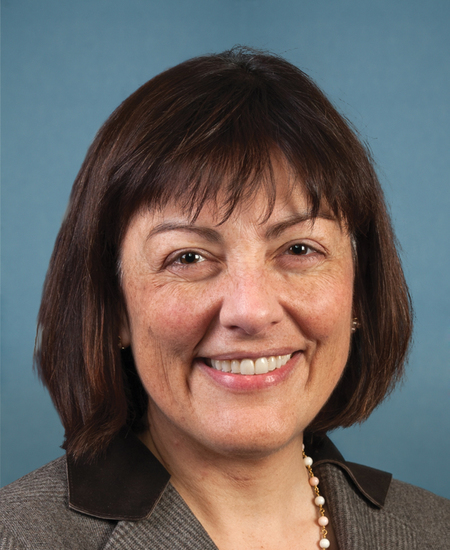
Rep. Suzan K. DelBene
Sponsored bills
Keeping Ecosystems Living and Productive Act or the KELP Act This bill directs the National Oceanic and Atmospheric Administration (NOAA) to award grants to carry out projects related to the conservation, restoration, or management of kelp forest ecosystems. NOAA shall award grants for projects that address greatest relative regional declines in kelp forest ecosystems; focus on, among other things, long term ecosystem resilience, kelp forest seeding and connectivity, or urchin removal and other actions to reestablish trophic structure; or are identified by federal or state restoration and management plans as focal areas for recovery of kelp forests and associated species.
This bill authorizes the Department of Commerce to award competitive grants to Indian tribes to further achievement of tribal coastal zone objectives. Specifically, these tribal coastal zone objectives include protecting, restoring, or preserving areas in the zone that hold important ecological, cultural, or sacred significance for the tribes or traditional, historic, and aesthetic values essential to the tribes; preparing and implementing a special area management plan and technical planning for important coastal areas; and implementing any coastal or shoreline stabilization measure for the purpose of public safety, public access, or cultural or historical preservation.
Prevent All Soring Tactics Act of 2022 or the PAST Act of 2022 This bill addresses the practice of soring horses. The soring of horses includes various actions taken on horses' limbs to produce higher gaits that may cause pain, distress, inflammation, or lameness. Specifically, the bill expands soring regulation and enforcement at horse shows, exhibitions, sales, and auctions, including by establishing a new system for inspecting horses for soring. In addition, the bill increases penalties for violations.
National Aviation Preparedness Plan Act of 2022 This bill directs the Department of Transportation (DOT) to develop a national aviation preparedness plan for communicable disease outbreaks, including to (1) create a process to identify appropriate personal protective equipment to reduce the likelihood of exposure to a communicable disease that has the potential to cause an epidemic or pandemic of infectious disease that would constitute a public health emergency of international concern (i.e., a covered communicable disease); and (2) improve coordination between airports, air carriers, and governmental entities with respect to preparing for and responding to communicable disease outbreaks. In developing the plan, DOT must consult with aviation industry and labor stakeholders such as air carriers. The Government Accountability Office must conduct a study assessing the plan, including (1) whether the plan meets the obligations of the United States under international conventions and treaties, and (2) the extent to which the U.S. aviation system is prepared to respond to an outbreak of a covered communicable disease.
Norman Y. Mineta Japanese American Confinement Education Act This bill increases the authorization of appropriations for the Japanese American Confinement Sites (JACS) grant program, which supports the preservation of U.S. confinement sites that were used to detain Japanese Americans during World War II (i.e., internment camps). It also establishes a program within JACS to provide grants to Japanese American nonprofits to educate individuals about the historical significance of these events.
This concurrent resolution expresses opposition to the application of criminal laws to pregnancy outcomes and affirms that people deserve access to high-quality health care without fear of reprisal or punishment.
This concurrent resolution supports the goals and ideals of the National Day of Silence (during which students vow to remain silent to bring attention to the harassment and discrimination faced by lesbian, gay, bisexual, transgender, queer, nonbinary, Two-Spirit, intersex, and questioning individuals in schools).
Maddy summaryHJRES 53 proposes a constitutional amendment to ban slavery and involuntary servitude as a criminal punishment. Currently, the 13th Amendment to the U.S. Constitution permits such punishments for crimes, creating a legal loophole. If ratified by 3/4 of state legislatures, this amendment would eliminate that exception nationwide, making it unconstitutional to impose forced labor or slavery as part of criminal sentences. The change would directly affect all states' criminal justice systems, particularly prison labor practices, by prohibiting these punishments for any offense.
This joint resolution proposes a constitutional amendment providing that the rights protected by the Constitution are the rights of natural persons only. Artificial entities, such as corporations, shall have no rights under the Constitution and are subject to regulation. The amendment requires federal, state, and local government to (1) regulate, limit, or prohibit election contributions and expenditures, including a candidate's own contributions and expenditures; and (2) require that any permissible contributions and expenditures be publicly disclosed. The judiciary is prohibited from construing the spending of money to influence elections to be speech under the First Amendment, and the amendment shall not be construed to abridge the freedom of the press.