

Maddy summaryThe Latonya Reeves Freedom Act of 2023 strengthens the Americans with Disabilities Act's requirement that individuals with disabilities receive long-term services and supports in community settings rather than institutions. It defines "community-based" services to include specific housing options where individuals with disabilities can live independently with maximum control over their lives, including access to integrated housing, employment, and community participation. The bill requires states to develop transition plans to move people from institutional settings to community-based services within 12 years, with measurable annual targets for reducing institutionalization. It establishes enforcement mechanisms through the Department of Justice and Department of Health and Human Services to ensure compliance with these requirements.
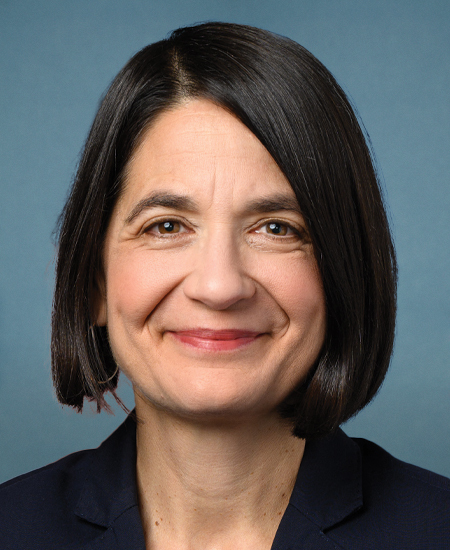
Rep. Becca Balint
Sponsored bills
Maddy summaryThe Puppy Protection Act of 2023 sets new standards for businesses that sell dogs (dealers), directly affecting pet stores and breeders operating under the Animal Welfare Act. It requires specific housing with space allowances based on dog size (e.g., 12-30 square feet per dog), temperature control (45-85°F), clean food twice daily, and daily exercise or socialization with humans/dogs for at least 30 minutes. The bill also mandates annual veterinary exams including dental care, strict breeding limits (e.g., age restrictions, maximum 2 litters in 18 months), and efforts to place retired breeding dogs in homes instead of selling them to other breeders. Regulations must be finalized within 18 months of enactment.
Maddy summaryHRES 303 is a symbolic House resolution designating April 2023 as "Care Worker Recognition Month" to honor care workers in the U.S. It specifically recognizes home care workers supporting older adults and people with disabilities, childcare workers, and early educators. The resolution highlights how these workers enable families to remain in the workforce and emphasizes the importance of their roles in community care. This is a non-binding expression of support with no new policy or funding changes.
Maddy summaryThe Ending PUSHOUT Act of 2023 aims to reduce discriminatory school discipline practices that disproportionately push students of color, particularly girls of color, out of school. It requires schools to collect detailed data on disciplinary actions disaggregated by race, ethnicity, gender identity, disability status, and other factors to identify patterns of overuse and discrimination. The bill provides grants to schools to implement trauma-informed practices, restorative approaches, and mental health supports instead of exclusionary discipline, while prohibiting out-of-school suspensions for minor infractions in early grades and banning practices like corporal punishment and certain restraints. It also establishes a joint task force with diverse representation to study discipline disparities and recommend solutions to prevent students from being pushed out of schools. The legislation seeks to create safer school environments by addressing the root causes of discipline issues rather than relying on punitive measures.
Maddy summaryThe Fairness to Freedom Act of 2023 guarantees the right to government-funded legal counsel for immigrants facing removal, exclusion, deportation, or bond proceedings who cannot afford private representation. It establishes the Office of Immigration Representation to oversee this system, with Local Boards in each region managing appointments and ensuring quality representation through public defender organizations, community defender organizations, and attorney panels. The bill requires counsel to be appointed within 24 hours for detained individuals, ensures continuous representation through all proceedings, mandates minimum funding based on a prosecution-defense ratio, and prohibits using appointed counsel as a basis for public charge determinations.
Maddy summaryHR 2642, the PEER Mental Health Act of 2023, provides federal grants to train school staff, students, parents, and caregivers to recognize mental health symptoms in children and adolescents, refer them to services, and apply basic mental health first aid during crises. The bill requires 25% of grant funds to support schools in rural areas and mandates rigorous program evaluation for grant recipients. It authorizes $24.96 million annually from 2024 to 2028 to cover training costs and community resource education. This legislation directly affects schools, particularly rural schools, by expanding mental health awareness and response capabilities for students and their families.
Small Business Tax Equity Act of 2023 This bill exempts a trade or business that conducts marijuana sales in compliance with state law from a provision in the Internal Revenue Code that prohibits business-related tax credits or deductions for expenditures in connection with trafficking in controlled substances.
Maddy summaryThe Family Violence Prevention and Services Improvement Act of 2023 amends the Family Violence Prevention and Services Act to improve services for victims of domestic violence, dating violence, and family violence. The bill authorizes $270 million annually for fiscal years 2024-2028, with specific allocations including 12.5% for Tribal grantees, 2.5% for culturally specific services, and funds for national hotlines and resource centers. It establishes a national domestic violence hotline, a National Indian Domestic Violence Hotline, and resource centers for Alaska Native and Native Hawaiian populations, requiring all services to be trauma-informed, culturally relevant, and accessible to underserved populations including racial and ethnic minorities, people with disabilities, and Tribal communities. The bill also mandates a study on financial stability support for survivors of domestic violence.
Maddy summaryHJRES 54 proposes a constitutional amendment stating that only natural persons (human beings) have rights protected by the U.S. Constitution, explicitly denying constitutional rights to corporations, limited liability companies, and other artificial entities. It would require governments to regulate or restrict corporate political contributions and spending to ensure equal access to elections, mandate public disclosure of all political spending, and clarify that campaign finance rules do not violate the First Amendment. This amendment directly affects corporations and other artificial entities by removing their constitutional standing in legal challenges and subjecting their political activities to stricter government oversight. If passed, it would fundamentally change how corporations interact with election laws and constitutional protections, though it preserves press freedom under Section 3. The bill is a proposed amendment requiring ratification by 3/4 of state legislatures to become part of the Constitution.
Maddy summaryThe School Meals Expansion Act (HR 2567) amends the National School Lunch Act to make it easier for schools to provide free meals to all students. It lowers the income threshold to 25% (from a higher previous rate) and increases the eligibility multiplier to 2.5 for school years starting July 1, 2023. This means school districts with 25% or more students from low-income families can now qualify for full federal funding to offer free meals to all students without requiring individual applications. The bill directly affects local school districts that choose to participate in the community eligibility program under the National School Lunch Act.