

Maddy summaryThe Protecting Our Democracy Act is a comprehensive legislative bill designed to prevent abuses of presidential power, restore checks and balances, and defend elections against foreign interference. Key provisions include prohibiting the President from granting self-pardons, requiring congressional oversight for pardons involving the President or their family, and banning the President from accepting payments from individuals who have received clemency. The bill also strengthens enforcement of the Hatch Act and ethics rules for political appointees, mandates greater transparency in presidential tax returns and campaign finances, and restricts the use of federal property for political conventions. Additionally, it expands reporting requirements for foreign contacts in federal campaigns and imposes stricter penalties for violations of election laws.
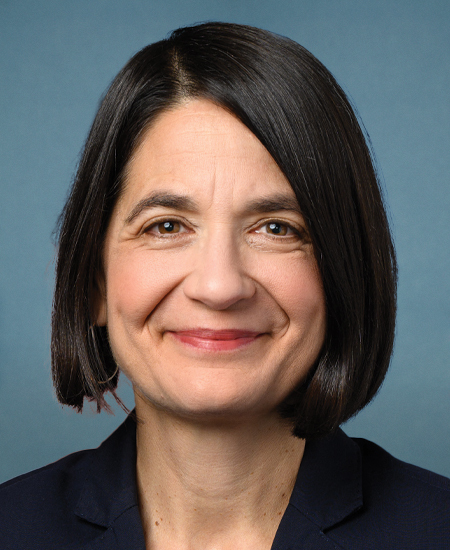
Rep. Becca Balint
Sponsored bills
Maddy summaryThis bill establishes a compensation fund to provide financial support to law enforcement officers who actively defended the U.S. Capitol on January 6, 2021, and suffered injuries, emotional distress, or death as a result. The program is administered by a Special Master appointed by the Attorney General, who will review individual claims for economic and non-economic losses while ignoring any questions of negligence. Eligible officers can receive specific payments for their injuries or the death of a colleague, with a guaranteed minimum of $4.975 million for death claims, plus an additional equal distribution to all qualifying officers regardless of injury status. The legislation also includes provisions to reduce payouts by any other compensation the claimant has already received and grants the federal government the right to recover funds if they are later paid out in related legal settlements.
Maddy summaryThe Universal School Meals Program Act of 2026 mandates that all public schools provide free breakfast and lunch to every enrolled student, regardless of income. It establishes specific funding rates for these meals, adjusts payments based on the use of locally sourced food, and eliminates the ability of schools to collect debt for unpaid charges. Additionally, the bill expands free meal access to summer programs, afterschool care, and incarcerated juveniles while updating poverty measurement standards across various federal education and nutrition laws.
Maddy summaryThe Full-Service Community School Expansion Act of 2026 authorizes billions of dollars in federal funding to expand a program that helps public schools in high-poverty areas provide integrated student supports, extended learning time, and active community engagement. The bill establishes specific roles for coordinators and directors to manage these efforts and requires schools to form leadership teams that include students, parents, educators, and community members. Funding is distributed through competitive grants to local educational agencies, states, and tribal organizations, with priority given to schools serving low-income students and those in rural or tribal areas. The legislation also mandates regular reporting on student outcomes and school climate to ensure accountability and continuous improvement.
Maddy summaryThis concurrent resolution directs the President to end the use of U.S. military forces in hostilities against Iran unless a formal declaration of war or specific authorization is issued. The measure allows the United States to continue defending itself, its allies, and maintaining a defensive troop presence in the region, while explicitly stating that the resolution does not authorize new military actions. Additionally, the bill clarifies that ending hostilities does not interfere with ongoing intelligence collection, analysis, or sharing activities related to threats from Iran.
Maddy summaryThe Competitive Prices Act modifies how antitrust lawsuits are filed and proven by clarifying the legal standards for alleging price-fixing conspiracies. It allows plaintiffs to establish a claim by showing that companies acted similarly to manipulate prices alongside specific supporting factors, such as motives to coordinate or actions that make no sense unless a conspiracy existed. Under this bill, individuals and organizations do not need to provide direct proof of a secret agreement or prove that independent action was impossible at the early stages of a lawsuit. The law applies to civil cases involving federal agencies, state attorneys general, and private parties seeking damages for violations of antitrust laws.
Maddy summaryThe No WAR Act prohibits Congress from using budget reconciliation procedures to fund military hostilities against Iran unless such actions are explicitly authorized by a formal declaration of war or a specific authorization for the use of military force. This legislation directly affects the legislative process by establishing a point of order that blocks any reconciliation bill attempting to provide budget authority for offensive military operations, strikes, or covert actions targeting Iranian military forces, territory, or government institutions. The bill also defines proxy forces as any foreign military or irregular groups operating with U.S. direction or material support, ensuring these entities are included in the restrictions on unauthorized funding. By amending the Congressional Budget and Impoundment Control Act, the measure aims to prevent the use of budgetary shortcuts to bypass the constitutional requirement for congressional approval before engaging in armed conflict with Iran.
Maddy summaryThis bill, titled the Protecting Human Rights and Public Health in Foreign Assistance Act, aims to cancel specific regulations issued by the Department of State. It directly affects the federal government by prohibiting any department or agency from enforcing, implementing, or proposing rules related to protecting life, combating discriminatory equity ideology, and combating gender ideology in foreign aid programs. The legislation treats these cancelled rules as if they never existed, effectively nullifying their impact on future foreign assistance policies.
Maddy summaryThis bill allows states to charge fees to boat owners when issuing vessel registration numbers. The collected funds can be used for specific purposes such as search and rescue, boater safety programs, and efforts to control aquatic invasive species. States are permitted to collect these fees alongside other standard registration charges. The legislation also restricts how the money can be spent, ensuring it is only used for activities that directly benefit recreational boating and waterway safety.
Maddy summaryThe HCBS Access Act requires Medicaid to cover a broad range of home and community-based services for people with disabilities and older adults, aiming to eliminate waiting lists and ensure these individuals can live in their communities rather than institutions. To achieve this, the bill mandates that states create detailed implementation plans, establishes a new advisory panel to recommend additional services, and sets a 100 percent federal funding match for these services to encourage state participation. The legislation also strengthens protections for family caregivers, requires states to remove financial liens on the estates of deceased beneficiaries, and creates a national technical assistance center to support the recruitment and training of direct care workers. Additionally, the bill directs the government to establish a separate occupational category for direct support professionals to better track workforce shortages and improve data collection on this critical labor force.