

Maddy summaryHRES 30 is a ceremonial House resolution recognizing two milestones: the 94th anniversary of Dr. Martin Luther King, Jr.'s birth (January 15, 1929) and the 40th anniversary of the federal Martin Luther King, Jr. Holiday (observed January 16, 2023). It contains no policy changes or binding requirements, as it is purely commemorative. The resolution urges the House to observe both dates and encourages the public to honor Dr. King’s legacy and his vision of equality. It does not affect any individuals, groups, or government programs.
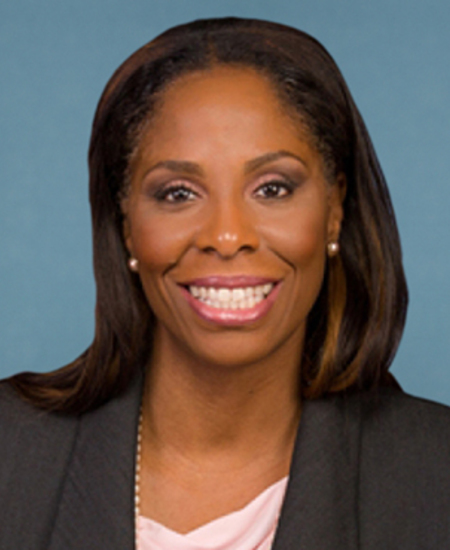
Rep. Stacey E. Plaskett
Sponsored bills
Maddy summaryHR 308, the Rosa Parks Day Act, would designate Rosa Parks Day as a legal public holiday for federal employees and government operations. The bill amends Title 5 of the U.S. Code to add "Rosa Parks Day" to the list of federal holidays, placing it after Thanksgiving Day. This change would require federal offices to close on this designated day, affecting federal employees and standard government operations. The bill does not create new programs or alter existing laws beyond the holiday designation.
Maddy summaryHR 52, the Kimberly Vaughan Firearm Safe Storage Act, promotes safe firearm storage through several concrete measures. It requires firearm manufacturers to include a "SAFE STORAGE SAVES LIVES" notice with each new handgun, rifle, or shotgun sold, directing buyers to the Attorney General’s public website with safe storage guidance. The bill also creates a federal grant program ($10 million annually) for states and tribes to develop public programs distributing safe storage devices (like locked containers or trigger locks), and establishes a tax credit for individuals purchasing such devices. These provisions directly affect firearm manufacturers, state/local governments, and the public seeking to secure firearms responsibly.
Maddy summaryHR 51, the Washington, D.C. Admission Act, would admit Washington, D.C. as the 51st state, named "Washington, Douglass Commonwealth," granting its residents full representation in Congress with two Senators and one Representative. The bill establishes procedures for admission, including elections for state officials, with the state initially having one Representative until the next congressional apportionment. It would create a "Capital" area (including the White House, Capitol, and other key federal buildings) that remains under federal jurisdiction as the seat of the U.S. government, while the rest of the District becomes the new state. The bill also includes provisions to ensure continuity of federal services, property management, and legal procedures during the transition to statehood.
Commission to Study and Develop Reparation Proposals for African Americans Act This bill establishes the Commission to Study and Develop Reparation Proposals for African Americans. The commission must (1) compile documentary evidence of slavery in the United States; (2) study the role of the federal and state governments in supporting the institution of slavery; (3) analyze discriminatory laws and policies against freed African slaves and their descendants; and (4) recommend ways the United States may recognize and remedy the effects of slavery and discrimination on African Americans, including through a formal apology and compensation (i.e., reparations). The commission consists of individuals from civil society and reparations organizations and individuals appointed by the President and congressional leadership; Members of Congress and governmental employees may not serve on the commission. The commission may hold hearings, subpoena witnesses and records, and contract with other entities to conduct its work. The commission must submit its final report within 18 months of its first meeting.
Insular Area Climate Change Act This bill provides support through programs and financial assistance for climate change planning, mitigation, adaptation, and resilience in U.S. territories (American Samoa, Guam, Northern Mariana Islands, Puerto Rico, and the U.S. Virgin Islands) and the Freely Associated States (Micronesia, Marshall Islands, and Palau). For example, the bill requires the Technical Assistance Program of the Department of the Interior's Office of Insular Affairs to provide technical assistance for climate change planning, mitigation, adaptation, and resilience to the territories and Freely Associated States. It also establishes an Insular Area National Program Office within the Environmental Protection Agency to build and strengthen infrastructure to withstand natural disasters, expand renewable energy and energy efficiency, and provide technical assistance in the territories and Freely Associated States. Additionally, the bill establishes several grant programs to assess and reduce the impacts of climate change, expand renewable energy and energy efficiency, or expand sustainable infrastructure to withstand natural disasters in the territories and Freely Associated States.
Maddy summaryThis resolution (HRES 1530) formally recognizes the 50th anniversary of the National Minority Supplier Development Council (NMSDC), a nonprofit organization founded in 1972. It highlights NMSDC’s role in connecting minority-owned businesses to corporate partners, facilitating over $400 billion in annual economic output. As a ceremonial resolution, it does not create new laws or allocate funds, but instead symbolically acknowledges NMSDC’s work supporting minority business enterprises and promoting economic opportunity. The bill specifically celebrates the organization’s contributions without proposing any policy changes.
Presidential Tax Filings and Audit Transparency Act of 2022 This bill requires the Internal Revenue Service (IRS) to conduct an examination to determine the correctness of a Presidential income tax return as rapidly as practicable after it is filed. The IRS must disclose and make publicly available (on the internet) an initial report, periodic reports, and a final report on the examination of such tax returns. The final report must include the date on which the IRS examination of the return was completed, a list of audit materials, and a description of each proposed adjustment to a return and any controversy relating to its examination. This disclosure of tax return information is an exception to the general rule of confidentiality of taxpayer returns. The bill provides criteria for approving a request for an extension of the filing of a tax return and for failing to file a return within the required time period. The bill defines Presidential income tax return as any relevant income tax return of (1) a president while the president is in office, (2) the spouse of a president, (3) a corporation or partnership controlled by a president or a president's spouse, and (4) the estate of a president or a president's spouse.
School Infrastructure Finance and Innovation Act or the SIFIA Act This bill allows a new tax credit for the issuance of school infrastructure finance and innovation bonds (SIFIA bonds). The bill defines SIFIA bonds as any bond issue if 100% of the project proceeds of such issue are to be used for the design, construction, expansion, renovation, furnishing, or equipping of qualified school facilities.
Expanding the Voluntary Opportunities for Translations in Elections Act or the Expanding the VOTE Act This bill expands access to voting materials for individuals with limited proficiency in the English language, including by establishing incentive grants for states and political subdivisions to provide translated voting materials. Additionally, the bill directs the Government Accountability Office to study the impact of (1) reducing the threshold requirement under Section 203 of the Voting Rights Act of 1965, and (2) expanding the definition of language minorities to include native speakers of additional languages.