

Cleaner, Quieter Airplanes Act This bill directs the National Aeronautics and Space Administration (NASA) to establish an initiative to research, develop, and demonstrate new technologies and concepts to reduce emissions and noise from aviation. Emissions to be addressed include carbon dioxide (CO2), nitrogen oxides (NOx), water vapor, black carbon, and sulfate aerosols. The goals and objectives of the initiative shall include ensuring U.S. leadership in research and technology innovation leading to substantial reductions in aviation noise and greenhouse gas emissions, a reduction of greenhouse gas emissions from new aircraft by at least 50% as compared to the highest-performing aircraft technologies in service as of December 31, 2021, net-zero greenhouse gas emissions from aircraft by 2050, and demonstrating new technologies developed pursuant to the initiative on regional aircraft intended to enter into service by 2030 and single-aisle aircraft designed to accommodate more than 125 passengers intended to enter into service by 2040.
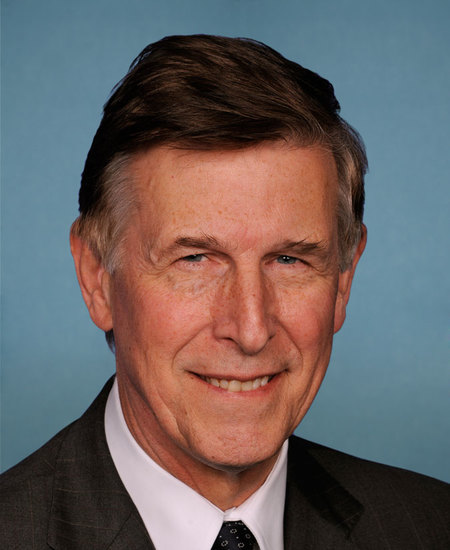
Rep. Donald S. Beyer, Jr.
Sponsored bills
Transparent Leadership Act of 2022 This bill requires the publication of schedules and speeches for the heads of executive branch agencies. Specifically, the bill requires each agency to make available for public inspection in an electronic format within a specified time frame a copy of each speech given after this bill's enactment by the head of the agency acting in an official capacity, and a document disclosing a meeting between an agency head acting in such capacity and a person not employed by the agency.
Assault Weapons Excise Act This bill imposes an additional 1000% excise tax on large capacity ammunition feeding devices and semiautomatic assault weapons. It exempts from such additional tax devices and weapons acquired by the United States or by a state or local government.
Fallen Heroes Flag Reauthorization Act of 2022 This bill reauthorizes through FY2027 a program through which a Member of Congress may provide, at no cost, a Capitol-flown flag to commemorate a firefighter, law enforcement officer, or other public safety officer who died in the line of duty if an immediate family member of the deceased requests such a flag.
Military Spouse Hiring Act This bill expands the Work Opportunity Tax Credit (WOTC) to include the hiring of a qualified military spouse. (The WOTC permits employers who hire individuals who are members of a targeted group such as qualified veterans, ex-felons, or long-term unemployment recipients to claim a tax credit equal to a portion of the wages paid to those individuals.) A qualified military spouse is any individual who is certified by the designated local agency as being (as of the hiring date) a spouse of a member of the Armed Forces.
This resolution expresses the sense of the House of Representatives that (1) the Earth is facing an imminent crisis from the extinction of species and the decline of biodiversity, and (2) Congress should work to support protecting and conserving at least 50% of the lands and oceans in the United States and encourage diplomatic efforts to achieve this goal worldwide.
Protecting Our Kids Act This bill makes various changes to federal firearms laws, including to establish new criminal offenses and to expand the types of weapons and devices that are subject to regulation. Among the changes, the bill generally prohibits the sale or transfer of certain semiautomatic firearms to individuals who are under 21 years of age; establishes new federal criminal offenses for gun trafficking and related conduct; establishes a federal statutory framework to regulate ghost guns (i.e., guns without serial numbers); establishes a framework to regulate the storage of firearms on residential premises at the federal, state, and tribal levels; subjects bump stocks to regulation under federal firearms laws; generally prohibits the import, sale, manufacture, transfer, and possession of large capacity ammunition feeding devices; and requires the Department of Justice to report on the demographic data of persons who are determined to be ineligible to purchase a firearm based on a background check performed by the national instant criminal background check system.
Federal Extreme Risk Protection Order Act of 2022 This bill authorizes and establishes procedures for federal courts to issue federal extreme risk protection orders. Additionally, the bill establishes grants to support the implementation of extreme risk protection order laws at the state and local levels, extends federal firearms restrictions to individuals who are subject to extreme risk protection orders, and expands related data collection. Extreme risk protection order laws, or red flag laws, generally allow certain individuals (e.g., law enforcement officers or family members) to petition a court for a temporary order that prohibits an at-risk individual from purchasing and possessing firearms. Among its provisions, the bill authorizes a family or household member, or a law enforcement officer, to petition for a federal extreme risk protection order with respect to an individual who poses a risk to themselves or others; directs the Department of Justice to establish a grant program to help states, local governments, Indian tribes, and other entities implement extreme risk protection order laws; extends federal restrictions on the receipt, possession, shipment, and transportation of firearms and ammunition to individuals who are subject to extreme risk protection orders; and requires the Federal Bureau of Investigation to compile records from federal, tribal, and state courts and other agencies that identify individuals who are subject to extreme risk protection orders.
Appalachian Communities Health Emergency Act or the ACHE Act This bill places restrictions and requirements on certain mining projects until the Department of Health and Human Services (HHS) determines whether such projects pose risks to human health. The bill applies to mountaintop-removal coal mining projects that use blasting with explosives in the steep slope regions of Kentucky, Tennessee, Virginia, and West Virginia. Specifically, the bill requires the National Institute of Environmental Health Sciences to conduct or support studies on the health impacts of mountaintop-removal coal mining projects on individuals in the surrounding communities. HHS must use these studies when making its determination on whether such mining presents any health risks to those individuals. Until HHS makes its determination, entities carrying out such mining must monitor levels of soil, water, air, and noise pollution. HHS must make the results of this monitoring publicly available. In addition, specified agencies may not issue permits for any mountaintop-removal coal mining project or expansion unless HHS determines that such mining does not present any health risk to individuals in the surrounding communities. The Office of Surface Mining Reclamation and Enforcement of the Department of the Interior must assess a one-time fee upon existing mining projects. The fee must cover the federal cost of the studies and pollution monitoring required by the bill.
Sustaining Our Democracy Act This bill establishes and provides funds through FY2032 for the State Election Assistance and Innovation Trust Fund for purposes of promoting election activities. Specifically, the bill establishes the Democracy Advancement and Innovation Program, through which the Office of Democracy Advancement and Innovation (also established by this bill) shall make allocations to states for carrying out democracy promotion activities. These activities include improving the administration of federal elections, recruiting and training nonpartisan election officials and poll workers, and increasing voting access. The bill requires each state, in order to receive allocated funds, to (1) submit a plan for approval that describes how the state will distribute resources and carry out democracy promotion activities, and (2) establish uniform and nondiscriminatory state-based administrative complaint procedures. The bill prohibits states from using funds for certain activities, including any activity that diminishes the ability of any eligible voter to participate in the electoral process.