

Maddy summaryHRES 688 is a non-binding House resolution expressing support for designating September 16-23, 2023, as "National Estuaries Week." It highlights estuaries' critical role in the U.S. economy, noting they support 39% of jobs, 47% of economic output, and 68% of commercial fish by value. The resolution aims to raise public awareness about estuaries' ecological importance - such as providing habitat for fish, flood control, and carbon sequestration - and encourages efforts to protect and restore them. It does not create new laws or funding but symbolically acknowledges ongoing conservation work by federal, state, and community partners.
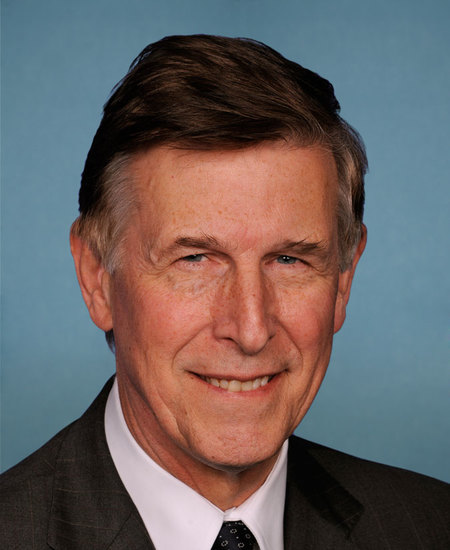
Rep. Donald S. Beyer, Jr.
Sponsored bills
Maddy summaryThe FABRIC Act amends the Fair Labor Standards Act to establish new protections for workers in the garment industry. It prohibits piece-rate pay, requiring employers to pay hourly wages that meet or exceed minimum wage standards, while allowing incentive bonuses. The bill creates joint liability for "brand guarantors" (brands that contract with garment manufacturers) for labor violations, and requires garment manufacturers and contractors to register with the Department of Labor, providing detailed business and employee information. The law also establishes an Undersecretary of the Garment Industry and a support program to fund workforce development and equipment for U.S. garment manufacturers. These provisions directly affect garment workers, manufacturers, contractors, and major fashion brands that contract with them.
Maddy summaryHR 5477, the Keep STEM Talent Act of 2023, modifies U.S. immigration rules to support foreign students pursuing advanced degrees in STEM fields. It requires these students to apply for admission before starting their program and adds enhanced background checks and credential verification for visa processing. The bill creates a new pathway to permanent residency for STEM graduates who earn a master’s or higher degree at a U.S. university, secure a qualifying job paying above median wages, and obtain approved labor certification. It also allows F-1 students in STEM fields to pursue permanent residency while on student visas ("dual intent"), without changing existing visa rules for non-STEM students. This directly affects foreign graduate students in STEM disciplines and their families seeking long-term U.S. work authorization.
Maddy summaryThe Space SSA Transition Act of 2023 directs the transition of certain space situational awareness (SSA) services currently provided by the Department of Defense to the Department of Commerce, specifically the National Oceanic and Atmospheric Administration (NOAA). The bill requires an Interagency Transition Plan within six months, with a target date of December 31, 2026 for public deployment of civil SSA services, and authorizes $90 million for Commerce in fiscal year 2024 and $95 million in 2025 to support this transition. It mandates that the new SSA services be provided free of direct user fees to commercial and government space operators, with requirements for developing voluntary consensus standards and cybersecurity protections. The bill aims to establish the Department of Commerce as the primary U.S. government source for space situational awareness services, improving accuracy and promoting international cooperation in space safety.
Tax Simplification for Americans Abroad Act This bill directs the Internal Revenue Service to make available a new tax form for certain U.S. citizens living abroad. The form shall allow such individuals to demonstrate nonresidence, and declare foreign income, foreign taxes paid, and U.S. source income from retirement, pension and social security benefits. The bill also expands the types of income allowed as foreign earned income for purposes of the foreign earned income tax exclusion and sets forth requirements for reporting foreign financial assets.
Maddy summaryHRES 492 is a congressional resolution condemning the Iranian government's systematic persecution of the Baha'i minority, which directly affects Baha'is in Iran facing arrests, property confiscation, and imprisonment. The resolution specifically calls for Iran to immediately release Baha'is detained for their faith, end state-sponsored hate propaganda against them, and reverse discriminatory policies denying equal access to education, employment, and religious freedom. It urges the U.S. President and Secretary of State to demand Iran’s compliance with international human rights treaties and to use existing sanctions authorities (under the 2010 and 2012 Iran sanctions laws) against officials responsible for these abuses. The resolution does not impose new legal requirements but serves as a formal U.S. government statement of condemnation and a call for diplomatic and sanctions action.
Maddy summaryThis bill would prevent government shutdowns by automatically continuing federal funding at the previous year's level if Congress fails to pass annual budget bills by October 1. It requires Congress to prioritize budget legislation over other matters during funding gaps, with only limited exceptions for true emergencies like national security threats. All federal programs and agencies would operate using prior-year funding rates until a new budget is enacted, applying broadly across the government unless specific exemptions exist under current law. The bill does not create new spending but changes the process to avoid shutdowns by default.
Maddy summaryThe SWAMP Act of 2023 requires the President to reimburse the U.S. Treasury for all government costs incurred when staying at properties they own or have a financial interest in. This directly affects the President, mandating repayment for Secret Service protection, security expenses (like local law enforcement overtime), and transportation costs (such as Air Force One flights) during stays at properties like Mar-a-Lago or Trump Tower. The bill’s key mechanism is a mandatory reimbursement clause for all government expenditures related to such stays, as specified in Section 3. It focuses on financial accountability, requiring the President to cover costs the taxpayer would otherwise bear, without altering existing security protocols or creating new programs.
Maddy summaryThe Sustaining Our Democracy Act creates a federal program to provide states with annual funding to improve election administration and increase voting access. It allocates $2 billion each year from 2024-2033 through the State Election Assistance and Innovation Trust Fund to support activities like upgrading voting equipment, training election workers, and expanding voting access for underserved communities, people with disabilities, and voters on Indian lands. States must submit detailed plans for using funds, which cannot be used for activities that restrict voting access or target election officials. The Act establishes an Office of Democracy Advancement and Innovation to administer the program, monitor fund usage, and oversee compliance with its requirements.
Maddy summaryHR 5244, the Fusion Energy Act, creates a new regulatory framework specifically for fusion energy machines - defined as particle accelerators that fuse atomic nuclei for commercial or industrial use. It amends the Atomic Energy Act to include fusion machines under existing byproduct material rules and establishes a "technology-inclusive" licensing process for their development. The bill requires the Nuclear Regulatory Commission (NRC) to report within one year on risk-based licensing frameworks for mass-produced fusion machines, potentially modeling them after FAA aircraft certification. This legislation directly affects fusion technology developers and the NRC, streamlining future regulatory pathways without providing new funding.