

Maddy summaryThe ROTOR Act narrows the definition of "sensitive government mission" for aircraft operations, excluding training flights and flights by officials below Cabinet rank. It requires regular reporting to Congress about exceptions to ADS-B Out requirements, establishes deadlines for requiring ADS-B In equipment on most aircraft, and mandates safety reviews for airports with military operations. The bill also improves coordination between the FAA and Department of Defense on airspace management and safety information sharing. These changes increase transparency around aircraft operations that don't broadcast their location while enhancing safety oversight. The bill directly affects Federal agencies operating aircraft, the FAA, and aircraft operators required to equip with ADS-B technology.
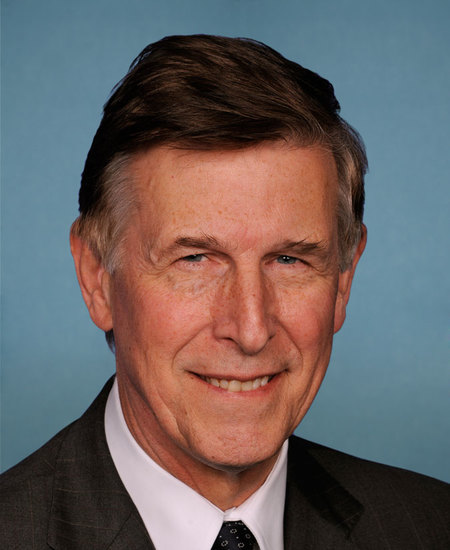
Rep. Donald S. Beyer, Jr.
Sponsored bills
Maddy summaryHR 6181, the John Lewis Every Child Deserves a Family Act, prohibits child welfare agencies receiving federal funds from discriminating against children, youth, or prospective foster/adoptive parents based on religion, sex (including sexual orientation and gender identity), or marital status. It directly affects LGBTQ youth in foster care - overrepresented at 30% of the system - who face higher risks of trauma, group home placements, and suicide attempts compared to non-LGBTQ peers. Key provisions require agencies to collect data on sexual orientation and gender identity, establish a National Resource Center for LGBTQ youth support, provide cultural competency training, and eliminate discriminatory practices. The law aims to improve safety, permanency, and placement stability by expanding access to family-based care and ensuring equitable services for all children in the system.
Maddy summaryHR 6231 extends and enhances the Work Opportunity Tax Credit (WOTC), a federal tax credit for employers hiring from specific target groups like veterans, SNAP recipients, and summer youth workers. The bill extends the program through 2030 (from 2025), increases the credit rate to 50% for certain wages (up from 40%), adds automatic inflation adjustments to the $6,000 wage cap, and expands eligibility to include military spouses and removes age limits for SNAP recipients. Key provisions also modify credit calculations for veterans, agricultural workers, and long-term assistance recipients, while requiring federal agencies to promote hiring from target groups in critical sectors like healthcare and construction. This bill directly affects employers who hire from these designated groups, making the tax credit more valuable and accessible.
Maddy summaryThis bill (HR 6015) ensures existing labor agreements between the Department of Veterans Affairs (VA) and employee unions remain in full effect through their scheduled terms. It also cancels two executive orders (14251 and 14343) that previously excluded VA from standard federal labor-management programs. The bill directly affects VA employees and their unions by preserving current collective bargaining rights and requiring VA to follow standard federal labor rules. It does not change veterans' benefits or healthcare access; it only modifies VA's internal labor relations procedures. This is a procedural bill focused on labor-management processes, not direct policy changes for veterans.
Maddy summaryHR 6126 authorizes the minting of commemorative coins to mark the 100th anniversary of the U.S. Foreign Service (established in 1924). It specifies three coin types: up to 50,000 $5 gold coins (90% gold), 400,000 $1 silver coins (90% silver), and 750,000 half-dollar coins, all to be sold during 2029. A surcharge of $35 per gold coin, $10 per silver coin, and $5 per half-dollar is added to the sale price, with all surcharge funds directed to the Association for Diplomatic Studies and Training to support its diplomatic history preservation work. The coins must include standard inscriptions (e.g., "Liberty," "United States of America") and will be legal tender, but the bill does not create new policy or affect government operations.
Maddy summaryThe Global Respect Act (HR 6151) requires the U.S. President to publicly list foreign officials responsible for severe human rights violations against LGBTQI individuals, including torture, prolonged detention, or violence based on sexual orientation or gender identity. It mandates denying visas and entry to listed individuals and requires annual reports on the list's updates and impacts. The bill also directs the State Department to track global violence against LGBTQI people and update annual human rights reports to include discrimination based on sexual orientation or gender identity. These provisions directly affect foreign government officials and entities implicated in such abuses, aiming to increase accountability through U.S. visa restrictions.
Maddy summaryThe AIM Act (HR 6127) removes numerous restrictions that have been placed on the Bureau of Alcohol, Tobacco, Firearms and Explosives (ATF) through annual appropriations bills. It eliminates provisions limiting how the ATF collects and uses firearms trace data, requires physical inventory checks of gun dealers, destroys background check records within 24 hours, and processes Freedom of Information Act requests. The bill also revises standards for license revocation from "willful" to "knowing" violations and removes barriers to record-keeping inspections and firearm import approvals. These changes directly affect the ATF's operational procedures and the federal firearms licensing system, allowing the agency greater flexibility in data collection and enforcement. The bill focuses on modernizing ATF operations by removing decades-old restrictions that were added through annual funding measures.
Maddy summaryThis bill reauthorizes and permanently funds the Wildlife Road Crossings Program through fiscal years 2026-2031, allocating $200 million annually for projects that build wildlife crossings (like overpasses or underpasses) to reduce animal-vehicle collisions. It directly affects state and tribal governments, local agencies, and conservation groups that design and build these crossings, with specific provisions ensuring 100% federal cost coverage for tribal projects. Key mechanisms include dedicated annual funding, streamlined application assistance for tribes, and rules allowing unobligated funds to roll over for future use. The bill removes "pilot" language from prior law, making the program permanent and expanding tribal participation.
Maddy summaryHR 5894, the RESTRAIN Act, prohibits the United States from conducting any explosive testing of nuclear weapons or other nuclear explosions. It directly affects U.S. nuclear weapons programs by banning such testing using federal funds for fiscal year 2026 and beyond. The bill's key mechanism is a funding restriction: no money authorized for fiscal year 2026 or later may be used for explosive nuclear testing or other nuclear explosions. However, it explicitly excludes subcritical nuclear tests (which do not sustain a chain reaction) from this prohibition. The law aims to enforce a permanent ban on nuclear detonations while preserving the ability to conduct certain non-explosive testing.
Maddy summaryThis bill amends Section 1983 of federal law (42 U.S.C. 1983) to explicitly allow lawsuits against federal officials who violate constitutional rights while acting under federal authority. It directly affects individuals whose constitutional rights were allegedly infringed by federal employees, such as law enforcement or agency staff. The key provision inserts "of the United States" before "of any State" in the statute, expanding the existing legal remedy for state officials to cover federal officials as well. This creates a clear, standalone legal path for citizens to seek redress for federal constitutional violations without relying on precedent.