

Ultra-Millionaire Tax Act of 2021 This bill imposes a tax on the net value of all taxable assets of the taxpayer on the last day of any calendar year (wealth tax). The amount of such tax shall be equal to the sum of 2% of the amount of taxpayer assets exceeding $50 million but not in excess of $1 billion, plus the applicable percentage (3% or 6% if certain legislation is in effect) of the net value of such taxable assets exceeding $1 billion. There is no tax on the net value of taxable assets not in excess of $50 million. The bill defines net value of all taxable assets as the value of all property of the taxpayer, real or personal, tangible or intangible, wherever situated reduced by any debts (including secured debts) owed by the taxpayer. The definition excludes property with a value of $50,000 or less, tangible personal property, certain property used in a trade or business, and collectibles. The Internal Revenue Service (IRS) must audit annually not less than 30% of taxpayers required to pay the tax imposed by this bill. The bill provides funding to the IRS for FY2022-FY2032 for enforcement of the requirements of this bill, taxpayer services, and for business system modernization.
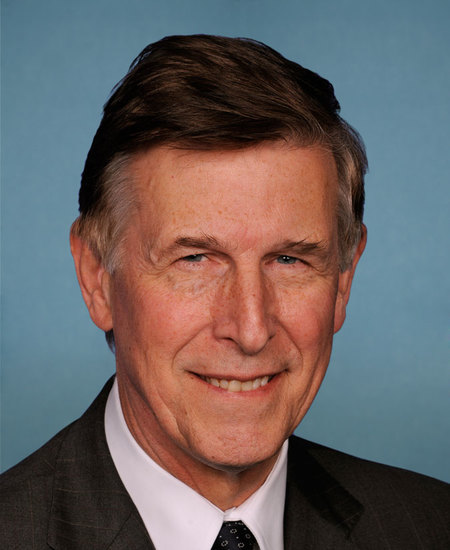
Rep. Donald S. Beyer, Jr.
Sponsored bills
This bill redesignates the federal building located at 935 Pennsylvania Avenue, NW, in the District of Columbia (currently known as the J. Edgar Hoover Building) as the Federal Bureau of Investigation Building.
Arctic Refuge Protection Act This bill repeals the Arctic National Wildlife Refuge oil and gas program. The bill designates approximately 1,559,538 acres of land within Alaska in the Arctic National Wildlife Refuge as a component of the National Wilderness Preservation System.
Federal Death Penalty Abolition Act of 2021 This bill prohibits the imposition of a death penalty sentence for a violation of federal law. It eliminates statutory authority for the death penalty as a sentencing option for federal offenses. It also requires a person who was sentenced to death before enactment of this bill to be resentenced.
Public Buildings Renewal Act of 2021 This bill allows tax-exempt financing of certain government-owned buildings by expanding the definition of exempt facility bond to include bonds used for qualified government buildings. A qualified government building is a government-owned building or facility that consists of one or more of the following an elementary or secondary school; facilities of a state college or university used for educational purposes; a public library; a court; hospital, health care, laboratory, or research facilities; public safety facilities; or offices for government employees. The bill excludes buildings or facilities that include specified recreational equipment or are used for the primary purpose of providing retail food and beverage services, recreation, or entertainment. The bill establishes (1) a $5 billion limit on the amount of tax-exempt financing which may be provided for government buildings, and (2) procedures for allocating and applying for the financing of a building, including a certification that the project owner will use reasonable efforts to ensure against job losses. The bill also allows an exemption from the volume cap for private activity bonds used to finance government buildings.
Black History is American History Act This bill requires entities (e.g., institutions of higher education, libraries, and museums), in order to be eligible for certain grants administered by the Department of Education (ED), to include Black history in their teaching of American history. It also requires Black history to be included in tests administered by the National Assessment of Educational Progress (NAEP). Specifically, the bill mandates the inclusion of Black history as a required component of American history for such entities to be eligible for American History and Civics Academies' competitive grants. These grants support the establishment of (1) Presidential Academies for Teachers of American History and Civics, which offer workshops to teachers of American history and civics to strengthen their knowledge and prepare them to teach in these subjects; and (2) Congressional Academies for Students of American History and Civics, which support high school students in developing an understanding of these subjects. (Currently, Black history is not a required component of American history for either academy.) In addition, ED must give priority to grant applicants that align their activities with programs and resources of the Smithsonian Institution's National Museum of African American History and Culture. The bill also requires the inclusion of Black history in tests administered by the NAEP, which measures student academic achievement in various subjects.
This resolution reaffirms the United States' commitment to supporting democracy and human rights both domestically and internationally. The resolution also calls on the U.S. government to uphold all relevant international human rights agreements ratified by the United States.
This resolution recognizes the roles that development and diplomacy play in advancing American interests and national security, and it expresses support for a substantial U.S. international affairs budget.
This bill provides for the presentation of a Congressional Gold Medal to the Freedom Riders, in recognition of their contribution to civil rights by fighting for equality in interstate travel.
Juneteenth National Independence Day Act This bill establishes Juneteenth Independence Day as a federal holiday.