

Critically Endangered Animals Conservation Act of 2021 This bill provides statutory authority for the Critically Endangered Animals Conservation Fund, which finances a grant program to protect critically endangered species. Specifically, the bill requires the Department of the Interior to establish the fund as a separate account in the Multinational Species Conservation Fund. Critically endangered species means any animal species categorized on the International Union for Conservation of Nature (IUCN) Red List of Threatened Species as either endangered or critically endangered. The term also means any other animals species categorized on such list as data deficient or under a threat category lower than endangered if Interior determines that (1) the most recent IUCN Red List assessment indicates that the population is decreasing, or (2) such species is facing new or emerging threats.
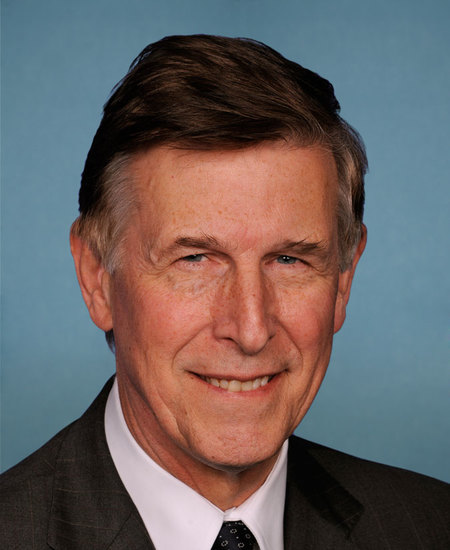
Rep. Donald S. Beyer, Jr.
Sponsored bills
This resolution (1) commits to advancing policies that will end roadway fatalities by 2050, and (2) calls on Congress and the Department of Transportation to commit to working together to achieve zero roadway fatalities by the year 2050.
Revitalizing Downtowns Act This bill expands the investment tax credit to add a qualified office conversion credit. The amount of such credit is 20% of the qualified conversion expenditures with respect to a qualified converted building. The bill defines qualified converted building as any building if (1) prior to conversion, the building was nonresidential real property which was leased, or available for lease, to office tenants; (2) the building has been substantially converted from an office use to a residential, retail, or other commercial use; (3) the building was initially placed in service at least 25 years prior to the beginning of the conversion, and (4) straight line depreciation is allowable with respect to the building.
Rebuilding Economies and Creating Opportunities for More People Everywhere To Excel Act or the RECOMPETE Act This bill establishes a grant program to assist economically distressed local communities and labor markets that meet specified economic criteria, including employment criteria. The Economic Development Administration (EDA) must award 10-year grants to a local government, tribal government, economic development district, or consortium of local government units located in such areas. Each grant recipient must develop and implement a comprehensive strategy to address the economic challenges specific to the area. The grants may be used to increase employment opportunities, increase local per capita income, support economic development, and develop infrastructure and housing. Additionally, the EDA must periodically evaluate each grant recipient based on certain benchmark criteria and annually report on the implementation of the program. The bill specifies formulas for determining the grant amount for each community or market and the federal share of the cost of each program or activity conducted under the program.
Recognizing and Ensuring Taxpayer Access to Infrastructure Necessary for GPS and Satellite Communications Act of 2021 or the RETAIN GPS and Satellite Communications Act of 2021 This bill places conditions on entities that deploy commercial terrestrial operations in the 1525-1559 megahertz (MHz) band or the 1626.5-1660.6 MHz band of the electromagnetic spectrum. These frequency bands are traditionally used for satellite operations, including the global positioning system (GPS). On April 19, 2020, the Federal Communications Commission approved an application for a low-power 5G wireless network in such bands despite concerns about the network interfering with GPS and other operations on adjacent bands. In its application, the entity committed to update, repair, or replace federal devices, platforms, or systems affected by its operations. This bill requires an entity (including the previously approved entity) that deploys terrestrial operations in the designated bands to reimburse a federal agency or a person for certain costs if the entity's operations interfere with or otherwise affect the operations of the agency or person. These costs may include necessary upgrades, repairs, or replacements to satellite communication devices and related equipment, as well as expenses for engineering studies and labor. Reimbursable costs owed by the entity transfer to any assignee, successor, or purchaser of its license to deploy terrestrial operations in the designated bands. The bill also expressly authorizes federal agencies to directly accept from the entity reimbursements for incurred costs.
Protecting Our Students by Terminating Graduate Rates that Add to Debt Act or the POST GRAD Act This bill authorizes graduate and professional students to receive subsidized Stafford Loans. These students have been ineligible to receive subsidized Stafford Loans since July 1, 2012.
This bill repeals the limitation on the amount of distilled spirits excise tax covered over (paid) to the treasuries of the U.S. Virgin Islands and the Commonwealth of Puerto Rico. The bill requires certain amounts of the excise tax paid to the treasury of Puerto Rico to be transferred to the Puerto Rico Conservation Trust Fund.
Comprehensive Paid Leave for Federal Employees Act This bill provides paid family and medical leave to federal employees. Currently, federal employees are entitled to 12 weeks of administrative leave for one or more of the following reasons: (1) the birth of a child, (2) the adoption or foster care of a child, (3) the care of an immediate family member with a serious health condition, (4) inability to work due to a serious health condition, and (5) exigencies relating to an immediate family member's active duty service in the Armed Forces. However, of these reasons, employees are entitled to paid administrative leave only in connection with the birth, adoption, or foster care of a child (i.e., parental leave). The bill provides 12 weeks of paid administrative leave for any of these reasons, and specifies that this leave is in addition to any annual or sick leave to which employees are entitled.
End Double Taxation of Successful Consumer Claims Act This bill allows a deduction from gross income (above-the-line deduction) for attorney fees and court costs in connection with a claim of a consumer protection violation.
Pathways to Health Careers Act This bill provides funding for, reauthorizes through FY2026, and makes a variety of changes to certain grants administered by the Department of Health and Human Services that provide education and training to low-income individuals for health care occupations, including by establishing a new competitive grant for projects designed to train low-income individuals in allied health professions.