

Two-State Solution Act This bill addresses U.S. policy and related activities to preserve conditions for a two-state solution to resolve territorial disputes between Israel and Palestine. The bill prohibits the United States from providing support for projects in geographic regions that came under Israeli control after June 5, 1967. It also prohibits the use of any U.S. security assistance, defense articles, or defense services provided to Israel for efforts to annex or exercise permanent control over any part of the West Bank or Gaza. Current law designates the Palestine Liberation Organization (PLO) as a terrorist organization and restricts its activities (e.g., prohibiting it from maintaining an office in the United States). The President may waive for up to six months some of these restrictions to serve U.S. national security or diplomatic interests. If the President certifies that the PLO has ceased supporting terrorist actions and met other conditions, the bill automatically terminates the terrorist organization designation. Goods produced in the West Bank or Gaza that are imported into the United States must indicate those areas as the country of origin on their labels. The bill expands the scope of certain foreign and development assistance to foster initiatives, including shared educational opportunities and youth activities, that connect Israelis and Palestinians. Additionally, the Department of State and the U.S. Agency for International Development may jointly award grants to private, nonprofit organizations to promote human rights and democracy, strengthen civil society, and otherwise address the needs of the Palestinian people.
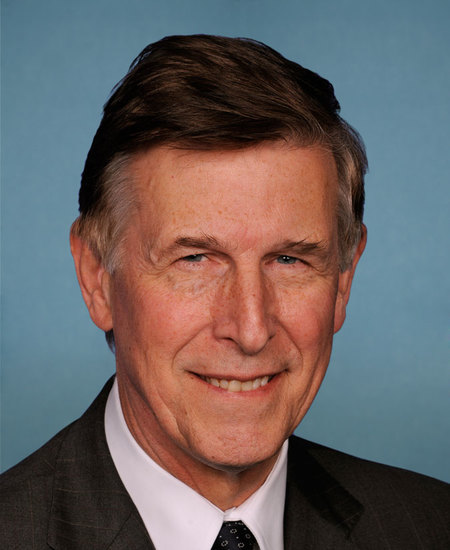
Rep. Donald S. Beyer, Jr.
Sponsored bills
John R. Lewis Voting Rights Advancement Act of 2021 This bill establishes new criteria for determining which states and political subdivisions must obtain preclearance before changes to voting practices may take effect. Preclearance is the process of receiving preapproval from the Department of Justice (DOJ) or the U.S. District Court for the District of Columbia before making legal changes that would affect voting rights. A state and all of its political subdivisions shall be subject to preclearance of voting practice changes for a 10-year period if 15 or more voting rights violations occurred in the state during the previous 25 years; 10 or more violations occurred during the previous 25 years, at least 1 of which was committed by the state itself; or 3 or more violations occurred during the previous 25 years and the state administers the elections. A political subdivision as a separate unit shall also be subject to preclearance for a 10-year period if three or more voting rights violations occurred there during the previous 25 years. States and political subdivisions that meet certain thresholds regarding minority groups must preclear covered practices before implementation, such as changes to methods of election and redistricting. Further, states and political subdivisions must notify the public of changes to voting practices. Next, the bill authorizes DOJ to require states or political subdivisions to provide certain documents or answers to questions for enforcing voting rights. The bill also outlines factors courts must consider when hearing challenges to voting practices, such as the extent of any history of official voting discrimination in the state or political subdivision.
Ejiao Act This bill prohibits the knowing sale or transport of ejiao (or products containing ejiao) in interstate or foreign commerce. (Ejiao is a gelatin made with donkey skin and used in traditional Chinese medicine and beauty products.)
Safe Travel Act This bill requires proof of COVID-19 vaccinations or proof of negative COVID-19 test results for passengers on planes and Amtrak trains; patrons of airports; and employees, contractors, and subcontractors of air carriers, airports, and Amtrak.
This resolution expresses the sense of the House of Representatives that the United States shall recognize kind actions in our country, encourage kindness, spread love, and foster a culture of being kind to one another.
Negate Emissions to Zero Act of 2021 or the NET Zero Act of 2021 This bill extends through 2031 the tax credit for carbon oxide sequestration. It also modifies requirements for direct air capture facilities.
This bill expands the tax credit for nonbusiness energy property to include a credit for home energy audits. The amount of such credit is 30% of the cost of a home energy audit, not to exceed $150. The bill defines home energy audit to mean an inspection and written report for a dwelling located in the United States that is owned and used by a taxpayer as the taxpayer's principal residence. The audit must identify the most significant and cost-effective energy efficiency improvements for such dwelling, including an estimate of the energy and cost savings for each improvement, and be conducted and prepared by a certified home energy auditor.
Medicare Negotiation and Competitive Licensing Act of 2021 This bill establishes several requirements relating to the prices of prescription drugs. Specifically, the bill requires the Centers for Medicare & Medicaid Services (CMS) to negotiate with pharmaceutical companies regarding prices for drugs covered under Medicare. (Current law prohibits the CMS from doing so.) If the CMS is unable to negotiate the price of a drug, such drug is subject to competitive licensing in order to further its sale under health insurance programs, notwithstanding existing government-granted exclusivities. The negotiated prices also apply to other federal health care programs, private health insurance, and the uninsured; pharmacies that charge more than the negotiated price for uninsured individuals are subject to civil penalties. Manufacturers must also comply with specified reporting requirements relating to prices and licensing, subject to civil penalties. The bill also institutes an excise tax on drugs for which the price spikes beyond a certain limit, subject to specified exemptions, as well as on drugs for which the price exceeds the negotiated price.
Green Vehicle Adoption Nationwide Act of 2021 or the Green VAN Act of 2021 This bill allows a new tax credit through 2031 for an amount equal to 30% of the basis of a qualified commercial electric vehicle. A qualified commercial electric vehicle must meet certain eligibility requirements, and must be mobile machinery and primarily propelled by an electric motor that draws electricity from a battery that (1) has a capacity of not less than 30 kilowatt hours, (2) is capable of being recharged from an external source of electricity, and (3) is not powered or charged by an internal combustion engine.
Negating Emissions to Zero Act of 2021 or the NET Zero Act of 2021 This bill extends through 2031 the tax credit for carbon oxide sequestration. It also modifies carbon oxide capture requirements and sets forth a special rule for determining the applicable dollar amount for the deduction of costs relating to direct air capture facilities.