

Patient Advocate Tracker Act This act requires the Office of Patient Advocacy within the Veterans Health Administration to establish an information technology system that allows veterans or their representatives to electronically file a complaint with a patient advocate and review the status of a filed complaint.
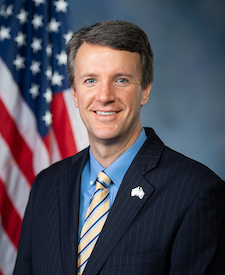
Rep. Ben Cline
Sponsored bills
Maddy summaryHR 8868, the Solidify Iran Sanctions Act of 2022, repeals the sunset provision in the 1996 Iran Sanctions Act, making existing sanctions against Iran permanent. It removes the expiration date from the sanctions regime, ensuring they remain in effect without needing periodic renewal. This bill directly affects the enforcement of current U.S. sanctions targeting Iran’s weapons programs, ballistic missile development, and support for terrorism, as defined under the 1996 Act. The key change is procedural, maintaining the status quo of existing sanctions without introducing new penalties or altering the scope of prohibited activities.
Pharmacist Conscience Protection Act This bill prohibits the federal government and federally funded entities from discriminating or otherwise taking adverse action against a pharmacist, pharmacy owner, or pharmacy technician who declines to store, fill prescriptions for, or make referrals for drugs that cause abortions (or that the individual provider believes in good faith cause abortions). Individuals or the Department of Justice may bring civil actions for violations of this bill.
No Federal Funds for Abortion Travel Expenses Act of 2022 This bill prohibits the use of federal funds to support interstate travel to obtain an abortion.
Assistance for Rural Community Hospitals Act of 2022 or the ARCH Act of 2022 This bill extends certain payment adjustments for Medicare-dependent hospitals and low-volume hospitals until the end of FY2027 (the adjustments currently expire at the end of FY2022).
Taxpayers Support Life Act This bill prohibits the Department of Health and Human Services (HHS) from finalizing, implementing, administering, or enforcing a proposed rule (published on August 4, 2022) that implements the statutory ban on discrimination in federally funded health programs and activities. Further, HHS may not use federal funds to contravene the administration or enforcement of the existing nondiscrimination rule, which became effective on June 19, 2020.
Responsible Education Assistance through Loan Reforms Act This bill makes various changes to the federal student loan system, including by (1) limiting the authority of the Department of Education to issue regulations, (2) establishing a new income-based repayment plan, (3) repealing the Public Service Loan Forgiveness program for new borrowers, and (4) allowing certain workforce development programs to be eligible for Pell Grants.
National World War II Memorial Commemorative Coin Act This bill directs the Department of the Treasury to mint and issue up to 50,000 $5 coins, 400,000 $1 silver coins, and 750,000 half-dollar clad coins in commemoration of the National World War II Memorial in the District of Columbia. The design of the coins shall be emblematic of the memorial and the service and sacrifice of American soldiers and civilians during World War II. All surcharges received from the sale of such coins shall be paid to the Friends of the National World War II Memorial to support the National Park Service in maintaining and repairing the memorial, and for educational and commemorative programs.
This resolution expresses the sense of the House of Representatives that it is necessary to expand the use of nuclear energy in order to (1) meet the growing energy demands of the United States, and (2) promote American nuclear energy leadership while retaining U.S. economic viability in the worldwide nuclear energy marketplace.
Airspace Clearinghouse Enhancement Act or the ACE Act This bill addresses structures interfering with air commerce or national security near military installations. Specifically, the bill requires the Department of Defense to elicit written testimony from the base commander of each military installation within a certain radius of a structure or sanitary landfill when making a determination of whether the construction, alteration, establishment, or expansion of such a facility will result in an unacceptable risk to U.S. national security; and any person that submits an application for an energy project near a military installation to disclose if they have a relationship with a foreign principal or an agent of a foreign principal.