

Maddy summaryHR 903 creates a 3-year pilot program offering grants to up to 250 eligible veterans to start or acquire small businesses, franchises, or startups. Eligible veterans must have completed 36+ months of active duty (or 24+ months for disability) and qualify for VA education benefits under Chapter 30 or 33. Grantees must complete approved entrepreneurship training, submit a business plan for approval, and receive funds in installments after meeting business milestones. The program provides grants up to the value of the veteran’s education benefits plus monthly housing-equivalent support during the business development period.
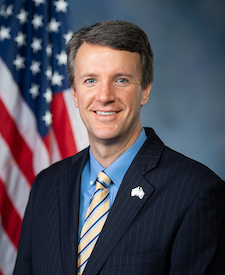
Rep. Ben Cline
Sponsored bills
Maddy summaryThis bill amends the Higher Education Act to require colleges and universities receiving federal funding to disclose gifts or contracts exceeding $5,000 from groups connected to China's government, Communist Party, or military. It mandates annual reports on joint activities with such groups and requires institutions to publicly post all agreements with them on their websites. The law defines "affiliated" organizations broadly to include state-owned enterprises, think tanks receiving significant Chinese funding, and entities with Chinese officials on their boards. Reports must be filed by January 31 or July 31 each year, detailing donor names, agreement terms, and supporting documentation.
Reimbursing Border Communities Act of 2023 This bill requires the Department of Homeland Security to make grants to certain border communities for expenses related to security measures along the southern border. Specifically, the local government of a community is eligible for a grant if it is located within 200 miles of the border and is not a sanctuary jurisdiction as defined by the bill. Additionally, no grant may be used to reimburse nonprofit organizations, fund legal representation, or provide educational, housing, food, or health care resources to a non-U.S. national ( alien under federal law).
Finish the Wall Act This bill requires the Department of Homeland Security (DHS) to resume activities related to the construction of a barrier system along the U.S.-Mexico border and addresses other border-related issues. DHS must resume all such construction activities that were planned or underway prior to January 20, 2021. DHS must also expend all funds appropriated or explicitly obligated since October 1, 2016, for construction of this barrier system. DHS may not cancel contracts for activities related to such construction entered into on or before January 20, 2021. Furthermore, within 14 days of this bill's enactment, DHS must certify to Congress that U.S. Customs and Border Protection facilities that process adults taken into custody at the border are fully compliant with certain laws related to the collection of DNA. (Among other things, these laws allow for the collection of DNA samples from non-U.S. persons detained under U.S. authority.)
Maddy summaryHR 29, the Border Safety and Security Act of 2023, grants the Secretary of Homeland Security authority to restrict entry at U.S. land or maritime borders for certain immigrants deemed "covered aliens" (those inadmissible under immigration law due to lack of proper documentation). The bill requires the Secretary to suspend entry if they cannot detain or process these individuals as required by existing immigration law. It also allows state attorneys general to sue the Secretary in federal court if they believe border policies harm their state's residents. The law defines "operational control" using terms from the Secure Fence Act of 2006. This bill directly affects immigrants seeking entry who fall under the specified inadmissibility category.
Maddy summaryHCONRES 9 is a symbolic resolution passed by the U.S. House of Representatives that formally denounces socialism as incompatible with American values, citing historical examples of socialist regimes causing widespread suffering and authoritarian rule. It states Congress opposes the implementation of socialist policies in the United States. This resolution has no legal effect, does not change any laws, and serves solely as a non-binding statement of congressional opinion. It directly affects no individuals or policies, as it is purely a declarative position.
Maddy summaryHJRES 31 is a procedural resolution seeking congressional disapproval of a specific rule issued by the Department of Veterans Affairs (VA) concerning reproductive health services. It targets the VA's September 2022 rule (published in the Federal Register as 87 Fed. Reg. 55287), which established policies for reproductive health care access for veterans. If passed, this resolution would nullify the VA rule, preventing it from taking effect under the Congressional Review Act (Chapter 8 of Title 5, U.S. Code). The bill directly affects the VA’s ability to implement its reproductive health services policy for veterans.
This resolution condemns Iranian state-sponsored terrorist attacks against U.S. citizens and officials and Iranian dissidents. The resolution also expresses support for the people of Iran who are legitimately defending their rights for freedom against repression and condemns the killing of Iranian protesters by the Iranian regime.
Dismemberment Abortion Ban Act of 2023 This bill restricts the performance of dismemberment abortions. It defines the term dismemberment abortion . Specifically, the bill prohibits a physician from knowingly performing a dismemberment abortion. It provides an exception for a dismemberment abortion that is necessary to save the life of a mother whose life is endangered by a physical disorder, illness, or condition. The bill establishes criminal penalties—a fine, a prison term of up to two years, or both—for a physician who performs a prohibited dismemberment abortion. It also authorizes civil remedies for a woman or parent of a minor who undergoes a dismemberment abortion. A woman who undergoes a dismemberment abortion may not be prosecuted or held civilly liable.
Maddy summaryHR 857, the Presidential Budget Accountability Act, requires the President to submit the annual budget to Congress by the first Monday in February. If the budget is late, federal funds cannot be used for the President's travel expenses starting the Tuesday after that date until the budget is submitted. The bill specifically restricts funds for the President's expense allowance, travel costs, entertainment, and subsistence during travel. This directly affects the President's travel budget and aims to incentivize timely budget submissions by the executive branch.