

Maddy summaryThis bill grants the Secretary of Homeland Security authority to temporarily suspend entry of certain individuals at U.S. borders to achieve "operational control" (defined as effective border management). It specifically applies to people seeking entry without proper documentation who would be denied entry under current law (e.g., lacking visas or asylum eligibility). The Secretary must block entry if they cannot detain or process these individuals as required by existing immigration law. States may also sue the government if they believe border security rules are violated.
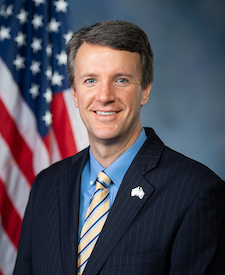
Rep. Ben Cline
Sponsored bills
Maddy summaryThis bill directs the Department of Homeland Security to implement the Migrant Protection Protocols (MPP) as outlined in a 2019 policy memo. It requires migrants seeking asylum at the U.S. border to remain in Mexico while their cases are processed, rather than being allowed to stay in the U.S. pending a hearing. The bill does not create new rules but mandates the reinstatement of a policy that was previously in effect from 2019 to 2021. This would directly affect asylum seekers arriving at the U.S.-Mexico border. The policy change would apply to all migrants covered by the existing MPP framework.
Maddy summaryThe Healthcare Freedom Act of 2025 would rename health savings accounts as "health freedom accounts" and make them available to all individuals, removing the previous requirement of having a high-deductible health plan. It increases the annual contribution limit to $12,000 (or $24,000 for joint returns) and expands eligible expenses to include direct primary care and health care sharing ministries. Employers could contribute to these accounts for new hires starting five years after enactment, with a transition rule for existing accounts. The bill would directly affect individuals using these accounts and employers who choose to participate in the new system.
Maddy summaryHR 274, the Sunset Chevron Act, requires the Government Accountability Office (GAO) to compile a list of federal court decisions that upheld agency rules using Chevron deference (a judicial practice deferring to agency interpretations of laws) and are still in effect. The bill mandates that the GAO publish this list within 180 days of enactment, organizing it by agency and assigning each rule a sunset date. The most recent rule from each agency expires 30 days after the list's publication, with earlier rules expiring 30 days after the prior rule’s sunset date. This creates an automatic expiration process for specific agency rules upheld under Chevron deference, directly affecting federal agencies whose rules are included in the GAO's list.
Preserving Safe Communities by Ending Swatting Act of 2025 This bill makes it a crime to intentionally convey false or misleading information in circumstances where the information may reasonably be expected to cause an emergency response and the information indicates the occurrence of criminal conduct or a threat to health or safety (commonly referred to as swatting ).
Legal Workforce Act This bill directs the Department of Homeland Security (DHS) to create an electronic employment eligibility confirmation system modeled after and to replace the E-Verify system, which allows employers and recruiters to verify the immigration status of individuals. The bill also mandates the use of such a system, where currently only some employers, such as those with federal contracts, are required to use E-Verify. The bill specifies documents that can establish an individual's identity and employment authorization. During the period starting when a job offer is made until three business days after hiring, the individual must attest to his or her employment authorization, and the employer or recruiter must attest that it has examined the individual's required documents. Employers shall reverify certain types of employees who were not previously verified using E-Verify. The Social Security Administration shall notify employees if their Social Security number has been used multiple times in an unusual manner. DHS shall establish programs for blocking and suspending misused numbers. Employers that are required to use the verification system shall not be liable for any employment-related action based on a good-faith reliance on the system. The bill establishes a phased-in participation deadline for different sizes and categories of employers, including agricultural employers. The bill increases civil penalties related to hiring individuals without work authorization. It also preempts state laws relating to hiring and employment eligibility verification, but states may use their authority of business licensing to penalize employers for failing to comply with the bill's provisions.
Maddy summaryThis bill, HR 221 (Abolish the ATF Act), would eliminate the Bureau of Alcohol, Tobacco, Firearms and Explosives (ATF) as a federal agency. It directly affects the ATF itself, removing its existence within the U.S. Department of Justice. The bill contains no policy provisions or new mechanisms - it solely directs the abolition of the agency through a single legislative action. As a procedural measure, it does not alter gun laws, enforcement responsibilities, or affect the public.
Maddy summaryThis proposed constitutional amendment would limit Members of Congress to serving a maximum of three terms in the House of Representatives or two terms in the Senate. It directly affects current and future members by preventing those who have already served the maximum terms from seeking re-election. Key provisions include counting vacancies filled for more than a year (House) or three years (Senate) as a full term toward the limit, while excluding terms served before ratification from the count. As a constitutional amendment proposal, it requires approval by three-fourths of state legislatures to become law.
Maddy summaryHR 82, the Social Security Fairness Act of 2023, repeals two provisions that reduce Social Security benefits for certain government workers. It eliminates the Government Pension Offset (GPO), which cuts spousal or survivor benefits for people with pensions from jobs not covered by Social Security (like federal or state government roles), and the Windfall Elimination Provision (WEP), which lowers retirement benefits for those with similar pensions. The law takes effect for benefits paid after December 2023, requiring the Social Security Administration to adjust benefit calculations to remove these reductions. This change directly affects public-sector employees who previously had their Social Security benefits reduced due to their government pensions.
Maddy summaryThis bill designates a specific United States Postal Service facility at 1285 Emancipation Highway in Fredericksburg, Virginia, as the "Gladys P. Todd Post Office." It directly affects the postal service location and all official references to it. The bill changes the facility's official name in all federal records and documents, with no policy changes or funding impacts. This is a ceremonial naming designation with no substantive legislative effect.