Maddy summaryHR 3478, the Manned Aircraft Clarification Act, amends existing federal criminal laws to explicitly include "manned" aircraft in provisions related to destruction and piracy. It adds "manned" before "aircraft" in Title 18, U.S. Code, Section 32 (destruction of aircraft) and in Title 49, U.S. Code, Section 46502 (aircraft piracy). This clarifies that the criminal penalties apply specifically to aircraft with people on board, not unmanned systems. The bill does not create new penalties or affect new groups; it refines existing law for precision. The change is purely procedural, updating legal language to avoid ambiguity.
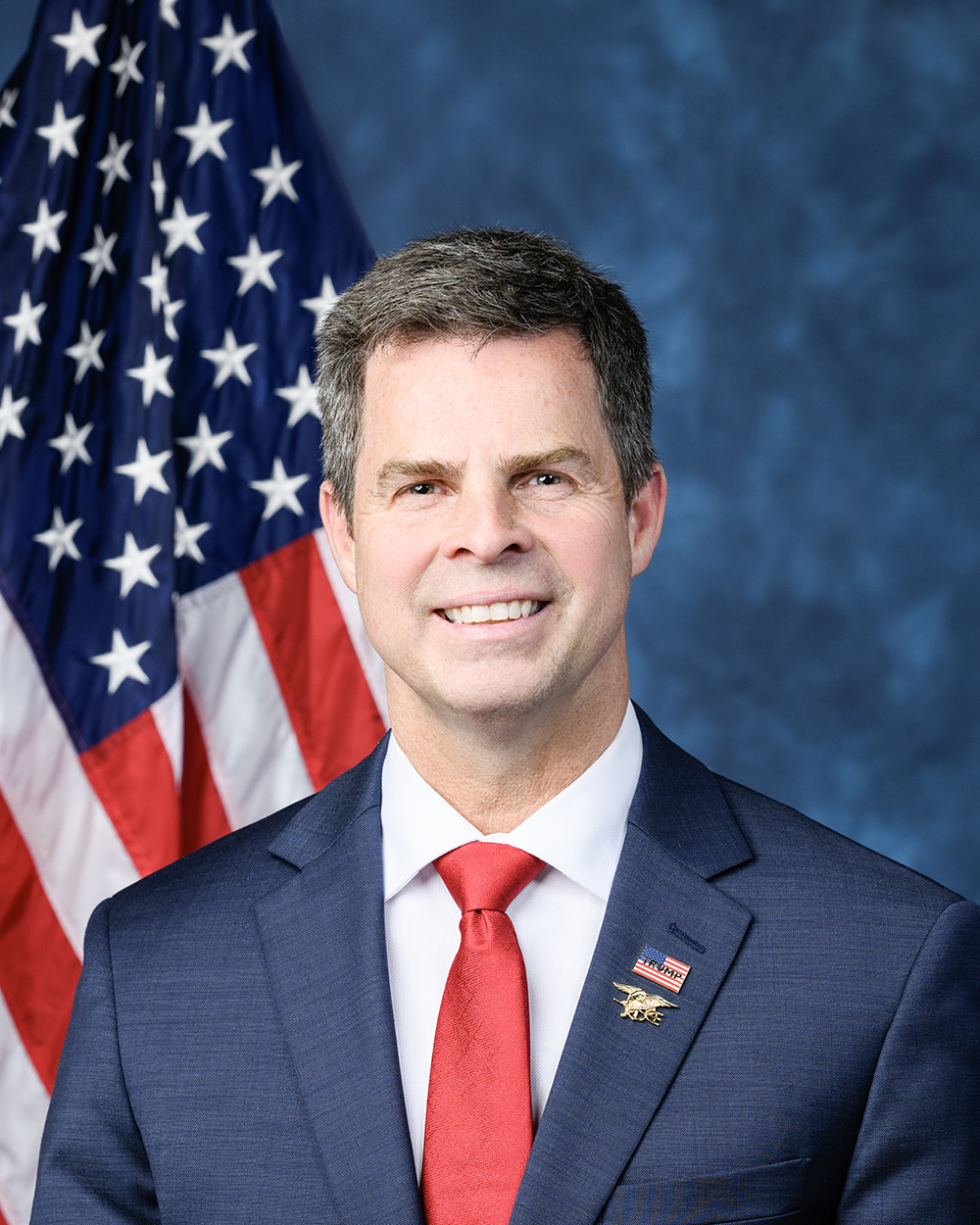
Rep. John J. McGuire III
Sponsored bills
Maddy summaryHR 276, the Gulf of America Act, would rename the Gulf of Mexico to the Gulf of America in all U.S. federal documents and maps. It requires all federal agencies to update their records, maps, and publications within 180 days of enactment to reflect this new name. The bill directly affects federal agencies responsible for geographic naming and documentation, such as the Department of the Interior and the Board on Geographic Names. This is a procedural change with no impact on policy, environmental regulations, or affected communities.
Maddy summaryThe SERVICE Act of 2025 creates a federal grant program to fund local veteran response teams within law enforcement agencies. These teams, composed of veteran officers and community partners, will provide 24/7 crisis response for at-risk veterans, coordinate with the Department of Veterans Affairs, and offer mental health training focused on military-related issues like PTSD. The program directly affects veterans in crisis and law enforcement agencies that receive grants to establish these teams. It requires teams to track outcomes and share best practices, with funding tied to existing crime control grants for fiscal years 2026-2030.
Maddy summaryThe Pregnancy.Gov Act requires the creation of a federal website, pregnancy.gov, to help pregnant and postpartum women find local resources. The website must allow users to search by ZIP code, filter services by distance (1-100 miles), and provide feedback on usability. It prohibits listing organizations that provide or support abortions (including abortion counseling, referrals, or financial support) and excludes such entities from receiving federal grants for resource aggregation. Within 180 days of launch, the government must report to Congress on website traffic, user experience, and gaps in available services, with multilingual access required.
Maddy summaryHR 3294, the "Justice for Victims of Illegal Alien Murders Act," amends federal murder sentencing to mandate the death penalty or life imprisonment for first-degree murder, and life or long-term imprisonment for second-degree murder, committed by non-citizens classified as inadmissible (e.g., due to prior criminal convictions) or deportable under specific immigration laws. The bill directly affects non-citizens who fall under these immigration categories and are convicted of murder in the U.S. It changes sentencing provisions under Title 18, U.S. Code, by adding these mandatory penalties for such offenses. The law focuses solely on modifying criminal penalties for specific convicted non-citizens, not on immigration enforcement or new legal standards. It does not alter immigration status requirements or create new procedures.
More Opportunities for Moms to Succeed Act or the MOMS Act This bill establishes requirements to enable the collection of certain child support during pregnancy, establishes grants for supportive services for women that promote alternatives to abortions, and requires the Department of Health and Human Services (HHS) to establish a website with pregnancy resources other than those about abortions. Specifically, the bill requires states to apply child support obligations to the time period during pregnancy under the Child Support Enforcement program. (The program enables states to receive federal matching funds for expenses related to child support enforcement activities and related services.) Such child support applies at the request of the mother and may be applied retroactively. Also, HHS must award grants to nonprofits to provide pregnant and postpartum women, and women parenting young children, with services or information on topics including health care (excluding abortions), child care, and employment assistance. It also requires HHS to provide grants to health care providers in rural or medically underserved areas, as well as tribal areas, to purchase equipment enabling telehealth visits for prenatal and postnatal care (e.g., monitoring devices). Additionally, the bill requires HHS to establish a public website to inform pregnant and postpartum women, and women parenting young children, of nearby services and resources on topics including health care, material or legal support, and alternatives to abortion. States must, as a condition of receiving certain federal funds, provide lists of nonprofit child placement agencies for potential inclusion on the site.

Maddy summaryHR 3228, the Constitutional Hearing Protection Act, reclassifies firearm silencers as firearms under federal tax law and eliminates their separate registration under the National Firearms Act. It requires the Attorney General to destroy all existing federal silencer registration records within one year and preempts state laws that impose taxes, registration, or recordkeeping requirements on silencers. The bill defines "firearm silencer" and specifies that manufacturers must mark silencers on a "keystone part" with a serial number. This directly affects silencer owners, manufacturers, and state governments by standardizing federal regulation and removing state-level restrictions.
Maddy summary# Summary of the SHIPS for America Act This comprehensive legislation focuses on strengthening the U.S. maritime industry, shipbuilding capacity, and maritime workforce to enhance national security and economic competitiveness. ## Key Areas of Focus 1. **Shipbuilding & Maritime Infrastructure** - Establishes a United States Center for Maritime Innovation to accelerate adoption of commercial technologies - Creates a National Shipbuilding Research Program - Requires an annual survey of anticipated commercial vessel construction - Includes provisions for streamlined environmental reviews of maritime infrastructure 2. **Workforce Development** - Establishes the United States Merchant Marine Career Retention Program to maintain mariner qualifications - Creates Centers of Excellence for Domestic Maritime Workforce Training and Education - Implements military-to-maritime transition programs - Establishes a Maritime Career and Technical Education Advisory Committee 3. **Education & Training** - Expands educational assistance for merchant mariners - Creates eligibility for Naval Postgraduate School for merchant mariners - Establishes maritime education programs from K-12 through higher education - Provides for international exchanges for mariners and naval architects 4. **National Security & Strategic Readiness** - Requires reports on National Defense Reserve Fleet utilization - Includes measures to de-risk the maritime sector from Chinese influence - Enhances shipbuilding capacity for national security needs - Establishes programs to ensure sufficient mariner workforce for national defense 5. **Funding Mechanisms** - Authorizes appropriations from the Maritime Security Trust Fund - Includes funding for workforce programs, education, and shipbuilding initiatives - Establishes specific funding levels for various programs over multiple fiscal years The legislation aims to create a sustainable domestic maritime industrial base that supports both commercial shipping and national defense requirements, with a particular emphasis on developing and retaining a skilled U.S. maritime workforce.
Maddy summaryThe SALUTE Act establishes a 5-year pilot program to provide supplemental insurance for military members and their TRICARE-eligible dependents who face uncovered cancer-related costs. It requires the Secretary of Defense to partner with up to two insurance companies to offer fixed indemnity plans that pay direct cash benefits for cancer screening, diagnosis, and treatment expenses not covered by standard military health benefits. These plans must operate separately from existing coverage, be available through TRICARE's online portal, and be funded entirely by enrollee premiums with no government subsidies. The program targets active-duty service members (Army, Navy, Marine Corps, Air Force, Space Force) and their TRICARE-enrolled dependents facing out-of-pocket cancer costs.
Maddy summaryThis bill (HR 3113) prohibits federal funding for most emergency response maps after fiscal year 2026, requiring any funded map to meet specific digital and accessibility standards. It directly affects federal agencies and public safety agencies (like police or fire departments) that use these maps for emergencies at government-owned sites (e.g., buildings or campuses). Key provisions mandate maps must be digital, stored in the U.S., integrate with safety software, display precise features (like exits, hazards, and utility points), and be verifiable via site inspections. The bill also requires the Secretary of Homeland Security to develop a strategy for procuring compliant maps for federal sites within one year. Note: The bill’s title ("Uniform School Mapping Act") appears inconsistent with its actual focus on federal emergency response maps, not school mapping.