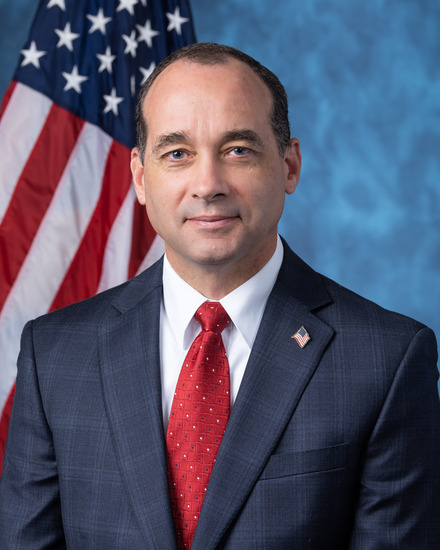
Photo of Bob Good
R United States House · District 5 · Former member · Virginia

Rep. Bob Good

Compare
Total votes
2,168
all sessions
Attendance
97%
62 missed
Near the chamber average
With party
80%
of cast votes
Lower than 97% of chamber peers
Bipartisan score
10%
some cross-party votes
Higher than 96% of chamber peers
Sponsored
1,324
bills & resolutions
Higher than 96% of chamber peers
Committees
0
assignments
1,324 bills and resolutions

Sponsored bills

Total
1,324
Primary
92
Co-sponsor
1,232
This page
1,324
matching current filters
Primary HR 380
In committee · United States House · Lead sponsor
Federal Student Loan Integrity Act

Maddy summaryHR 380, the Federal Student Loan Integrity Act, restricts the Secretary of Education's authority to extend pandemic-related student loan payment pauses. It prohibits using the HEROES Act to extend moratoriums beyond 30 days or to cancel loan balances for borrowers under federal student loan programs (Title IV of the Higher Education Act). The bill explicitly limits any pause to a maximum 30-day period for payment or interest suspension, and bans any loan forgiveness. This directly affects borrowers currently benefiting from the pandemic-era payment pause and limits the Secretary's ability to modify loan terms during emergencies.

In committee Jan 17, 2023 0 co-sponsors
Co-sponsor HR 344
In committee · United States House · Co-sponsor
Securing America’s Land from Foreign Interference Act

Securing America's Land from Foreign Interference Act This bill requires the President to take actions as necessary to prohibit members of the Chinese Communist Party (and entities owned, controlled, or influenced by the party) from purchasing real estate located in the United States.

In committee Jan 12, 2023 1 co-sponsor
Co-sponsor HR 301
In committee · United States House · Co-sponsor
Unmasking the Origins of COVID–19 Act

Unmasking the Origins of COVID-19 Act This bill authorizes the Department of State to pay a reward for information leading to the identification of the origins of COVID-19 or other related information, such as the identification of individuals or entities involved in a cover-up of the origins of COVID-19.

In committee Jan 11, 2023 1 co-sponsor
Co-sponsor HRES 17
In committee · United States House · Co-sponsor
Amending the Rules of the House of Representatives to require the Speaker to allow the Cable-Satellite Public Affairs Network (C-SPAN) to broadcast and record the floor proceedings of the House, and for other purposes.

Maddy summaryHRES 17 would amend House rules to require the Speaker to allow C-SPAN to broadcast and record House floor proceedings using at least four cameras owned and operated by C-SPAN. This change would replace the current discretionary process with a mandatory provision, directly affecting the Speaker's authority over broadcasting access in the chamber. The bill ensures consistent public access to live coverage of legislative debates and votes without requiring separate permissions for each session. This procedural update aims to standardize transparency for viewers of C-SPAN, a nonpartisan network providing public access to government proceedings.

In committee Jan 10, 2023 1 co-sponsor
Primary HRES 18
In committee · United States House · Lead sponsor
Less is More Resolution

Maddy summaryThe Less is More Resolution (HRES 18) amends House rules to require that any bill funding a new federal program must include reductions in funding for at least two existing programs (each reduction equal to or greater than the new program's funding). It mandates that the introducing member submit a written certification confirming this offset, which must be made public. This procedural rule applies to all House members and aims to enforce budgetary offsets for new spending proposals without creating new fiscal obligations.

In committee Jan 10, 2023 0 co-sponsors
Co-sponsor HR 233
In committee · United States House · Co-sponsor
Qualified Immunity Act of 2023

Qualified Immunity Act of 2023 This bill provides statutory authority for qualified immunity for law enforcement officers in civil cases involving constitutional violations. Current law provides a statutory civil cause of action against state and local government actors (e.g., law enforcement officers) for violations of constitutional rights, also known as Section 1983 lawsuits. The Supreme Court has also found an implied cause of action against federal law enforcement officers in certain situations (e.g., Fourth Amendment violations), also known as Bivens lawsuits. However, under the judicial doctrine of qualified immunity, government officials performing discretionary duties are generally shielded from civil liability, unless their actions violate clearly established rights of which a reasonable person would have known. The bill provides statutory authority for these principles with respect to law enforcement officers. Specifically, under the bill, law enforcement officers are entitled to qualified immunity if (1) at the time of the alleged violation, the constitutional right at issue was not clearly established or the state of the law was not sufficiently clear for every reasonable officer to know that the conduct was unconstitutional; or (2) a court has held that the specific conduct at issue is constitutional. The bill applies to federal, state, and local law enforcement officers. It also specifies that law enforcement agencies and local governments may not be held liable if their officers are entitled to qualified immunity.


In committee Jan 10, 2023 1 co-sponsor
Primary HR 260
In committee · United States House · Lead sponsor
Nickel Plan Act

Maddy summaryHR 260, the Nickel Plan Act, establishes annual federal spending limits to control budget growth. It sets a cap of $5.95 trillion (less 5% for interest) for fiscal year 2024, decreasing by 5% each year through 2027, then tying future spending to 17.5% of GDP starting in 2028. If spending exceeds these limits, the Office of Management and Budget triggers automatic spending cuts (sequestration) by October 31 each year. The bill also prevents Congress from passing legislation that would breach these caps without a two-thirds vote in both chambers, enforcing the limits through procedural rules.

In committee Jan 10, 2023 0 co-sponsors
Primary HR 261
In committee · United States House · Lead sponsor
Article I Regulatory Budget Act

Maddy summaryThis bill establishes a "regulatory budget" system requiring federal agencies to estimate and report the costs of regulations on businesses, especially small businesses. It mandates the President to submit annual projections of regulatory costs for proposed rules, and creates a process for Congress to set limits on how much regulatory costs can grow. The Congressional Budget Office would analyze regulatory cost impacts of proposed legislation, while agencies would need to conduct cost-benefit analyses for significant regulations. The bill aims to increase transparency around regulatory costs and provide Congress with tools to monitor and control regulatory burdens on businesses.

In committee Jan 10, 2023 0 co-sponsors
Showing 861 to 870 of 1,324 bills
Previous 1 … 86 87 88 … 133 Next