

Maddy summaryHRES 166 is a non-binding House resolution expressing U.S. support for the Iranian people's desire for a democratic, secular, and nonnuclear republic. It condemns the Iranian regime's terrorism, regional proxy wars, internal suppression of ethnic and religious minorities, and human rights abuses - including executions and repression of women-led protests. The resolution calls for holding the regime accountable through sanctions, supports the Ten-Point Plan for Iran’s democratic transition, and urges protection for Iranian political refugees in Albania. It does not create new laws but affirms U.S. policy alignment with Iranian protesters' demands.
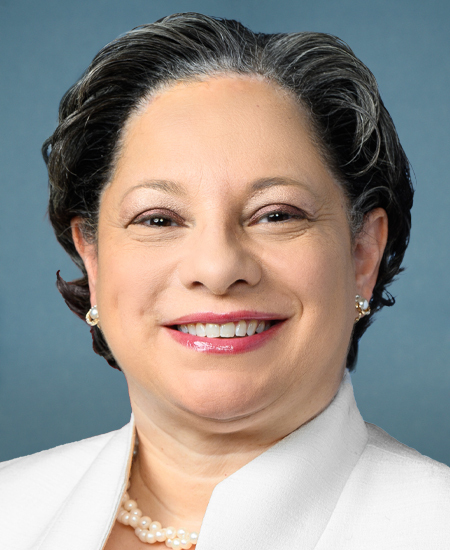
Rep. Jennifer L. McClellan
Sponsored bills
Maddy summaryThe RAISE Act of 2025 creates a new tax credit for teachers and early childhood educators, with a base of $1,000 plus additional amounts based on school poverty rates. Teachers working in schools where more than 39% of students live in poverty can receive up to $14,000 more in tax credits, calculated based on how much a school's poverty rate exceeds 39%. The bill also increases the deduction for teachers' classroom expenses from $250 to $500 and requires schools to maintain teacher pay levels to receive certain federal funds. This directly affects public school teachers, early childhood educators, and schools serving communities with high poverty rates.
Maddy summaryHR 1638, the CROWN Act of 2025, prohibits discrimination based on hair texture or hairstyle that is commonly associated with race or national origin, particularly affecting Black individuals who wear natural or protective styles like braids, locs, cornrows, twists, or Afros. The bill explicitly expands protections under existing federal civil rights laws (including the Civil Rights Act of 1964 and the Fair Housing Act) to cover hair-based discrimination in federally funded programs, housing, public accommodations, employment, and equal rights. It requires schools, employers, and other entities receiving federal funds to eliminate grooming policies that disproportionately target these hairstyles. The law clarifies that such discrimination violates federal law and provides enforcement through existing civil rights mechanisms.
Maddy summaryEthan's Law requires gun owners to store firearms securely in homes where minors live or where residents are legally prohibited from owning guns. It makes it unlawful to leave firearms unsecured if a minor or ineligible person could access them, with fines of $500 per violation and harsher penalties if injury or death occurs. The bill creates a federal grant program to help states implement similar secure storage laws and treats unsafe storage as negligence in legal cases. It directly affects households with children or residents who cannot legally possess firearms, aiming to reduce accidental shootings and unauthorized access.
Maddy summaryThe Conrad State 30 and Physician Access Reauthorization Act extends and reauthorizes a program that allows foreign medical graduates to work in underserved U.S. communities after completing their training. It extends the program through 2021 (with retroactive effect), adds protections for physicians who have completed service requirements, and makes changes to visa requirements to better support physicians working in underserved areas. The bill requires states to maintain a 90% utilization rate of waivers to keep receiving the full allocation, and adds reporting requirements for the program. This bill directly affects foreign physicians seeking to work in underserved areas and the health care facilities that employ them.
Maddy summaryHR 1581 establishes Fort Monroe National Historical Park in Virginia to preserve and interpret the site's significant history, including its role in the Civil War (like the 1861 Contraband Decision), its use as a coastal defense site, and its connection to the first entry of Africans into English North America. The bill replaces the existing Fort Monroe National Monument by incorporating its lands into the new park, updating all references from "National Monument" to "Historical Park" in federal documents. It defines the park's boundary using a specific map and allows the National Park Service to acquire land within that boundary through donations or purchases. The park will be managed under standard National Park System laws while ensuring Virginia's authority over non-federal land and allowing historic buildings to be reused, provided they meet preservation standards.
Maddy summaryHRES 159 is a symbolic resolution expressing the U.S. House of Representatives' support for designating February 24-28, 2025, as "Public Schools Week." It does not create new laws or allocate funds but aims to highlight the importance of public schools in communities. The resolution cites reasons such as public schools serving 90% of U.S. students, fostering critical thinking, and requiring equitable funding - though these are context, not policy changes. It directly affects public schools and their communities by raising awareness of their role in education. As a non-binding resolution, it has no direct impact on school operations or funding.
Maddy summaryHR 1543, the EQUITY Act, prohibits discrimination in the U.S. military based on race, color, religion, sex, national origin, gender identity, or sexual orientation. It requires that military service, advancement, and evaluations be based solely on individual merit, fitness, capability, and performance. The bill amends Title 10 to add Section 975, explicitly banning discrimination and ensuring eligibility considers only job-related standards and military occupational specialty requirements. This directly affects all active-duty service members and military personnel by codifying merit-based standards and reversing policies like the 2025 executive order restricting transgender service.
Maddy summaryThe Access Technology Affordability Act of 2025 creates a new tax credit for individuals who purchase technology designed to assist blind people, such as screen readers or braille displays. This credit covers up to $2,000 in expenses per three-year period for qualified access technology used by the taxpayer, their spouse, or a blind dependent. The credit adjusts for inflation after 2026 but does not apply to costs already covered by other tax benefits. The credit expires after 2030, with adjustments for cost-of-living changes starting in 2027.
Maddy summaryThis bill would require states to create a simplified process for out-of-state healthcare providers to join Medicaid and CHIP programs. Qualified providers (those already enrolled in Medicare or another state's program with low fraud risk) could enroll without excessive screening and would be approved for five years. It directly affects children under 21 enrolled in Medicaid or CHIP by expanding access to providers outside their state, particularly in underserved areas. The change applies to all states' Medicaid programs but takes effect three years after enactment.