

Maddy summaryHR 1990, the American Innovation and R&D Competitiveness Act of 2025, amends tax rules for businesses to make research and development (R&D) costs more flexible. It allows companies to deduct R&D expenses immediately as business costs (instead of capitalizing them) or to spread these costs over a minimum 60-month period. The bill clarifies which R&D expenses qualify, excludes land improvements and mineral exploration costs, and ensures companies can claim R&D tax credits without conflict with expense treatment. This directly affects businesses that conduct R&D, changing how they account for these costs on tax returns starting for 2022 taxable years.
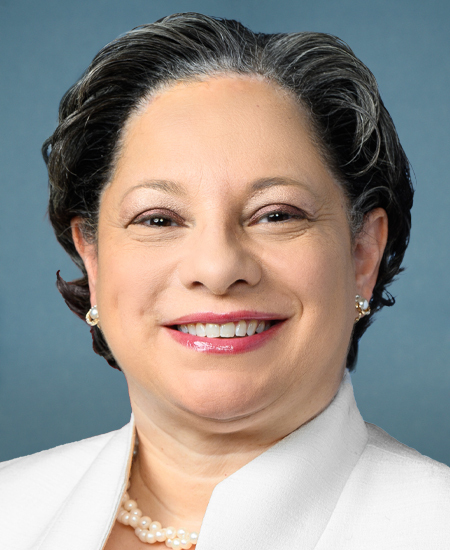
Rep. Jennifer L. McClellan
Sponsored bills
Maddy summaryThe Feed Our Families Act of 2025 ensures SNAP (Supplemental Nutrition Assistance Program) benefits continue for 90 days during the first government funding lapse in a fiscal year. It appropriates emergency funds from the Treasury to cover SNAP operations for the initial 90 days of a lapse in discretionary appropriations for the program. These funds are held in reserve and can only be used to maintain SNAP program services during that period. The bill directly affects millions of low-income households relying on SNAP benefits by preventing immediate disruptions during early government shutdowns.
Maddy summaryThis bill amends the calculation method for the Basic Allowance for Housing (BAH) for uniformed service members living off-base in the United States. It requires the Secretary of Defense to set BAH amounts based directly on the actual monthly cost of adequate housing in each area, matching the member's pay grade and dependency status. This change ensures BAH rates more accurately reflect local housing expenses rather than using a previous formula. The bill directly affects all service members receiving BAH for off-base housing across the U.S., particularly those in high-cost areas where current rates may not cover actual rent.
Maddy summaryHR 1967 would rename the National School Lunch Program Act to honor Jean E. Fairfax, a civil rights activist who worked to expand equitable access to school meals for marginalized communities. The bill amends over 40 federal statutes to replace "Richard B. Russell" with "Jean E. Fairfax" in all official references, including program titles and legal citations. This is a purely procedural change that updates naming conventions without altering program eligibility, funding, or operations. The renaming follows findings that Richard B. Russell opposed civil rights legislation and segregation, while Jean E. Fairfax advocated for inclusive school meal access.
Maddy summaryHR 1938 requires the Department of Defense to request modifications to stormwater permits at military facilities, mandating quarterly monitoring of PFAS discharges and implementation of best management practices to reduce them. The bill directly affects all Department of Defense facilities subject to federal stormwater permits under the Clean Water Act. It allocates at least 1% of annual PFAS remediation funds specifically for testing stormwater runoff at these sites. The legislation focuses on preventing PFAS contamination in waterways by strengthening monitoring and reduction measures at military operations.
Maddy summaryHR 1954, the "Do No Harm Act," amends the Religious Freedom Restoration Act (RFRA) to clarify that RFRA does not override specific federal laws protecting against harm. It explicitly exempts provisions related to anti-discrimination (like the Civil Rights Act), workplace protections (wages, leave, collective activity), child safety, and healthcare access from RFRA's requirements. The bill ensures RFRA cannot be used to challenge government programs or contracts that provide these essential protections. It also clarifies that RFRA applies only to disputes involving government as a party, not private disputes between individuals. This change preserves existing legal safeguards while modifying RFRA's scope.
Maddy summaryHR 1901, the CHIPP Act, makes Children's Health Insurance Program (CHIP) funding permanent for all future fiscal years, removing previous expiration dates that required annual congressional renewal. This directly affects low-income children and families who rely on CHIP coverage and the states that administer these programs. The key mechanism is amending federal law to require "such sums as are necessary" for CHIP funding starting in fiscal year 2029 and beyond. Other provisions adjust funding for related programs like pediatric quality measures and outreach, but the primary change is CHIP’s permanent funding structure.
Maddy summaryHR 1873, the Broadband Grant Tax Treatment Act, excludes certain federal broadband grants from taxable income for recipients. It directly affects entities (like internet providers or local governments) receiving qualifying grants under specific programs, including the Broadband Equity, Access, and Deployment Program and State Digital Equity Capacity Grants established by the Infrastructure Investment and Jobs Act. The bill prevents double tax benefits by disallowing deductions for expenses covered by these excluded grants and reduces the adjusted basis of related property. This change applies to grants received in taxable years ending after March 11, 2023.
Maddy summaryThis bill prohibits the Federal Communications Commission (FCC) from taking action against broadcasters - such as revoking licenses - based on the viewpoints they broadcast or the content they disseminate. It also bans the FCC from imposing viewpoint-related conditions when reviewing transactions like license transfers. The law explicitly preserves the FCC’s authority to act against illegal content (such as incitement, hate speech, or threats under existing federal law) but prevents political pressure from influencing regulatory decisions. It directly affects broadcasters and the FCC’s enforcement practices under the Communications Act of 1934.
Protecting Americans’ Social Security Data Act This bill prohibits political appointees and special government employees from accessing Social Security data systems that contain personally identifiable information about Social Security beneficiaries. Specifically, political appointees and special government employees may not access systems maintained by the Social Security Administration (SSA) that issue or record Social Security account numbers, that are used to determine eligibility for or to pay Social Security benefits, or that otherwise contain personally identifiable information about individuals receiving or applying for benefits. The bill also establishes a civil right of action for an individual whose information was negligently accessed or disclosed in violation of these provisions. The individual may bring suit against the United States if the violator was a U.S. employee or officer, or against the violator if they were not a U.S. employee or officer. Such a claim must be brought within two years of the affected individual’s discovery of the violation. Upon a finding of liability, defendants are liable for specified monetary damages. If an individual is criminally charged or subject to proposed disciplinary or adverse action by a federal or state agency for having accessed or disclosed information in violation of these provisions, SSA must notify the individual whose information was accessed or disclosed of the violation as soon as practicable. Finally, the bill requires the SSA Office of the Inspector General to investigate and report to Congress on any unauthorized access to or disclosure of information in a beneficiary data system.