

Maddy summaryHRES 1039 is a symbolic resolution supporting National Black HIV/AIDS Awareness Day observed annually on February 7. It highlights that Black Americans account for disproportionate HIV impacts (e.g., 39% of new diagnoses despite representing 12% of the U.S. population) and urges state/local health agencies to promote HIV testing, reduce stigma, and prioritize minority-led HIV services. The resolution encourages alignment with the National HIV/AIDS Strategy and emphasizes culturally competent care, but does not create new funding or enforceable requirements. It serves as a non-binding endorsement of existing efforts to address racial disparities in HIV prevention and treatment.
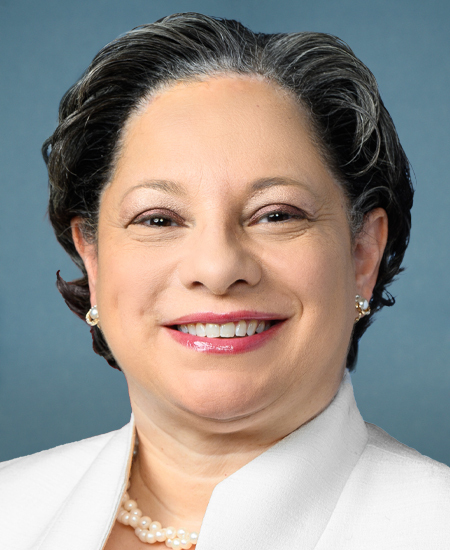
Rep. Jennifer L. McClellan
Sponsored bills
Maddy summaryThis bill creates new funding eligibility for Historically Black Colleges and Universities (HBCUs) and Predominantly Black Institutions (PBIs) that offer approved master's degree programs. It amends existing law to add specific categories (subsections S for HBCUs and F for PBIs) allowing these institutions to access federal funds previously restricted to certain program types. The key mechanism expands funding access by adjusting how remaining funds are allocated after initial disbursements. Directly affects qualifying HBCUs and PBIs meeting both the institution type and master's program criteria.
Maddy summaryHR 7345 directs the Congressional Budget Office (CBO) to study the long-term economic effects of immigration policies implemented beginning January 20, 2025. The CBO must assess impacts across specific sectors (like healthcare, agriculture, STEM fields), public safety concerns, demographic shifts, small business effects, and tax revenue at federal, state, and local levels. Federal agencies - including Homeland Security, the Bureau of Labor Statistics, and the IRS - must provide requested data to support this study. The report must be completed within 180 days of the bill’s enactment or by the end of the current congressional session, whichever comes first. This is a procedural study bill, not a policy change.
Maddy summaryThe Rebuild America's Schools Act of 2026 authorizes $20 billion annually from 2027 to 2031 to improve public school facilities nationwide. The bill provides grants to states to fund school construction, renovation, and modernization projects that focus on safety, energy efficiency, and accessibility, with priority given to schools serving high percentages of students eligible for free or reduced-price lunch. Funds cannot be used for routine maintenance, athletic facilities, or vehicles, and must meet specific environmental, safety, and energy efficiency standards. The bill also includes specific provisions for repairing school foundations affected by pyrrhotite, a mineral that causes concrete deterioration, and requires use of American-made materials for construction projects.
Maddy summaryHR 7346, the Drain ICE Act of 2026, repeals specific funding provisions (sections 90003 and 100052) from the "One Big Beautiful Bill Act" and cancels all unspent funds allocated under those sections. This bill directly affects ICE’s detention budget by removing existing financial authority for detention operations. It does not change immigration enforcement practices or directly impact individuals; it solely modifies budgetary allocations. The bill focuses on eliminating funding mechanisms, not on policy changes for migrants or enforcement. (Procedural bill; summary limited to 2 sentences as specified.)
Weatherization Enhancement and Readiness Act of 2025 This bill reauthorizes through FY2030 and modifies the Weatherization Assistance Program. Under the program, the Department of Energy (DOE) provides grants for low-income households to improve the energy efficiency of their homes. The bill increases the cap on the average assistance provided per home from $6,500 to $12,000. The bill also directs DOE to include in its annual report to Congress a description of the impacts of enhancement and innovation readiness efforts on eligibility for assistance under the program.
Maddy summaryHR 7334 establishes the Commission on American Leadership in Robotics to study how robotics development impacts U.S. economic competitiveness and national security. The 18-member Commission, appointed with balanced political representation (3 each from House/Senate leadership and 6 by the President), will review robotics applications in industry, supply chains, workforce needs, and global trends. It must submit an interim report after one year and a final report with recommendations after two years, working with federal agencies but having no authority to enact new laws. The Commission will terminate 18 months after its final report.
Maddy summaryHR 7278, the Cost of Police Misconduct Act of 2026, requires federal, state, and local law enforcement agencies receiving Byrne JAG program funds to collect and report detailed data on misconduct settlements and judgments. Agencies must track information like the type of allegation (e.g., use of force, racial profiling), costs paid, officer demographics, and funding sources, then submit annual reports to the Attorney General. Non-compliant states or localities face up to a 10% reduction in Byrne JAG or Cops on the Beat program funding. The Attorney General will create a public, searchable database of this aggregated data (excluding personal identifiers) and issue annual reports with recommendations for reducing misconduct. The bill mandates a GAO study after two years of data collection to analyze trends and costs across agencies.
Maddy summaryHR 7297, the "ICE and CBP Constitutional Accountability Act," creates a direct legal path for individuals harmed by ICE or CBP officers to sue the U.S. government for constitutional violations. The bill amends the Federal Tort Claims Act to allow lawsuits when officers violate rights like due process, privacy, or free speech - without requiring proof that a government policy caused the harm. Monetary damages would come from specific federal appropriations, and the government waives its usual immunity from such lawsuits. This directly affects people subjected to unlawful immigration enforcement actions by these agencies. The bill does not change agency operations but provides a new civil remedy for victims.
Maddy summaryHJRES 144 is a congressional disapproval resolution targeting a specific rule issued by the Department of Veterans Affairs (VA) on December 31, 2025, which addressed "Reproductive Health Services" (90 Fed. Reg. 61310). This resolution directs Congress to disapprove the VA rule under Chapter 8 of Title 5, U.S. Code, meaning the rule would have no legal effect if passed. The bill directly affects the VA's implementation of reproductive health services for veterans, as it seeks to nullify the agency's existing policy. This is a procedural measure, not a substantive policy change, aimed solely at blocking the VA's rule through congressional action.