

Paycheck Fairness Act This bill addresses wage discrimination on the basis of sex, which is defined to include pregnancy, sexual orientation, gender identity, and sex characteristics. Specifically, it limits an employer's defense that a pay differential is based on a factor other than sex to only bona fide job-related factors in wage discrimination claims, enhances nonretaliation prohibitions, and makes it unlawful to require an employee to sign a contract or waiver prohibiting the employee from disclosing information about the employee's wages. The bill also increases civil penalties for violations of equal pay provisions. Additionally, the Equal Employment Opportunity Commission (EEOC) and the Office of Federal Contract Compliance Programs must train EEOC employees and other affected parties on wage discrimination. The bill directs the Department of Labor to (1) establish and carry out a grant program to provide training in negotiation skills related to compensation and equitable working conditions, (2) conduct studies to eliminate pay disparities between men and women, and (3) make available information on wage discrimination to assist the public in understanding and addressing such discrimination. The bill establishes the National Award for Pay Equity in the Workplace for an employer who has made a substantial effort to eliminate pay disparities between men and women. It also establishes the National Equal Pay Enforcement Task Force to address compliance, public education, and enforcement of equal pay laws. Finally, the bill requires the EEOC to issue regulations for collecting from employers compensation and other employment data according to the sex, race, and national origin of employees for use in enforcing laws prohibiting pay discrimination.
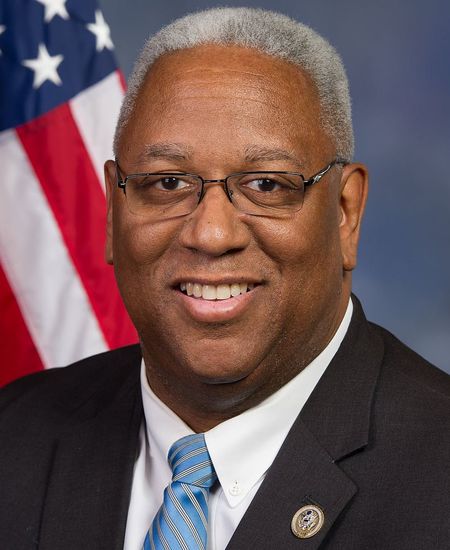
Rep. A. Donald McEachin
Sponsored bills
Armed Forces Transgender Dependent Protection Act This bill expands the policy of the Office of Special Needs within the Department of Defense to address transgender dependents. Specifically, the bill codifies the definition of a medical or educational special need to include gender dysphoria. Under the bill, the policy of the office must prohibit the assignment of a military family with special needs to a permanent duty location where the law restricts medically necessary treatment for a medical or educational special need. A member who is serving at a location when such a law is established may elect to be reassigned.
United States Army Rangers Veterans of World War II Congressional Gold Medal Act This bill provides for the award of a single Congressional Gold Medal to the U.S. Army Rangers Veterans of World War II in recognition of their dedicated service during World War II.
Reproductive Rights are Human Rights Act of 2021 This bill directs the Department of State to include in its annual reports on human rights in countries receiving U.S. development and security assistance a discussion of the status of reproductive rights in each country. This must include whether a country has adopted and enforced policies to (1) promote access to contraception and accurate, nondiscriminatory family planning and sexual health information; (2) provide services to ensure safe and healthy pregnancy and childbirth; (3) expand or restrict access to safe abortion services; and (4) prevent and treat sexually transmitted diseases. For each country, the reports shall also contain (1) data concerning pregnancy-related injuries and deaths; and (2) a description of the nature and extent of discrimination and violence against women, girls, and LGBTQI+ individuals in health care settings and the relevant government's response to such actions.
Trees for Residential Energy and Economic Savings Act of 2021 or the TREES Act of 2021 This bill directs the Department of Energy (DOE) to establish a grant program for states, local governments, Indian tribes, and other entities to facilitate tree planting projects that reduce residential energy consumption. Under the program, DOE may award grants to facilitate the planting of at least 300,000 trees annually in residential neighborhoods.
John Lewis Every Child Deserves a Family Act This bill prohibits discrimination on the basis of sexual orientation, gender identity, marital status, or religion in the provision of child welfare programs and services by entities receiving federal funding. The Department of Health and Human Services (HHS) must provide technical assistance to help states follow this requirement, including (1) guidance for bringing state laws into compliance, (2) developing training to increase cultural competency related to social identity, and (3) training for judges and attorneys involved in child welfare cases, among other supports. Additionally, HHS must establish the National Resource Center on Safety, Well-Being, Placement Stability, and Permanency for LGBTQ Children and Youth Involved with Child Welfare Services to provide training, technical assistance, and guidance to applicable state and local agencies and service providers. Further, the Religious Freedom Restoration Act may not be the basis for challenging the application or enforcement of this bill. The Government Accountability Office must study and report on states' compliance with the requirements of the bill no later than three years after enactment.
Keeping All Students Safe Act This bill prohibits the use of seclusion and limits the use of physical restraint in schools and Head Start programs that receive federal funding. Specifically, the bill prohibits the use of seclusion, which is the involuntary confinement of a student alone in a room or area from which the student is physically prevented from leaving. The term does not include a time out, which may involve separating the student from others in a non-locked setting. The bill prohibits the use of mechanical or chemical restraints or physical restraints that restrict breathing or are life threatening. The bill outlines the requirements for the use of physical restraint, including that the student's behavior must pose an imminent danger of serious physical injury to the student or other individual. Each state must ensure that a sufficient number of program personnel are trained and certified by a state-approved crisis intervention training program. Additionally, each program must establish procedures to follow after an incident involving physical restraint. Further, the bill establishes enforcement provisions, including a private right of action for a student who has been subjected to unlawful seclusion or restraint. The Department of Education and the Department of Health and Human Services must withhold payments from a program for unlawful seclusion or restraint. Finally, the bill requires each state educational agency (SEA) to establish, implement, and enforce policies and procedures required by the bill. It also creates a grant program to assist SEAs with these activities.
Safe Drinking Water in Public Playgrounds, Parks, and Libraries Act This bill requires the Environmental Protection Agency to establish a grant program to provide assistance to states and municipalities for the replacement of drinking water fountains that were manufactured prior to 2014 and are located in certain playgrounds, parks, or libraries.
Safeguarding Against Fraud, Exploitation, Threats, Extremism, and Consumer Harms Act or the SAFE TECH Act This bill limits federal liability protection that applies to a user or provider of an interactive computer service (e.g., a social media company) for claims related to content provided by third parties. Specifically, the bill applies the liability protection to claims arising from third-party speech rather than third-party information. Additionally, the liability protection shall not apply if a user or provider (1) accepts payment to make the speech available, or (2) creates or funds (in whole or in part) the speech. The bill changes legal procedures concerning the liability protection by (1) requiring a defendant in a lawsuit to raise the liability protection as an affirmative defense, and (2) placing the burden of proving that the defense applies on the defendant. Some courts have held that the current liability protection bars claims for civil penalties and injunctive relief. The bill expressly excludes from the liability protection requests for injunctive relief arising from a provider's failure to remove, restrict access to, or prevent dissemination of material likely to cause irreparable harm. However, the bill protects a provider from liability for actions taken to comply with such injunctions. Under current law, the liability protection does not apply to federal criminal law, intellectual property law, and other designated areas of law. The bill further specifies that the liability protection shall not apply to civil rights law; antitrust law; stalking, harassment, or intimidation laws; international human rights law; and civil actions for wrongful death.
Territories Health Equity Act of 2021 This bill alters provisions relating to the treatment of U.S. territories under Medicaid, Medicare, and Medicare Advantage. For example, the bill eliminates Medicaid funding limitations for U.S. territories beginning in FY2022, exempts an individual from late-enrollment penalties for Medicare medical services if the individual resided in Puerto Rico as of the date of eligibility and the individual enrolls within five years of such date, and establishes minimum criteria for certain elements used in Medicare Advantage payment calculations for areas within U.S. territories. The bill also allows residents of U.S. territories who are unable to obtain health insurance through their employer or a health insurance exchange to instead obtain coverage that is at least as broad as the coverage available to Members of Congress and their staff through the District of Columbia exchange.